
The Sensory Evening: How Dim Lighting and Low Sound Heal Your Mind
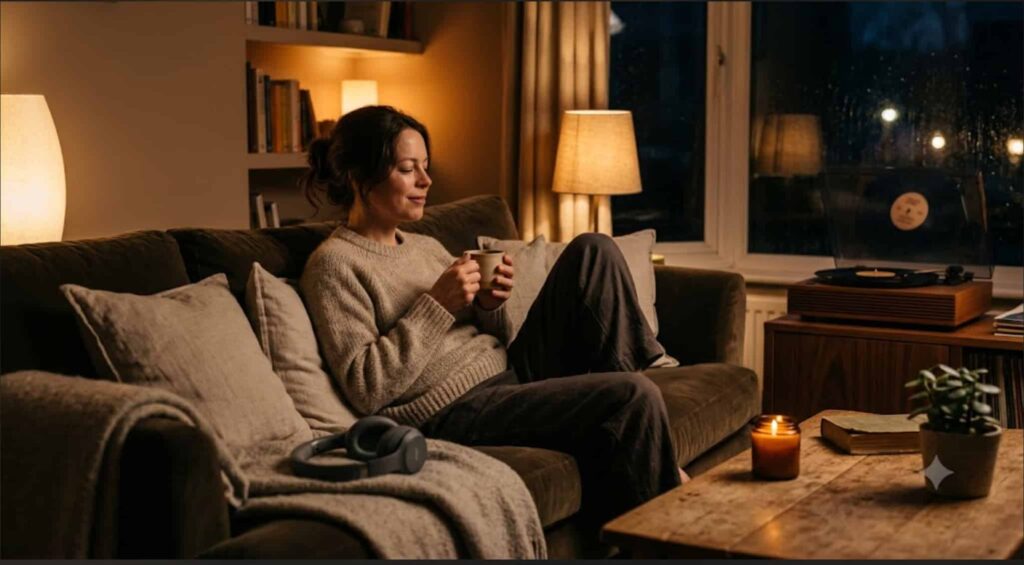
It is a subtle human experience: you turn off the harsh overhead kitchen light, switch on a small bedside lamp, and suddenly your shoulders drop an inch. Nothing about your to-do list changed, yet your body immediately knows the boundary between the demands of the day and the quiet of the night has finally been drawn.
Bright lights and background noise send a continuous message to your brain: stay alert, stay awake, keep performing. Learning to lower the sensory volume of your home is the simplest, most effortless way to signal to your body that it is safe to unwind.
“Your nervous system doesn’t understand your schedule, but it understands light and sound. Lowering the sensory volume of your home is an act of physical kindness.”
The Biology of Light: Why Bright Lights Keep Your Mind Racing
Human biology was designed to follow the gentle arc of the sun. For thousands of years, sunset was the ultimate cue that the day’s physical exertion was over.
Modern indoor lighting—especially bright LED bulbs and overhead fixtures—mimics midday sunlight. When these lights stay on at 9 PM, your brain interprets the environment as daytime:
- Melatonin Suppression: Bright light directly inhibits the release of melatonin, the hormone responsible for natural drowsiness.
- Elevated Cortisol: Exposure to harsh light keeps your stress hormones slightly elevated, making you feel wired yet tired.
- Visual Fatigue: Eye strain from sharp contrast and screen glare adds a subtle layer of physical tension to your face and neck.
By simply switching from overhead lighting to warm, low-level lamps, you gently step out of the “daytime” state without needing willpower.

If this article resonated with you…
Your triggers are trying to tell you something.
The Understanding My Triggers Journal gently guides you through 30 days of reflection to help you recognise emotional patterns, understand your triggers and respond with greater self-compassion.
Sound Pollution and the Alert Nervous System
Background noise—such as the TV droning in another room, loud podcasts, or traffic outside—requires constant micro-processing from your brain. Even if you feel used to the noise, your auditory system remains on guard.
In a state of subtle sensory overload, your brain seeks immediate comfort and grounding. This is often why late-night cravings or endless screen scrolling feel so compelling; your system is trying to anchor itself against background stimulation.
Lowering the Sensory Volume: A Simple Checklist
Transforming your evening environment doesn’t require buying expensive gear. It is simply about intentionally dimming the sensory input around you.
| Sensory Trigger | High-Stimulation State | Calming Alternative |
| Lighting | Bright overhead LEDs, main kitchen lights | Warm table lamps, candles, low-wattage bulbs |
| Sound | Loud TV shows, fast podcasts, notifications | Soft acoustic music, rain sounds, or functional silence |
| Visual Space | Cluttered counters, bright screens | A clear, minimal bedside table with soft textures |
| Temperature | Stuffy, overheated rooms | Cool night air mixed with a warm, heavy blanket |
3 Low-Effort Shifts to Try Tonight
If you feel completely exhausted at the end of the day, do not try to overhaul your whole house. Start with these three low-effort adjustments:
- The “Overhead Light Boundary”: At 8 PM, turn off all main ceiling lights. Rely only on floor lamps or low-level lighting for the rest of the evening.
- Trade Sound for Atmosphere: Replace background TV or news chatter with low ambient sounds, or simply allow yourself 10 minutes of complete silence while making tea.
- Protect the Bedside: Keep your immediate sleeping area free of bright chargers or clutter. Let the space right beside your head be visual sanctuary.
Tonight, remember: you don’t have to perform relaxation. Sometimes, all your body needs is a quiet room, a warmer light, and permission to stop processing the world.