
Why Your Inner Critic Is Making You More Anxious (And How This Guided Workbook Helps You Stop It)

Have you ever noticed that the harshest voice you hear all day is often your own?
We often believe that being hard on ourselves keeps us motivated. However, psychological research tells a different story: chronic self-criticism activates the brain’s threat system, elevating anxiety, shame, and burnout rather than healthy motivation (Gilbert, 2014; Millard et al., 2023).
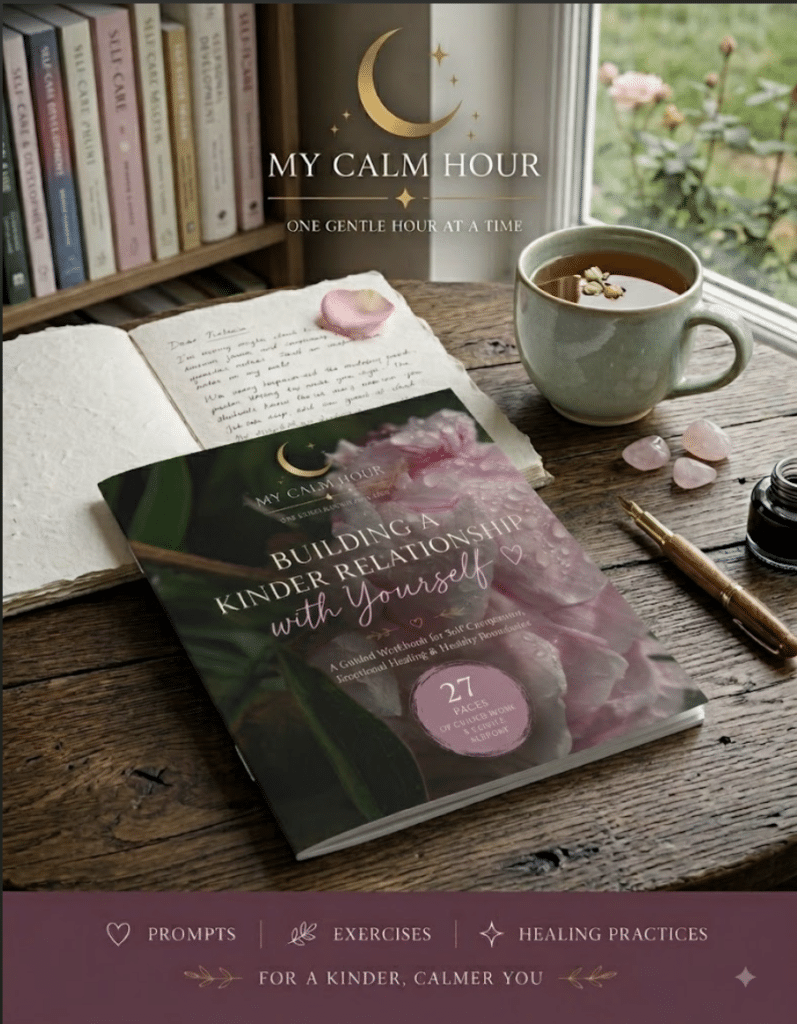
If you are ready to quiet that voice, the “Building a Kinder Relationship with Yourself” Guided Workbook by My Calm Hour was designed to guide you step-by-step from harsh self-judgment to grounded self-compassion.
1. The Problem: Self-Criticism Triggers Constant Anxiety
When you criticize yourself for a mistake, your brain treats those thoughts as a physical threat.
- The Science: According to Compassion Focused Therapy (CFT), chronic self-criticism can keep the brain’s threat system activated, making it easier to stay in a state of anxiety, vigilance, and self-protection rather than emotional safety.
- The Result: Overthinking, perfectionism, and feeling guilty even when resting.
💡 How the Workbook Solves This:
In Module 1 (Inner Critic Audit), the workbook gives you a structured framework to map out your specific triggers and catch critical thoughts before they control your mood. Instead of asking “What is wrong with me?”, you learn to observe your patterns with curiosity.
2. The Solution: Replacing Fear with Evidence-Based Self-Compassion
Research shows that people who respond to setbacks with kindness rather than judgment are more resilient, less anxious, and more likely to learn from their mistakes (Neff, 2023; Millard et al., 2023).
💡 How the Workbook Solves This:
The workbook bridges the gap between scientific theory and real life through practical exercises:
| Your Problem / Challenge | What You Gain from the Workbook |
| Harsh Inner Voice | From Critic to Compassion Exercise: Reframe toxic thoughts into supportive, believable self-talk. |
| Paralyzing Perfectionism | Releasing Perfectionism Prompts: Learn to safely practice “good enough” without fear of failure. |
| People-Pleasing & Guilt | Guilt-Free Boundaries (Module 3): Identify energy drains and say “no” without long explanations. |
| Emotional Overwhelm | The Hard Day Plan: A step-by-step emergency layout for when life feels like too much. |
If this article resonated with you…
You deserve to be kinder to yourself.
The Building a Kinder Relationship with Yourself workbook offers gentle prompts, practical exercises and healing practices to help you quiet self-criticism, build self-compassion and reconnect with yourself.
3. What Makes This Workbook Unique?
Unlike traditional self-help books that only explain the concepts, this 27-page printable workbook gives you actionable tools you can use immediately:
- No Pressure or Performance: There is no “correct” way to complete it—skip pages, write messy notes, or take your time.
- 5-Minute Self-Care Menu: Quick routines designed for low-energy days when you don’t have time for a long morning routine.
- Instant Digital Download: Easily print it out, bind it, or use it on your tablet (GoodNotes / Notability).
🌿 Transform Your Inner Conversation Today
You don’t need to fix your entire life in one weekend. You only need a gentle space to start listening to your own supportive voice.
👉 Get your instant copy of the “Building a Kinder Relationship with Yourself” Workbook on Etsy today!
👉 Explore more tools and gentle practices at www.mycalmhour.com
Research & References
- Gilbert, P. (2014). The origins and nature of Compassion Focused Therapy. Clinical Psychology & Psychotherapy. (Research showing how self-criticism activates the brain’s threat-defense system).
- Millard, L., et al. (2023). The effectiveness of Compassion Focused Therapy: A systematic review and meta-analysis. (Evidence proving CFT reduces self-criticism and increases self-soothing).
- Neff, K. (2023). Self-Compassion: Theory, Method, and Research. (Studies linking self-compassion to lower anxiety, emotional resilience, and reduced perfectionism).
🌿 Keep Exploring Your Healing Journey
Quieting your inner critic is just the first step toward a gentler relationship with yourself. Explore more practical self-compassion tools from our series:
- Why Rest Feels So Hard (And How to Stop Feeling Guilty for It) — Learn how to release productivity guilt and give your mind and body permission to truly recover.
- How to Stop Beating Yourself Up After a Mistake — Discover how to separate your identity from your mistakes and move from shame to self-forgiveness.