
Why Rest Feels So Hard (And How This Guided Workbook Helps You Stop Feeling Guilty for It)
Have you ever sat down to relax, only to find yourself instantly worrying about everything you should be doing instead?
For many adults, taking a break doesn’t feel peaceful—it feels uncomfortable. We quietly live by unwritten rules: “I need to finish everything before I deserve a break” or “If I’m resting, I’m falling behind.”
However, psychological research confirms that rest isn’t a reward for finishing an endless to-do list—it is part of basic human recovery. Studies on self-compassion demonstrate that treating yourself with kindness when you are exhausted actually improves emotional resilience and lowers anxiety, rather than reducing your drive or discipline (Neff, 2023).
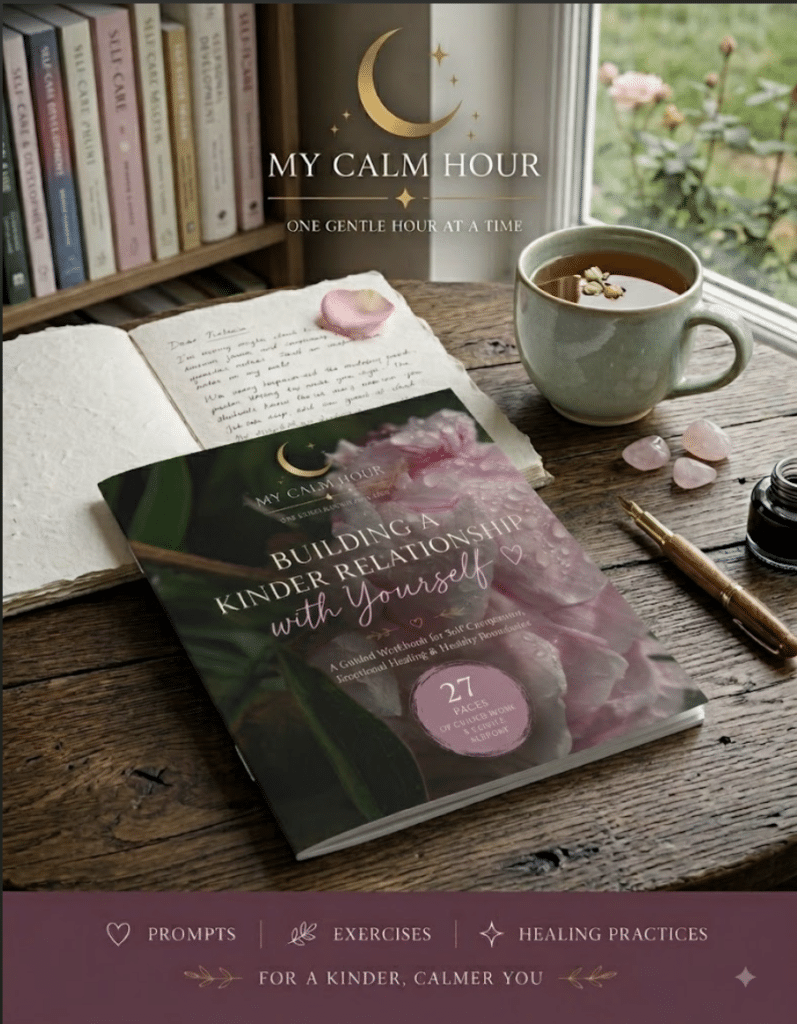
If you are ready to give yourself permission to pause, the “Building a Kinder Relationship with Yourself” Guided Workbook by My Calm Hour gives you the exact tools to release productivity guilt—one gentle page at a time.
1. The Problem: The “Productivity Trap” and Rest Guilt
Sometimes exhaustion isn’t what makes resting difficult—guilt does.
When your worth becomes tied entirely to productivity, taking a break triggers a cycle of anxiety and shame. You sit down, but your mind stays trapped in fight-or-flight mode, whispering: “You’ve wasted enough time already.”
💡 How Module 2 of the Workbook Solves This:
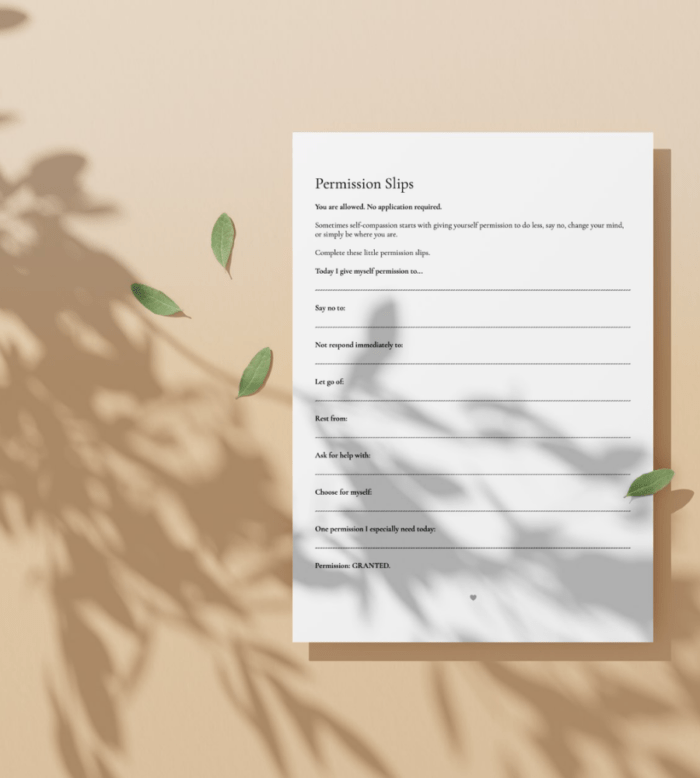
Instead of giving you another rigid routine, Module 2 of the Workbook starts with Permission Slips.
Through practical prompts, the workbook gives you explicit permission to:
- Say “no” to non-essential demands without guilt.
- Rest before reaching complete emotional burnout.
- Leave tasks unfinished without viewing yourself as a failure.
2. The Solution: Reconnecting with What Your Body Actually Needs
Many people only notice stress when their energy is completely depleted. Research shows that developing self-compassion helps break the cycle of emotional overwhelm by replacing self-punishment with supportive self-care (Neff, 2023).
💡 Core Workbook Exercises to Heal Your Relationship with Rest:
| Your Challenge | What You Gain from the Workbook |
| Ignoring Physical Exhaustion | Body & Emotion Check-In: Use somatic prompts to identify whether your body needs quiet, movement, fresh air, or less stimulation. |
| Harsh Internal Commentary | The Healing Letter Exercise: Write to yourself with the same empathy and warmth you would offer a loved one going through a hard time. |
| Fear of Falling Behind | Weekly Compassion Tracker: Notice small moments of self-kindness and track your progress without passing or failing. |
If this article resonated with you…
You deserve to be kinder to yourself.
The Building a Kinder Relationship with Yourself workbook offers gentle prompts, practical exercises and healing practices to help you quiet self-criticism, build self-compassion and reconnect with yourself.
3. Why This Guided Workbook Works for Real Life
- No Performance, No Passing, No Failing: Designed for real, messy days. You can skip pages, take breaks, or write unfinished sentences.
- Practical Emergency Layout: Includes a step-by-step “Hard Day Plan” for moments when everything feels like too much.
- Instant Digital Access: Downloadable PDF you can print out, bind, or use directly on tablet apps like GoodNotes or Notability.
🌿 Give Yourself Permission to Pause Today
Rest is not something you unlock—it is something you require. Stop abandoning yourself in the process of trying to be “productive.”
👉 Get your copy of the “Building a Kinder Relationship with Yourself” Workbook on Etsy today!
👉 Explore more tools and gentle self-care practices at www.mycalmhour.com
Research & References
- Neff, K. D. (2023). Self-Compassion: Theory, Method, and Research. Annual Review of Psychology, 74, 193–218. (Research proving self-compassion supports emotional resilience and reduces stress without lowering motivation).
- Gilbert, P. (2014). The origins and nature of Compassion Focused Therapy. Clinical Psychology & Psychotherapy.
🌿 Keep Exploring Your Healing Journey
Learning to rest without guilt is deeply connected to how we speak to ourselves every day. Continue reading our gentle guides:
- Why Your Inner Critic Is Making You More Anxious — Discover the psychological roots of harsh self-talk and how to turn criticism into supportive self-compassion.
- How to Stop Beating Yourself Up After a Mistake — Learn how to stop replaying past regrets and treat yourself with kindness when things don’t go as planned.