What Happens in Your Brain During Evening Cravings?
By the time evening arrives, many people are not just hungry. They are mentally spent, emotionally thin-skinned, and quietly desperate for relief. If you have ever wondered, “What Happens in Your Brain During Evening Cravings?” the answer has very little to do with a lack of willpower and a great deal to do with stress, habit, and the brain’s deep need for comfort and safety.
That matters, because shame tends to rush in where understanding is missing. You tell yourself you should have more discipline, more control, more motivation. But evening cravings often begin long before you open the pantry. They build across the day in your nervous system, in your stress load, and in the quiet ways your brain learns what helps you finally exhale.
What happens in your brain during evening cravings?
Your brain is always trying to solve one central problem: how to help you feel safe enough to keep going. During the day, especially if you are juggling work, caregiving, emotional labor, decision-making, or simply being “on” for too many hours, your system uses a lot of energy to stay regulated.
By evening, the parts of the brain involved in planning, pausing, and self-monitoring are often more tired. At the same time, the more emotionally driven and reward-seeking parts of the brain become louder. This does not mean you lose control completely. It means the balance shifts.
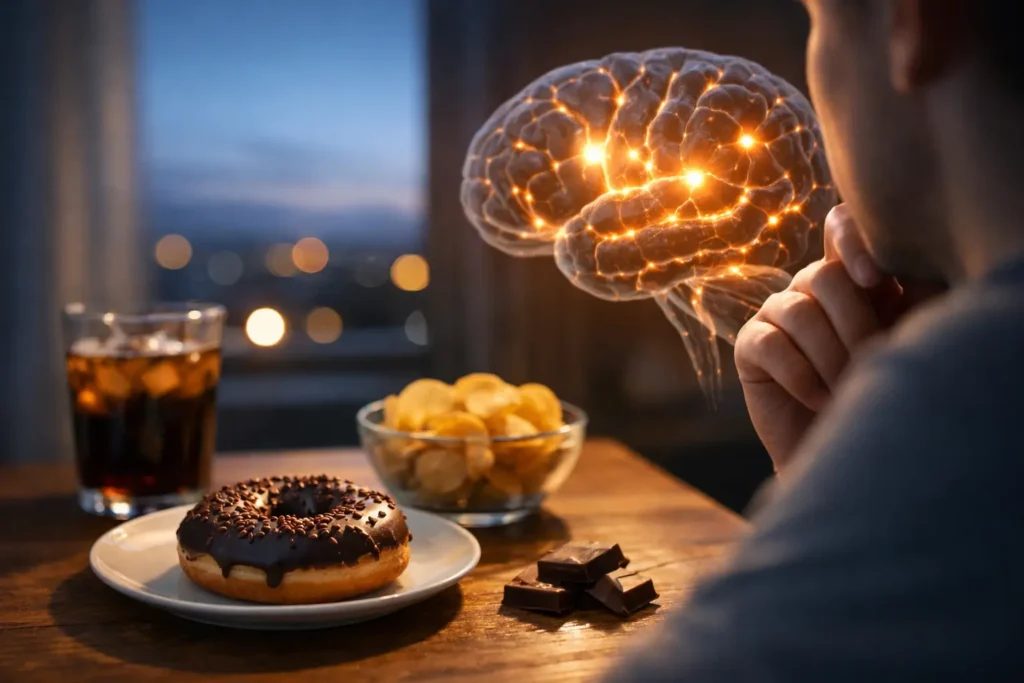
The prefrontal cortex, which helps with thoughtful choices and impulse control, tends to work less efficiently when you are stressed, underslept, or overwhelmed. Meanwhile, brain reward circuits become more responsive to the idea of quick comfort. Foods that are sweet, salty, crunchy, or familiar can start to feel less like a preference and more like a promise: relief is here.
That is one reason nighttime eating can feel so automatic. Your brain is not simply asking, “What sounds good?” It may be asking, “What will help me come down from this day?”
Stress changes how reward feels at night
Evening cravings are often stronger after hard days, and that is not random. Stress shifts brain chemistry in ways that make fast relief feel more compelling.
When stress hormones stay elevated for hours, your body and brain begin to crave regulation. Food can become one of the quickest available ways to create a temporary sense of reward or soothing. This is especially true if eating in the evening has helped you emotionally decompress in the past.
Over time, your brain starts linking certain foods, certain times, and certain emotional states together. The moment you sit down on the couch, finish cleaning the kitchen, or finally stop answering messages, your brain may anticipate relief before you even consciously decide to eat.
This is not you being weak. It is associative learning. The brain loves efficiency. If something helped you feel calmer before, even briefly, it remembers.
There is also an emotional layer here. Many people spend the day overriding their own needs. Evening may be the first moment the body gets a chance to speak up. Cravings can then carry more than physical hunger. They can hold loneliness, depletion, resentment, overstimulation, and the need to be comforted.
Why cravings often feel stronger after dinner
A lot of people feel confused by this: they have eaten enough, yet the urge to keep eating grows once the day is winding down. That can happen for several reasons at once.
First, the brain often expects a reward at the end of effort. If your days feel demanding, evening can become symbolically loaded. It is the part of the day that says, “Now I get something for me.” Food easily slides into that role because it is immediate, familiar, and socially normal.
Second, fatigue reduces emotional resilience. When you are tired, it becomes harder to tolerate uncomfortable feelings or delay gratification. The same urge you could brush off at 10 a.m. may feel much more intense at 9 p.m.
Third, quiet itself can trigger cravings. During the day, busyness can drown out emotional static. At night, when everything slows down, feelings have room to surface. The brain then reaches for whatever has reliably softened that inner noise before.
Sometimes this is why evening cravings feel so confusing. The craving is real, but it may not be about food alone. It may be about transition. It may be about relief. It may be about finally wanting to feel held after holding everything together.
The habit loop your brain builds around comfort
If evening eating has become a repeated pattern, your brain may have built a strong habit loop around it. Habit loops are not signs of failure. They are the brain’s way of conserving effort.
A cue appears – maybe stress, boredom, loneliness, finishing work, or sitting in a certain chair. The routine follows – reaching for something comforting. Then comes the reward – pleasure, numbing, relief, distraction, or a feeling of being cared for.
The more often that loop repeats, the more efficient it becomes. Eventually, cravings can begin before the food even appears because the brain is predicting the reward.
This is also why trying to “just use willpower” often feels exhausting. You are not only resisting food. You are interrupting a learned regulation strategy. If that strategy is removed without anything supportive replacing it, your nervous system may push back harder.
That is why gentle change works better than force. The goal is not to rip away comfort. The goal is to widen your options for comfort.
Your nervous system may be asking for soothing, not discipline
Many evening cravings are better understood through the nervous system than through self-control. When your body has spent the day in tension, urgency, or emotional suppression, it naturally seeks something settling.
Food can do that temporarily. The act of chewing, the sensory pleasure, the predictability, and the pause from thinking can all create a short-lived sense of regulation. For some people, eating in the evening is one of the only moments they truly stop.
This is why punishment rarely helps. If the craving is partly driven by nervous system overload, adding self-criticism only increases the stress your brain is already trying to escape.
You are not broken. Your brain is responding to patterns, pressure, and learned relief. That does not mean the pattern feels good. It simply means it makes sense.
How to respond when evening cravings hit
The most helpful first step is not asking, “How do I stop this?” but asking, “What is my brain and body asking for right now?” That question creates space. It turns a battle into a conversation.
Sometimes you are hungry, and eating is the kind response. Sometimes you need sensory comfort, emotional release, rest, or a softer transition out of the day. Often it is a mix.
When you notice a craving, try slowing the moment down just slightly. Not to deny yourself, but to gather information. You might ask yourself whether you are physically hungry, emotionally overloaded, lonely, under-stimulated, or simply worn out. Even naming the state can reduce some of the urgency.
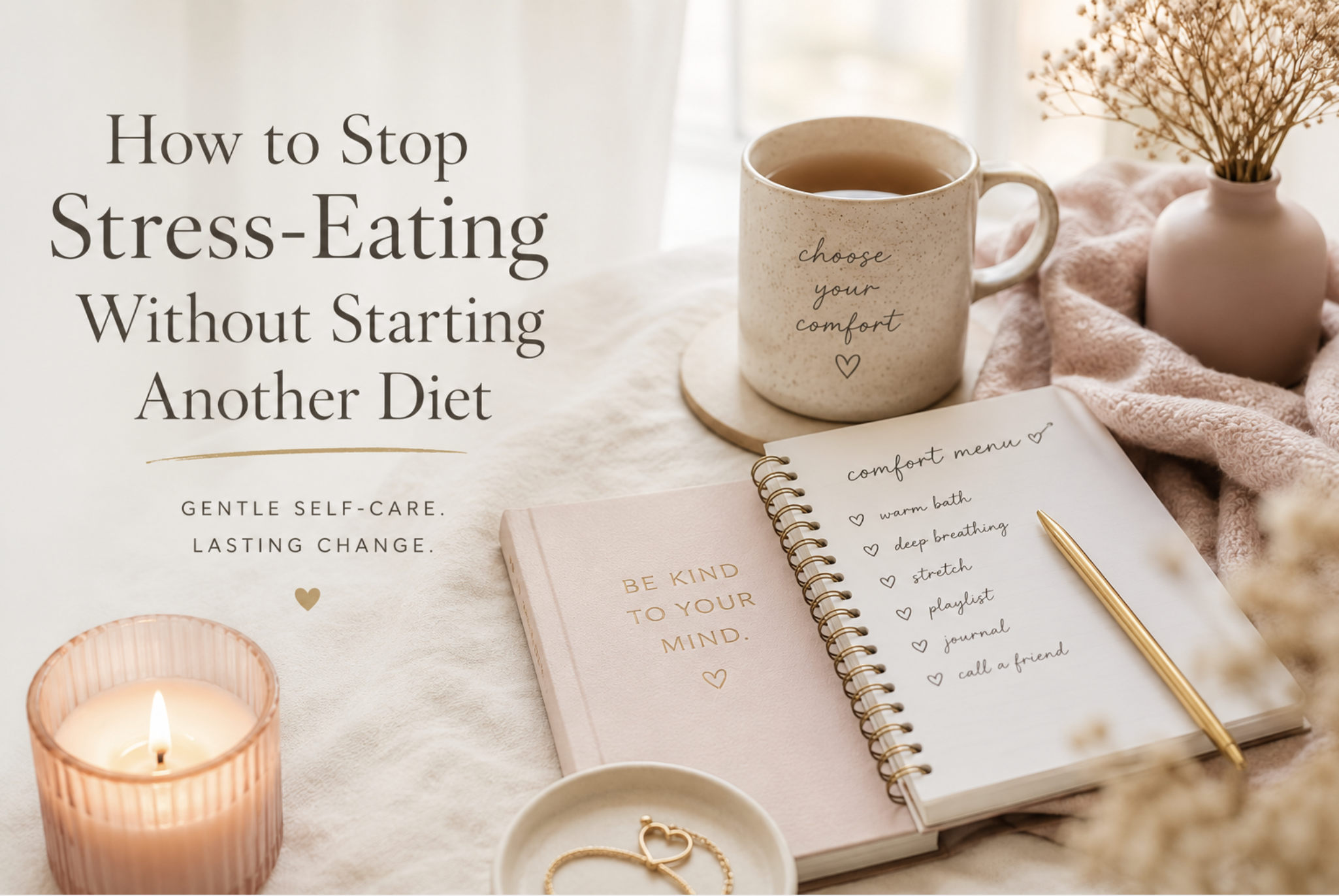
Then offer one small regulating action before or alongside food. This could be making tea, dimming the lights, stepping away from your phone, wrapping up in a blanket, taking five slow breaths, or sitting with a hand on your chest for one minute. These are not magic tricks. They are ways of telling the brain, “Relief is available here too.”
If you still want the food afterward, that is okay. The practice is not about earning permission. It is about helping your brain experience more than one path to comfort.
Building a calmer evening brain over time
Brains change through repetition, not criticism. The more often you pair your evenings with gentle regulation, the less your system has to rely on food as the only off-switch.
That might mean creating a consistent wind-down ritual that starts before cravings peak. A calmer evening brain often begins with earlier signals of safety: softer lighting, less stimulation, a predictable snack or meal rhythm, music that helps your body unclench, a brief journal check-in, or simply ten minutes where no one needs anything from you.
This is where My Calm Hour’s approach feels so different from harsh behavior-change advice. Instead of treating cravings like an enemy, it treats them like information. The craving is not proof that you failed. It is often a message that your system needs care.
Some nights, the old pattern will still happen. That does not erase your progress. It means you are human, and your brain is still learning. Real change usually looks less like a clean break and more like growing awareness, gentler pauses, and a little more choice than you had before.
The next time evening cravings arrive, you do not have to meet them with fear. You can meet them with curiosity. Somewhere underneath the urge, your brain may be asking for comfort, reward, rest, or safety. And one gentle hour at a time, you can begin to answer that need with more compassion.