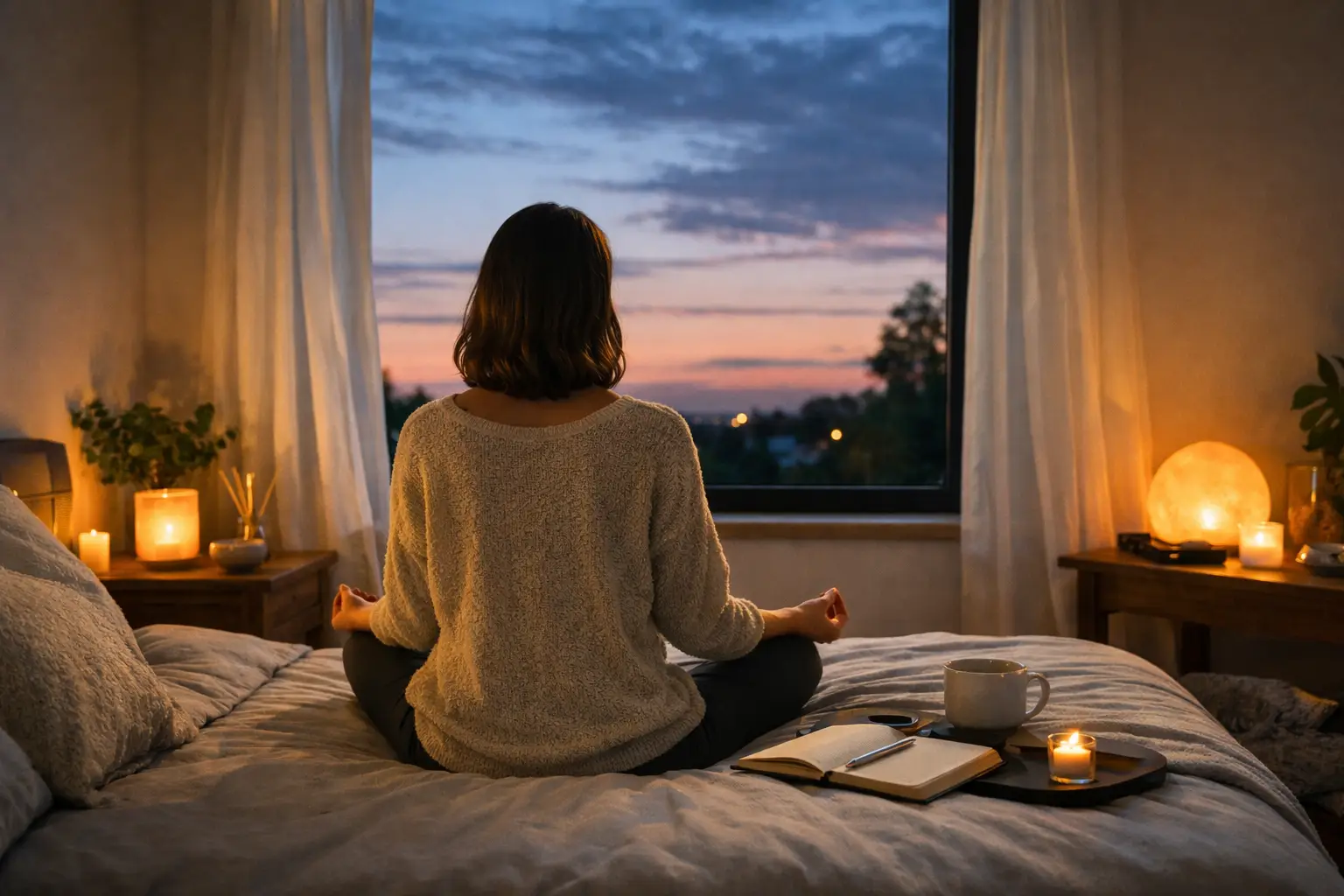
A Gentle Guide to Nervous System Regulation

The moment you finally sit down at night, the urge to eat can feel almost immediate. Maybe you are not physically hungry, or maybe you are unsure. You simply want something sweet, salty, warm, crunchy, or comforting.
This guide to nervous system regulation begins with a different question than “How do I stop?”:
🌱 “What has my body been carrying all day?”
You are not broken for wanting relief. When your day has been full of rushing, caring, working, worrying, or holding yourself together, food can become a fast and familiar way to soften the edges.
Nervous system regulation is not about becoming perfectly calm or removing every craving. It is about helping your body experience enough safety that comfort does not have to come from one place alone.
What Nervous System Regulation Really Means
Your nervous system is constantly taking in information from inside and around you. A difficult email, a noisy room, an unfinished task, loneliness after a long day, or the pressure to keep going can all register as stress.
Your body may respond by becoming activated:
- Your thoughts race
- Your shoulders tighten
- You feel restless
- You struggle to settle, even when nothing urgent is happening
Daily Stress / Pressure ──► High Nervous System Activation ──► Urge to Eat (Fast Comfort)
Regulation is the gentle process of noticing that activation and offering your body cues of safety, connection, rest, or release.
It does not mean you will never feel stressed. A regulated nervous system is flexible, not permanently peaceful. It can move through challenge and gradually return to a steadier place.
Why This Matters in the Evening
Many people spend the day functioning purely on momentum. There may be little room to feel frustration, fatigue, or need. When the house is quieter and expectations finally ease, those feelings can arrive all at once. Reaching for food may be your system’s learned way of saying:
“I need care right now.”
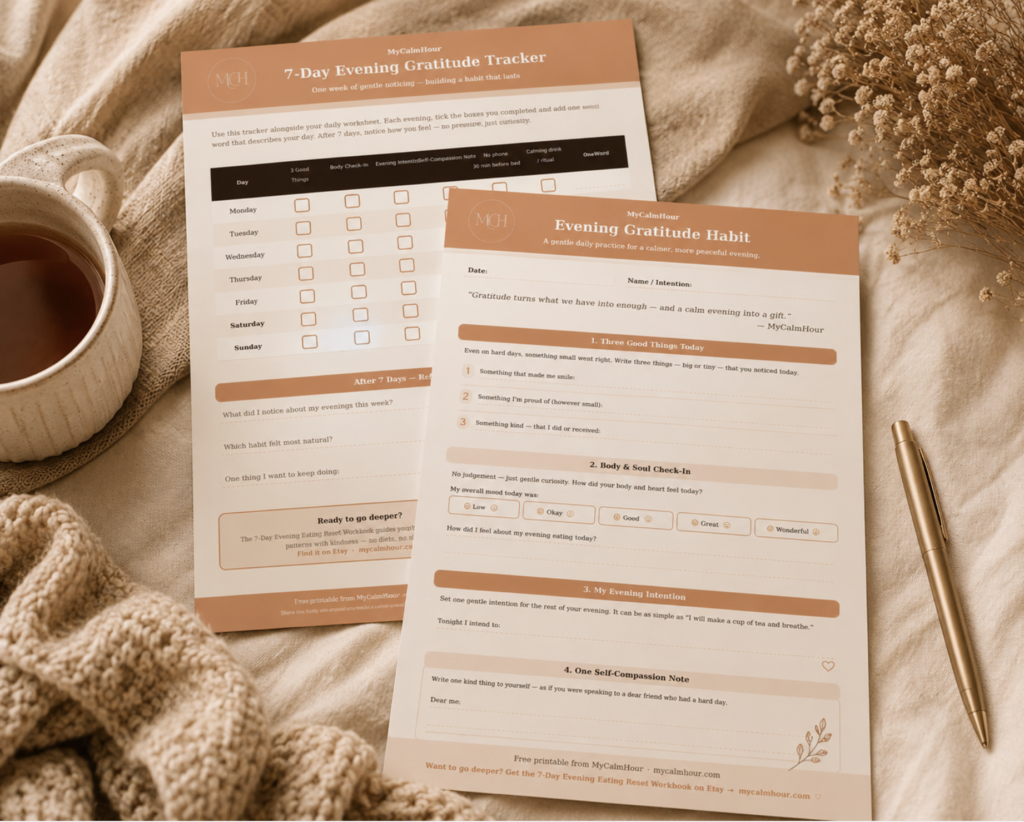
If this article resonated with you …
End your day with a little more kindness.
7-Day Evening Gratitude Tracker – build a simple evening habit that helps you slow down, reflect and finish the day with greater calm.
Why Stress Makes Evening Eating Feel So Urgent
When you are depleted, your brain naturally prefers what is immediate, familiar, and soothing. Food offers sensory sensation, routine, and a brief pause from thinking. There is nothing irrational about that response—it may have helped you get through many hard evenings.
This is why trying to argue with yourself at 9 p.m. feels exhausting:
❌ Your body is not asking for a better rule or a test of willpower.
✅ It is asking for a transition out of a high-alert day.
Sometimes a snack is part of that answer. Sometimes the craving softens when your body receives another form of comfort first. Often, it is a little of both.
A Practical Guide to Regulation for Real Evenings
The most supportive practices are usually the ones small enough to repeat. You do not need a long routine or special equipment. Think of these as brief signals to your body that the day is changing and you are allowed to rest.
1. Start with a Pause That Demands Nothing
When you notice the pull toward the kitchen, pause for ten seconds. Place one hand on your chest or stomach, and let your exhale be slightly longer than your inhale.
Ask yourself: “What is here right now?”
You might notice physical hunger, but you might also notice pressure behind your eyes, irritation, emptiness, or loneliness. Naming the feeling reduces the sense that the urge is an absolute command.
You can still choose to eat. The pause is not meant to take food away—it simply gives you a chance to include yourself in the decision.
2. Create a Small “Landing Ritual”
A simple after-work or after-dinner ritual helps mark the boundary between doing and resting. Choose one or two easy actions:
- Changing into soft clothes
- Washing your face with warm water
- Stepping outside for two minutes
- Making a warm tea or lowering the lights
- Listening to one familiar song
If your evenings are busy with caregiving or shift work, your ritual can be very small. Standing at the sink with your hands under warm water while taking three unhurried breaths still counts.
3. Match Your Practice to Your State
| How your body feels | What your nervous system might need | Simple action |
| Anxious & Restless | Gentle Movement / Energy Release | Stretch overhead, shake out your hands, or sway while the kettle boils. |
| Overstimulated & Scattered | Less Input / Soft Boundaries | Dim the lights, turn off background noise, or step away from screens. |
| Numb or Lonely | Warmth & Connection | Hold a warm mug, wrap up in a heavy blanket, or send a voice note to a friend. |
4. Add Comfort Before You Need It Desperately
Many evening cravings become louder because comfort has been postponed for too long. At My Calm Hour, we advocate for building one reliable source of comfort into your evening before the craving peaks:
- A warm shower
- Ten minutes with a favorite novel
- Writing freely in a journal
- Sitting quietly with a heating pad
The goal is to widen your options. A warm drink, a satisfying snack, and five quiet minutes under a blanket can all belong in the same caring evening.
What If Regulation Doesn’t Feel Calming Right Away?
If that happens, make the practice simpler and look outward:
- Look around the room and name five neutral things you see.
- Feel your feet pressing firmly into the floor.
- Hold something cool or warm in your hands.
Regulation is not always about going inward. Safety can begin with ordinary, grounding details around you.
A Gentler Response After an Eating Episode
If you have already eaten in a way that feels uncomfortable, harsh self-criticism will only keep your nervous system activated—making relief feel even more necessary tomorrow night.
Instead, try a compassionate review:
- What happened before the urge arrived?
- Was I overtired, lonely, rushed, or under pressure?
- What helped tonight, even slightly?
- What might make tomorrow evening feel 1% softer?
This is about learning your patterns with kindness, not finding fault.
Moving Forward Tonight
Choose one simple signal of safety that feels possible right now:
- Dim bright overhead lights
- Take three slower breaths
- Eat something with your full presence
- Put a hand over your heart and say: “I have had a lot to carry today.”
You do not have to transform your evenings all at once. You can build a calmer relationship with yourself, one gentle hour at a time.