How Sensory Overload in the Kitchen Triggers Late-Night Cortisol Spikes
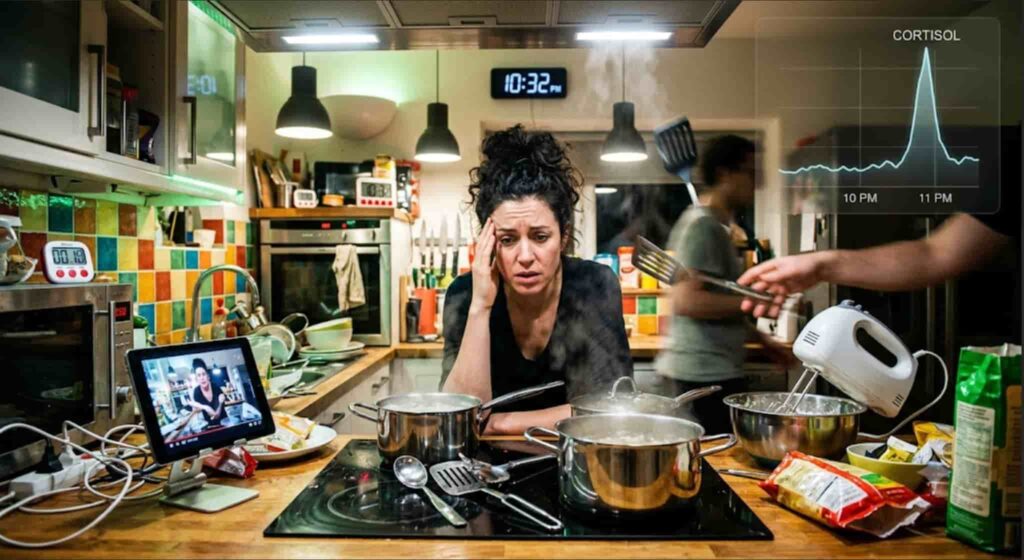
You walk into the kitchen at 9 PM to get a simple glass of water. The harsh overhead LED lights flicker on, dishes are stacked in the sink, the refrigerator hums loudly, and an unread notification lights up your phone on the counter.
Within seconds, an unexpected wave of restlessness sweeps over you. Suddenly, you aren’t just getting water—you’re opening cabinets, searching for chips, chocolate, or anything comforting.
What feels like a sudden lack of willpower is often a biological reflex. The modern kitchen is frequently the most sensory-intense room in the home. When an already exhausted brain meets high visual and auditory input late at night, your body registers it as a micro-crisis, triggering a subtle cortisol spike that drives you straight toward quick relief.
“Late-night cravings aren’t always about an empty stomach. Often, they are your brain’s attempt to self-soothe in a room that is simply too loud and too bright.”
The Biological Cascade: Sensory Input to Cortisol
Cortisol is your body’s primary stress hormone. It is designed to rise in the morning to help you wake up and gradually taper off as the sun sets.
However, your nervous system cannot distinguish between a real threat and modern sensory overload. When you enter a high-stimulation kitchen late at night, a quick biological chain reaction occurs:
- Visual Alarm: Bright, cool-spectrum overhead lights hit your retinas, signaling to your brain that it is still midday. Cortisol production surges to keep you alert.
- Cognitive Overload: Messy counters, unfinished chores, and bright packaging force your brain to process dozens of visual tasks when its energy is already depleted.
- The Craving Trigger: High cortisol alters your brain chemistry, suppressing long-term reasoning and ramping up your appetite for fast, high-dopamine foods (carbohydrates, sugar, and fats) to cope with the perceived stress.

If this article resonated with you…
Your triggers are trying to tell you something.
The Understanding My Triggers Journal gently guides you through 30 days of reflection to help you recognise emotional patterns, understand your triggers and respond with greater self-compassion.
High-Stimulation vs. Low-Stimulation Kitchen Environments
Small adjustments to the sensory landscape of your kitchen can dramatically lower your evening stress response.
| Sensory Element | High-Stimulation (Spikes Cortisol) | Low-Stimulation (Protects Rest) |
| Lighting | Glaring overhead LEDs, under-cabinet fluorescent strips | Soft counter lamp, warm nightlight, or candlelight |
| Sounds | Blaring TV in background, loud appliances, phone chimes | Low acoustic music, quiet hum, or gentle silence |
| Visuals | Cluttered countertops, open mail, dirty dishes in view | Cleared central surface, hidden clutter, soft neutral tones |
| Pantry Setup | Bright, chaotic packaging on open display | Foods stored in simple containers or behind closed doors |
How to Create a “Sensory-Safe” Evening Kitchen
You don’t need a full kitchen renovation to protect your nervous system. Transforming your space into a calmer environment is about creating soft physical boundaries.
Bright Lights + Visual Clutter = High Cortisol → Instant Cravings
Warm Lighting + Clear Space = Low Cortisol → Natural Unwinding
1. The “Kitchen Sunset” Rule
At 8 PM, turn off the main overhead kitchen lights. Place a small, warm-toned lamp (with an amber bulb) on the counter or use a soft nightlight. Entering a dimly lit kitchen signals to your brain that the day is over, keeping cortisol low.
2. Practice Visual Closure Before Rest
Clear just one small surface—like the island or the spot right next to the kettle. You don’t have to deep-clean the entire kitchen every night. Giving your eyes one clear, uncluttered landing space stops the brain from launching into task-mode.
3. Step In with Intention
If you go into the kitchen for a late-night snack, do it in the soft light. Pour the food onto a real plate, sit down away from the counter, and eat without the glare of harsh lighting. When you reduce sensory chaos, you can actually tune in to whether your body is physically hungry or simply seeking sensory rest.
A Gentle Reminder for Tonight
If you find yourself standing in the kitchen late at night feeling agitated and reaching into the pantry, pause for a moment.
Look around. Is the overhead light blazing? Is there noise buzzing around you?