How to Regulate Nighttime Cortisol Gently

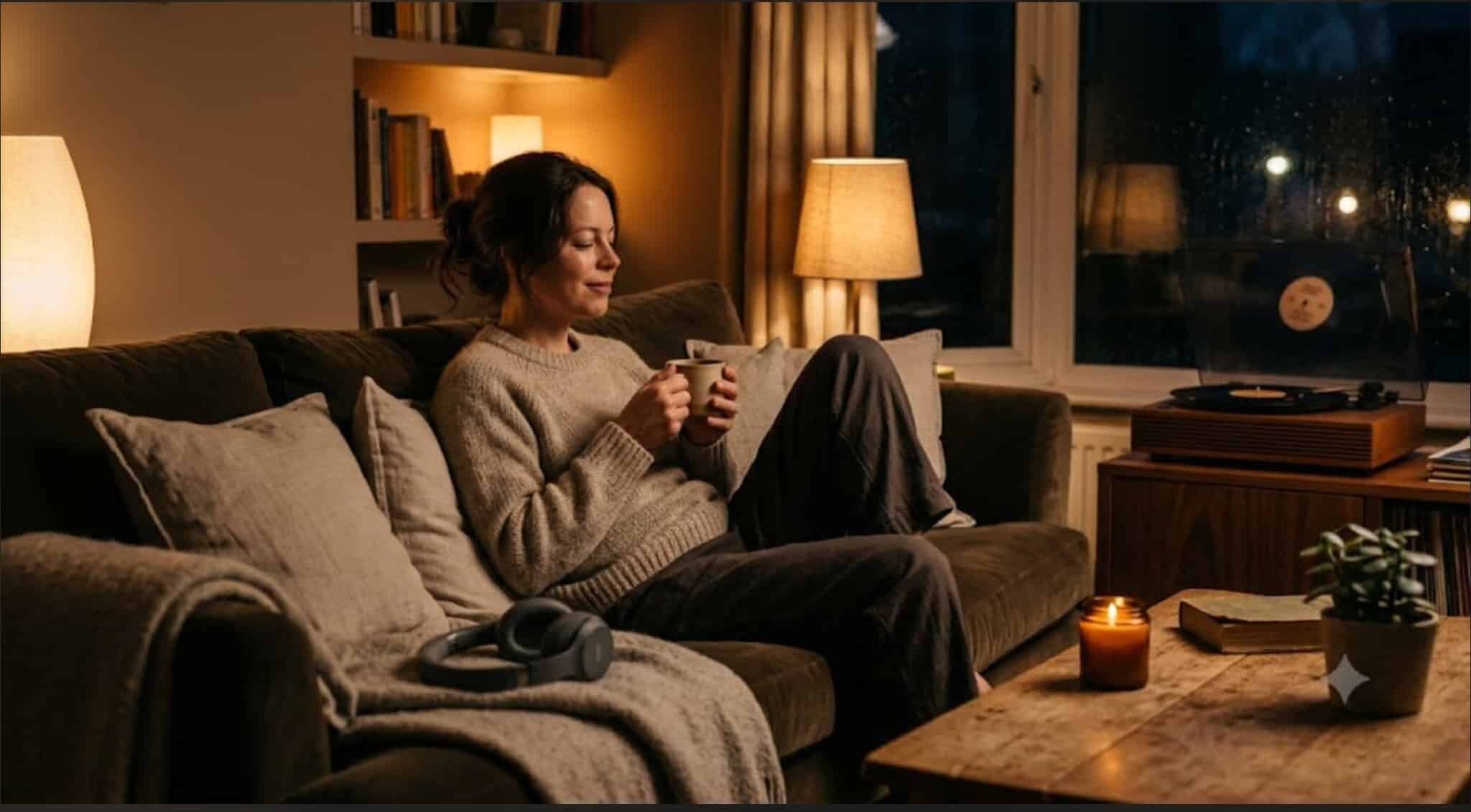
At 9:30 p.m., the house may finally be quiet, yet your mind is still replaying conversations, unfinished tasks, and everything tomorrow requires. If you are wondering how to regulate nighttime cortisol, start here: your body is not failing you. It may simply be carrying the momentum of a demanding day and looking for a signal that it is safe to stand down.
Cortisol is often described as the stress hormone, but it is also part of your natural daily rhythm. It helps you wake up, respond to challenges, and stay alert when you need to be. The difficulty comes when your system remains in high-alert mode long after the stressful moment has passed. That lingering activation can make rest feel far away, intensify the urge to snack for comfort, or leave you tired but strangely wired.
You do not need to create a perfect evening. A few repeated signals of safety can help your nervous system recognize that the day is ending, one gentle hour at a time.
What nighttime cortisol can feel like
A busy evening does not automatically mean cortisol is the problem. Sleep can be affected by many things, including schedules, grief, caregiving, hormones, medication, illness, and the ordinary unpredictability of life. Still, a nervous system that has spent all day bracing often has a recognizable feeling.
You might notice that you become restless the moment you sit down. You may feel an urgent pull toward sweets, salty snacks, scrolling, or another glass of wine, even when what you really want is relief. Perhaps you are exhausted but suddenly motivated to answer emails, clean the kitchen, or solve a problem that can wait until morning.
These are not character flaws. They can be attempts to manage an overloaded system. Food may offer a brief sense of grounding, pleasure, or pause. Rather than treating the craving as something to defeat, it can help to ask what your body has not yet received: nourishment, rest, comfort, connection, or a chance to release the day.
How to regulate nighttime cortisol by ending the day slowly
Your body learns through repetition more than intention. Saying, “I should relax,” rarely works when your shoulders are tight and your thoughts are racing. A transition ritual works better because it gives your senses evidence that the pace is changing.
Start with one clear boundary between daytime and evening. It could be changing out of work clothes, dimming a lamp, taking a warm shower, or stepping outside for two minutes of fresh air. The ritual itself does not need to be elaborate. What matters is that it happens often enough for your brain to begin associating it with release.
Light is one of the strongest cues your body uses to understand time. Bright overhead lights and close-up screens can keep the evening feeling more like daytime, especially when you have been working late. You do not have to make your home dark at sunset. Try softening the environment where you can: use a lamp instead of the brightest room light, lower screen brightness, or place your phone farther away while you make tea.
The goal is not to control every input. It is to make the last part of your day feel noticeably different from the first.
Give your body a physical cue of safety
Stress is not only a thought pattern. It is also held in the body through a quickened breath, clenched jaw, shallow chest breathing, or a stomach that never quite relaxes. Before asking your mind to become calm, offer your body a small experience of settling.
Try placing both feet on the floor and letting your exhale run a little longer than your inhale for one or two minutes. There is no need to force a deep breath. Gentle, easy breathing is enough. You might place a hand over your chest or abdomen and notice the support beneath you.
Some people feel calmer with stillness; others need movement first. A slow walk around the block, a few shoulder rolls, or stretching while the kettle boils may feel more accessible than meditation after a long day. Let your body choose the doorway that feels least demanding.
Do not let hunger and stress become tangled
Nighttime cravings can become louder when your body has been underfed, rushed, or ignored during the day. Emotional comfort and physical hunger can exist at the same time. You do not have to prove that a craving is one or the other before you respond with care.
A satisfying evening meal or snack can be part of a calming routine, particularly if you are genuinely hungry. Sit down if possible. Add something warm, familiar, and enjoyable. Give yourself enough time to notice the first few bites instead of eating while standing at the counter with your mind somewhere else.
Then widen the support around food. If the urge to keep eating remains, pause without judgment and try adding another kind of comfort: a blanket, a hot drink, a voice note to someone safe, music, or five quiet minutes away from the kitchen. This is not about taking food away. It is about making sure food does not have to carry the entire weight of soothing you.
Create a smaller landing zone for your thoughts
Many evenings become activated because the mind finally has room to speak. The thoughts that were held back during meetings, errands, parenting, or caregiving arrive all at once. Trying to banish them can make them louder.
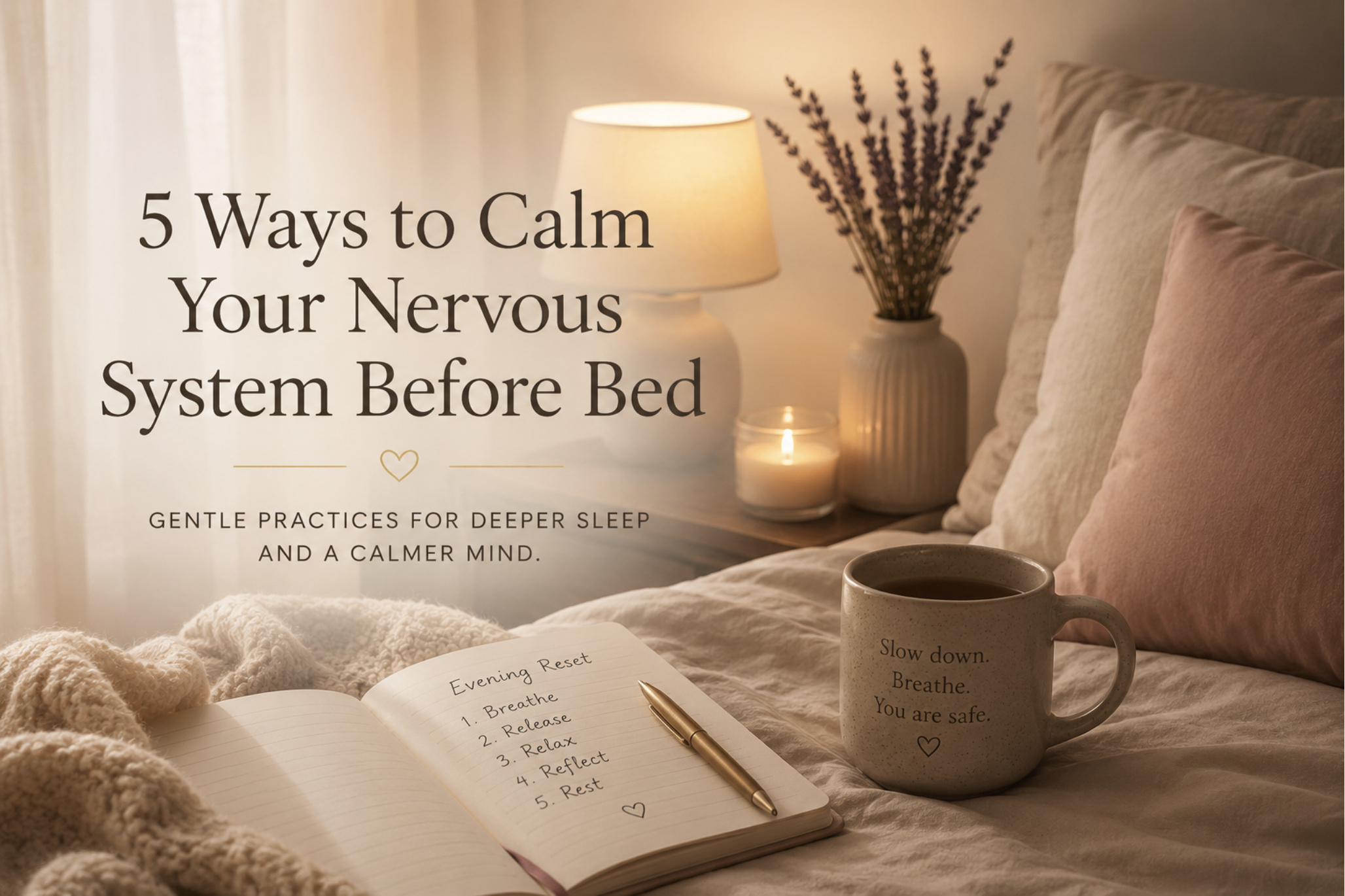
Instead, give them a container. Keep a notebook nearby and write down what is circling: the task you are afraid of forgetting, the conversation that hurt, the thing you wish you had said. You do not need to solve any of it. A simple sentence such as, “This matters, and I can return to it tomorrow,” can interrupt the feeling that every thought must be handled tonight.
If journaling feels like another task, make it smaller. Write three lines: what happened today, what your body needs now, and one thing that can wait. The purpose is not insight or self-improvement. It is permission to stop carrying everything in your head.
Be mindful of late stimulation, without making rules
Caffeine late in the day, alcohol close to bedtime, intense news, conflict-heavy shows, and work messages can all leave some people feeling more activated at night. But bodies differ, and rigid rules often create more pressure than peace.
Notice your own patterns with curiosity. If you routinely feel wired after an evening coffee or an hour of stressful scrolling, experiment with a gentler alternative for a few nights. Choose a comforting show, a paper book, a puzzle, or music that does not ask much of you. Think of this as gathering information about your nervous system, not passing a test.
Let consistency be more valuable than perfection
The most supportive evening routine is usually the one you can do on an ordinary Tuesday, not only on your best day. Maybe that is ten minutes with the lights low, a simple snack, and your phone on the other side of the room. Maybe it is a shower and one page of journaling. Small practices count because they teach your body, over time, that rest is allowed.
There will be nights when cravings are strong, sleep is difficult, or your plans fall apart. Those nights do not erase the care you have practiced. Responding with criticism can keep the stress cycle going. Responding with kindness gives you another chance to settle.
If racing thoughts, severe sleep disruption, or physical symptoms are persistent or concerning, a qualified healthcare professional can help you explore what may be contributing. Support is not a sign that you have done anything wrong.
Tonight, choose one cue that says the day is over: soften one light, take one longer exhale, eat something nourishing without rushing, or write down one thought you do not need to carry into bed. Your body does not need you to be perfect. It needs a few believable reminders that, for this moment, you are safe enough to rest.