Why Stress Eating at Night Feels So Hard

The kitchen is quiet. The messages have stopped, the workday is finally over, and there is no one asking anything more of you. Then comes the pull toward the pantry, the delivery app, or whatever feels comforting and easy. If you experience stress eating at night, you are not weak, lacking discipline, or broken. You may simply be reaching for the fastest form of relief your tired system knows.
Food can offer a brief pause from pressure. It gives your hands something to do, your mind something immediate to focus on, and your body a familiar sensation of comfort. The goal is not to judge that instinct away. It is to understand what your evenings have been asking you to carry, and to slowly create more than one way to feel cared for.
Why Stress Eating at Night Can Feel So Urgent
By evening, most people are not operating with the same emotional resources they had in the morning. You may have made countless small decisions, managed other people’s needs, moved through conflict, rushed between tasks, or held yourself together when you really needed a break. Even a day that looked ordinary from the outside can leave the nervous system braced and depleted.
When the pace finally drops, feelings that had no room to surface can become louder. Loneliness, frustration, resentment, uncertainty, and simple exhaustion often arrive together. Eating can become a transition ritual: a way to mark that the day is over and you no longer have to perform.
There is also a practical piece that deserves kindness, not blame. If meals were rushed, delayed, or unsatisfying earlier in the day, your body may genuinely need nourishment by night. Emotional hunger and physical hunger can coexist. You do not have to prove which one is “real” before you are allowed to care for yourself.
Your brain is looking for relief, not making a moral mistake
Stress shifts attention toward what is immediate, familiar, and rewarding. After a demanding day, planning a soothing alternative can feel like one more task. Food requires little setup and often brings comfort quickly. That does not mean it is your only coping skill. It means this one has become available when you are most tired.
The painful part is often what happens afterward: the inner criticism, the promises to do better tomorrow, the feeling that you have somehow undone your progress. But harshness tends to add more stress to an already stressed system. A gentler question is more useful: What was I needing when I reached for food?
Notice the Moment Before You Eat
You do not need to stop yourself from eating in order to pause. A pause is not a test of control. It is a small opening where you can learn what is happening.
When you feel the urge, try placing both feet on the floor or resting a hand against your chest. Take one slower breath than usual and ask, “What would feel supportive right now?” The answer may be food. It may also be quiet, warmth, permission to stop, a cry, a glass of water, a shower, or ten minutes without anyone needing you.
If you do choose to eat, see whether you can make the moment a little more present. Sit down if possible. Put the food on a plate or in a bowl. Let yourself have it without scrolling through upsetting news or mentally building a case against yourself. This is not about making eating perfect. It is about reducing the sense that you must rush through comfort before someone takes it away.
Over time, this simple check-in can help you spot patterns. Perhaps the urge is strongest after difficult conversations. Perhaps it appears when you work late, skip rest, or feel disconnected from your partner. Patterns are information, not evidence against you.
Build an Evening That Gives You Somewhere to Land
The most sustainable support for stress eating at night often begins before the craving feels overwhelming. Think of your evening as a landing strip rather than a final stretch to push through. Your nervous system needs cues that it can come down from the day.
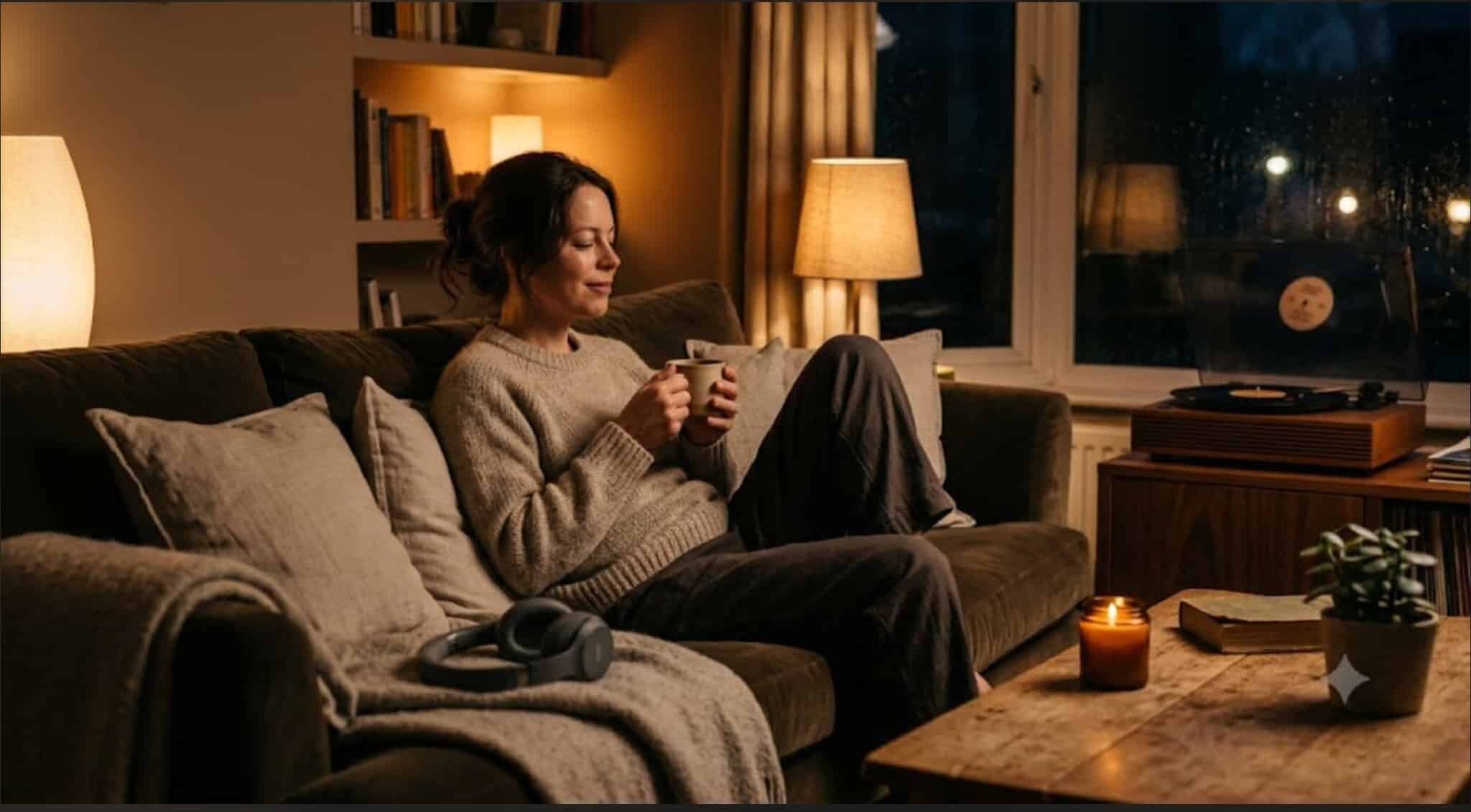
A calming routine does not need to be long or polished to work. It needs to be realistic enough that you will return to it. You might change into comfortable clothes as soon as you get home, make a warm drink, dim one light, or step outside for two minutes of fresh air. These small signals tell your body that the demands of the day are changing.
Choose one ritual that involves the body and one that offers emotional release. The body ritual could be washing your face slowly, stretching your shoulders, or sitting under a blanket. Emotional release might be writing three uncensored sentences in a notebook, listening to one calming song, or saying out loud, “That was a lot.”
This is not meant to replace food with a long list of things you should do. It is meant to widen your options. On some nights, food may still be part of comfort. The difference is that it no longer has to carry the entire job of helping you recover.
Make comfort easier to reach
When you are depleted, convenience matters. Set up comfort in advance where you can see it. Keep a soft blanket on the couch, leave a journal beside your bed, create a short evening playlist, or save a few simple meals and snacks that feel satisfying and easy.
It can also help to make your environment less demanding. Turn off the bright overhead light. Put your phone in another room for fifteen minutes. Let the dishes wait if doing them immediately makes your body tighten. There are trade-offs, of course. Sometimes a small tidy-up genuinely helps you feel settled; other times, rest is the more caring choice. Pay attention to which one leaves you calmer afterward.
When the Urge Feels Bigger Than the Moment
Some evenings bring an intensity that cannot be softened with one cup of tea or a few deep breaths. That is okay. A strong urge may be connected to a hard week, a season of caregiving, grief, work pressure, relationship strain, or old coping patterns that once helped you get through difficult things.
In those moments, try making the goal smaller. Instead of asking yourself to solve nighttime eating forever, offer yourself the next five minutes. You might say, “I can eat if I still want to. First, I am going to sit with myself for five minutes.” During that time, notice the feeling underneath the urge. Is it agitation? Numbness? A need for reward? A wish to be looked after?
Then respond in the kindest workable way. If you are hungry, nourish yourself. If you are overwhelmed, reduce the stimulation around you. If you are lonely, send a low-pressure message to someone safe or listen to a familiar voice. If you feel numb, try a sensory cue such as warm water on your hands or stepping onto the porch.
You do not need to earn comfort by being perfectly calm first. Comfort is often what helps calm become possible.
A Different Way to Speak to Yourself Tomorrow
The morning after stress eating can feel vulnerable. It is tempting to replay the night and decide it means something definitive about you. Instead, try a softer review. Ask what made the evening difficult and what helped, even slightly. Maybe you noticed the urge sooner. Maybe you sat down while eating. Maybe you recognized that you had been holding too much all day.
These are meaningful shifts because they build awareness without turning your life into a project to fix. Change usually comes through many ordinary evenings, not one flawless night. My Calm Hour is built around this idea: you can create more safety and steadiness one gentle hour at a time.