Mindless Snacking vs Emotional Eating at Night
You may be standing at the counter, reaching for something sweet or salty, only to wonder later: was that mindless snacking or emotional eating? The question is not a test you need to pass. It is simply a doorway into understanding what you needed in that moment.
Both experiences are common, especially after a day spent meeting demands, making decisions, caring for other people, and holding yourself together. Food can offer a pause when nothing else has.
Why the Difference Can Feel So Blurry
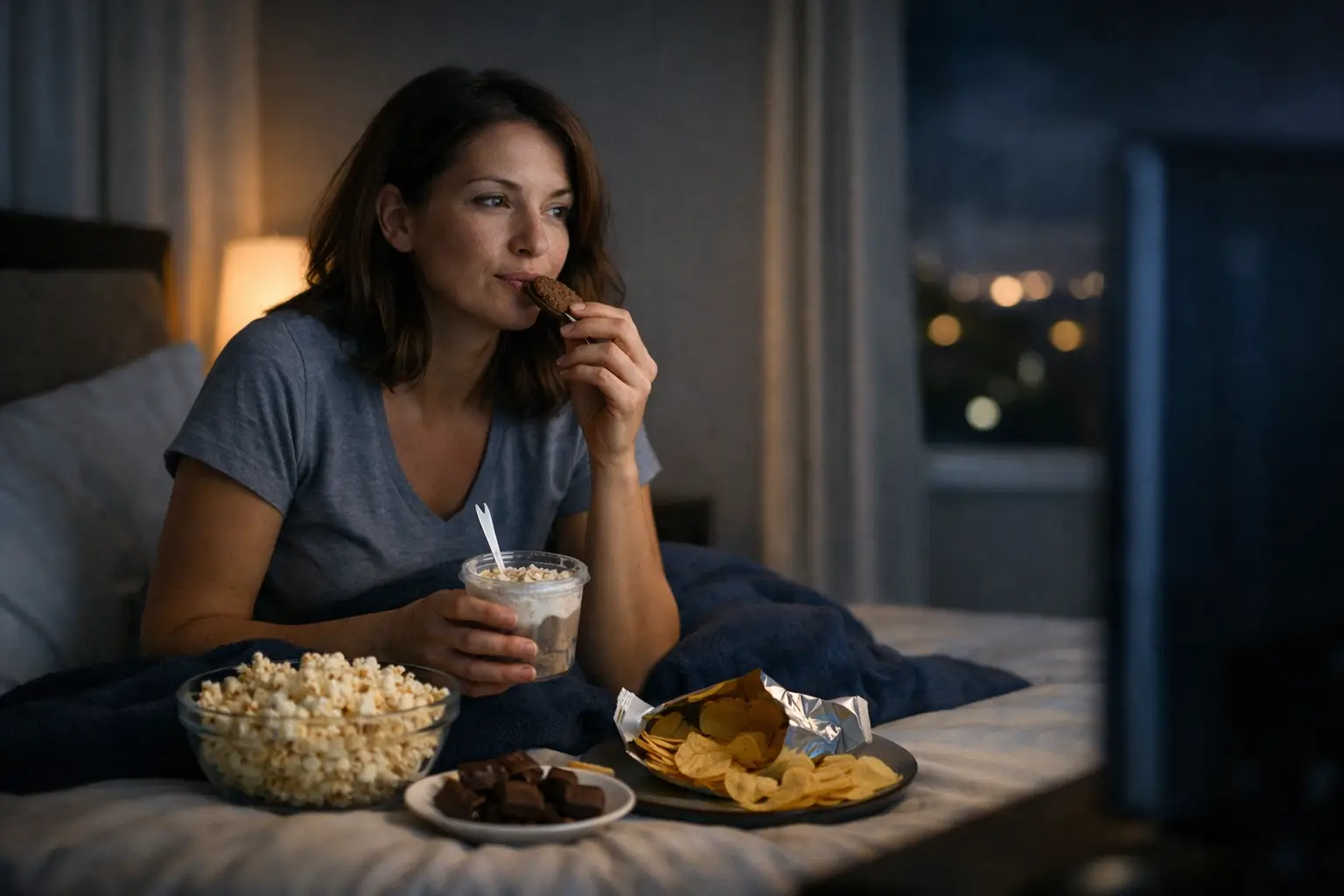
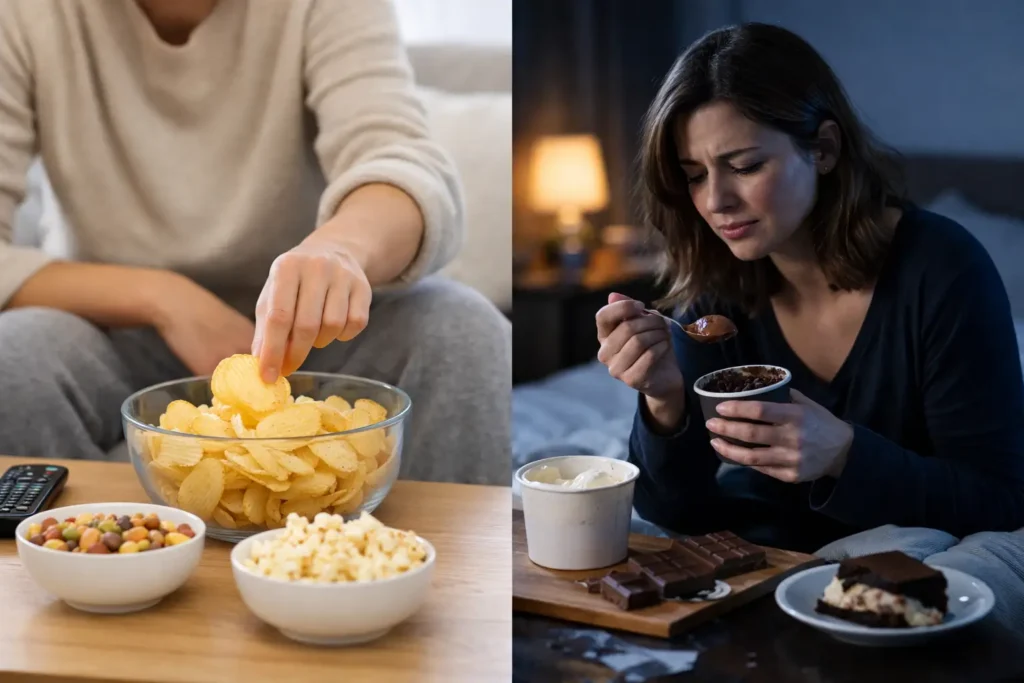
Mindless snacking and emotional eating often happen in the same place, at the same time, with the same foods. Both may show up on the couch after dinner, during a familiar show, or while scrolling through your phone. Both can leave you feeling disconnected from the moment.
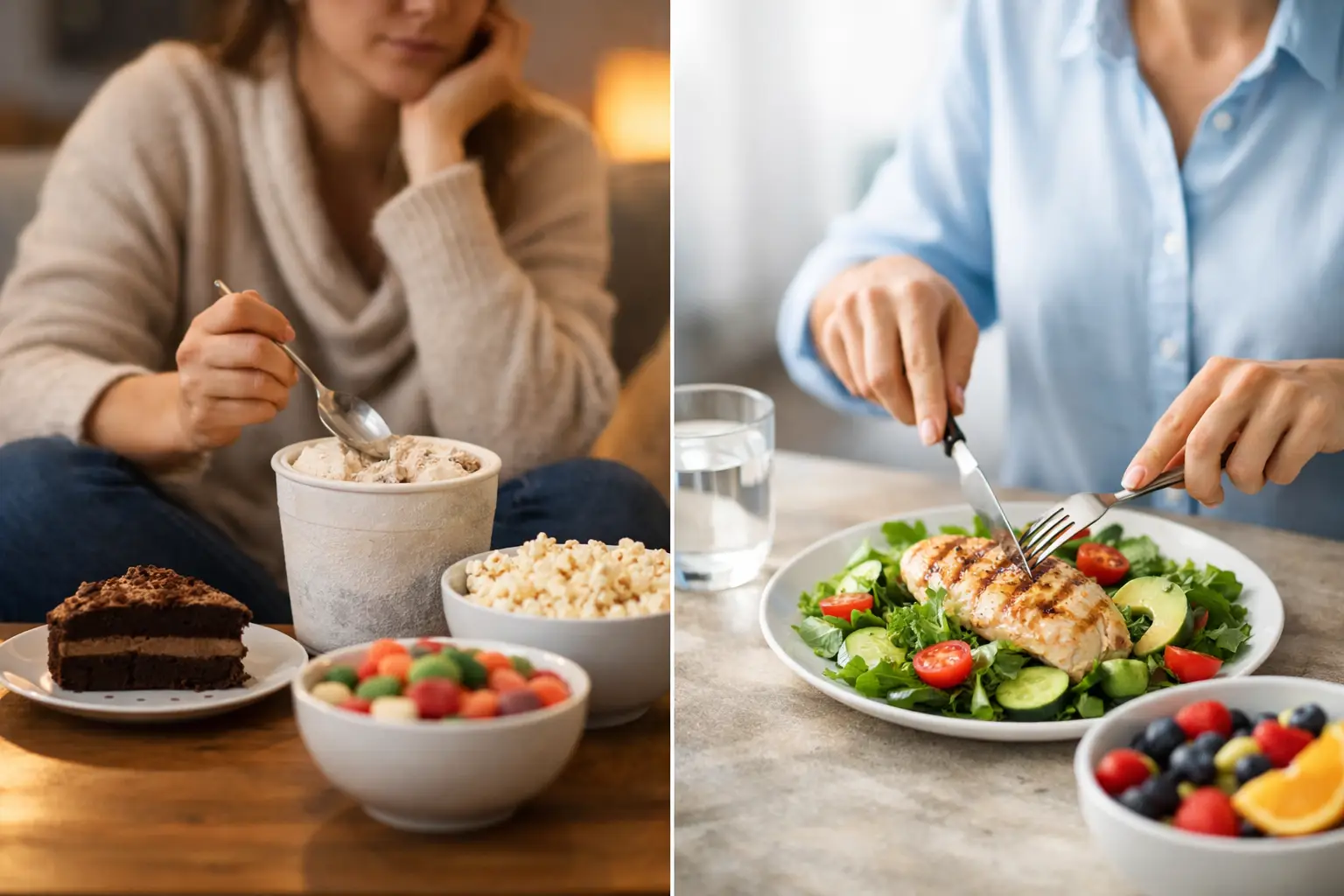
The difference is less about what you eat and more about what is happening around the urge.
Mindless snacking is often driven by attention being elsewhere. Your hand keeps returning to the bowl because the episode is absorbing, the food is nearby, or the action has become part of a well-worn evening routine. You may not feel especially upset. You simply notice that the snack is gone before you really tasted it.
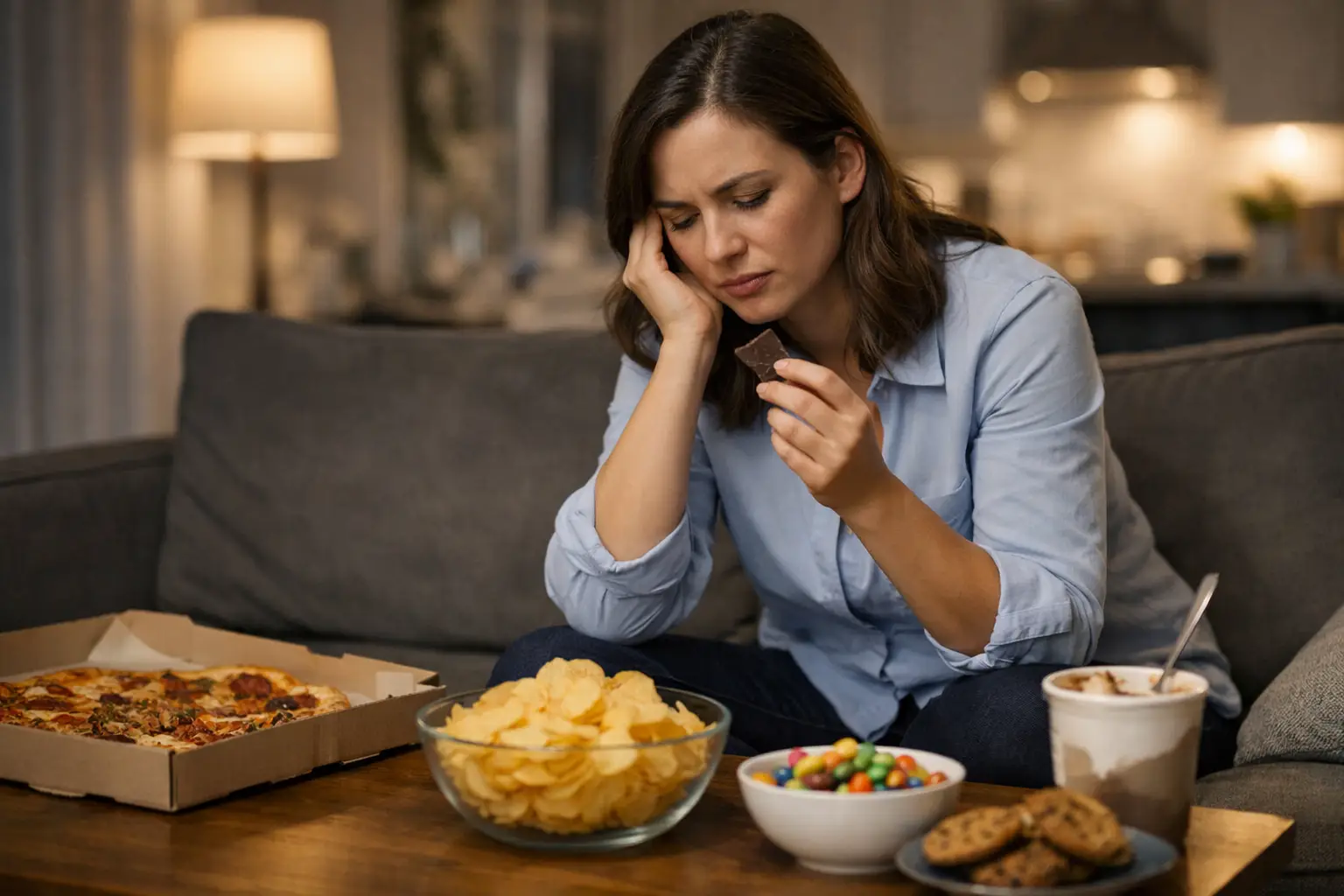
Emotional eating is more often connected to an inner state asking for relief. Perhaps there is a tight feeling in your chest after a difficult conversation. Perhaps loneliness gets louder once the house is still. Perhaps the day was so full that eating is the first moment that feels entirely yours. The food may bring a brief sense of comfort, grounding, reward, or escape.
These categories can overlap. A stressful day may make you more likely to eat while distracted, and a familiar snack ritual may become soothing precisely because it is predictable. You do not need to label every bite perfectly. The value of noticing is that it gives you more choices next time.
Mindless Snacking vs Emotional Eating: Gentle Clues
Try approaching the moment as a curious observer rather than an investigator building a case against yourself. There is no wrong answer.
Mindless snacking may feel automatic. You might realize you have opened the pantry without deciding to, or you may keep eating because the package is open. The urge can be linked to cues: sitting in a particular chair, watching television, cleaning up after dinner, or passing through the kitchen.
Emotional eating may feel more urgent or loaded. There can be a thought underneath it, even if it is quiet: “I need something,” “I deserve a break,” or “I cannot deal with this feeling right now.” Sometimes the craving seems very specific because a particular food has become associated with comfort, celebration, rest, or being cared for.
Neither pattern says anything negative about your character. Your brain is designed to repeat behaviors that bring immediate relief or familiarity. After stress, that pull can become stronger because your system is looking for a signal that the day is over and you are safe enough to soften.
What Your Evening Craving May Be Trying to Do
It can be tempting to treat an evening craving as an enemy to defeat. A kinder approach is to ask what job the craving has taken on.
For some people, it creates a transition. The workday ends, responsibilities loosen their grip, and a snack marks the beginning of personal time. For others, it offers stimulation after a long day of being needed, or comfort after feeling overlooked. It may also help quiet a nervous system that has been braced for.
Food is not the only way to meet these needs, but it may be the most available way you have learned. That makes sense. The goal is not to force yourself to give up comfort. The goal is to slowly widen the ways you can receive it.
A small shift in language can help. Instead of asking, “Why am I doing this again?” try asking, “What has today asked of me?” This question makes room for context. It recognizes that an urge at 9 p.m. often began much earlier, in the meetings, the commute, the caregiving, the unanswered messages, or the pressure to keep going.
Create a Pause That Does Not Feel Like Punishment
A pause is not a rule that says you cannot eat. It is a chance to arrive before you decide what would feel supportive.
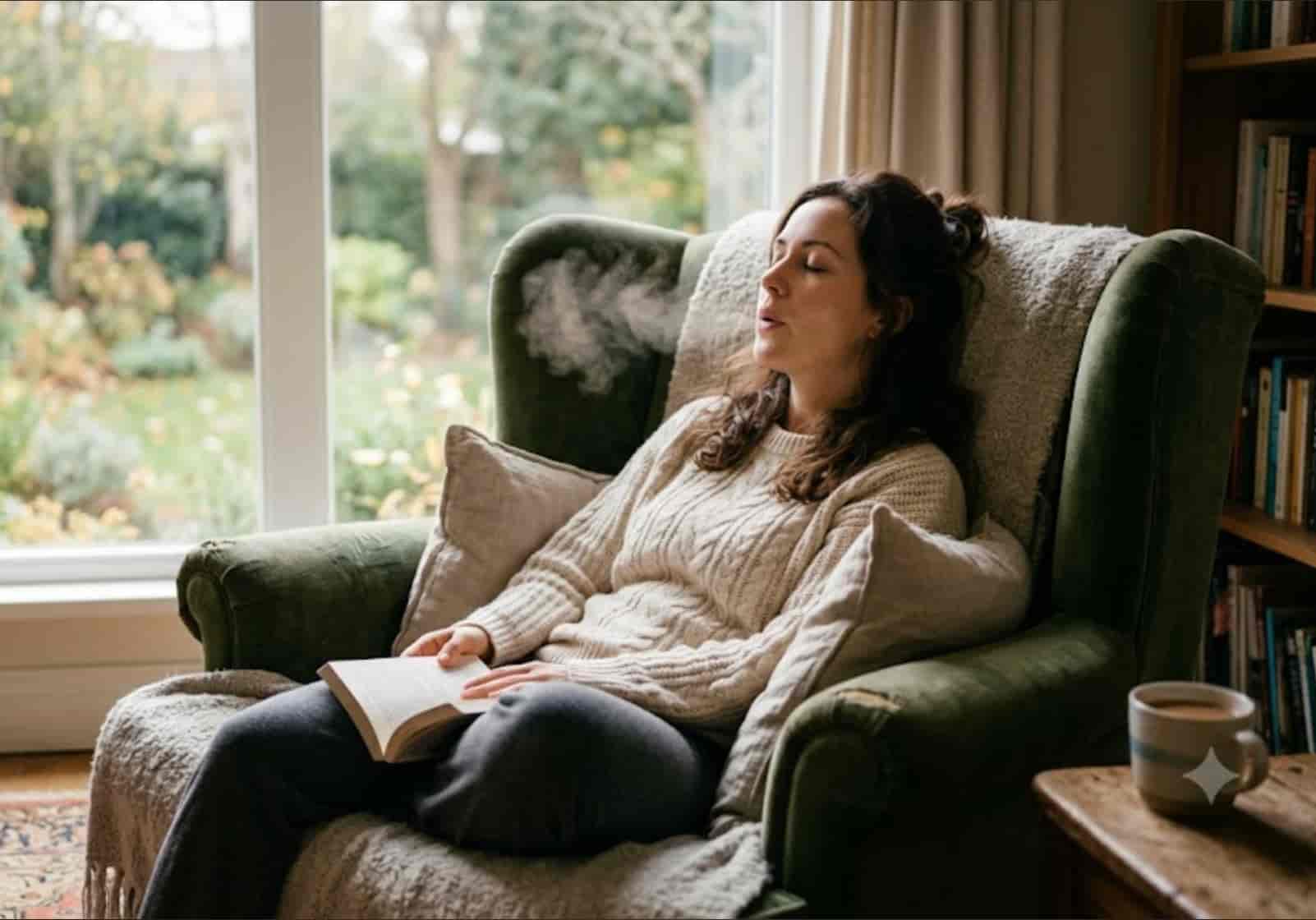
When you notice yourself heading toward food, try placing one hand on the counter or your chest and taking one slower breath. Then ask yourself three simple questions: What am I feeling right now? What do I need most? Would food feel comforting, nourishing, or both?
You may still choose the snack, and that is okay. The practice is not successful only when the food stays in the cupboard. It is successful when you make contact with yourself, even briefly.
If the answer is that you are genuinely hungry, let that information be enough. Consider making yourself something you can sit down and enjoy rather than eating in a rush or standing at the counter. A plate, a chair, and a few minutes of attention can turn an automatic moment into one where your body feels included.
If the answer is exhaustion, sadness, overwhelm, or restlessness, you might pair food with another form of comfort rather than asking food to carry the whole weight of the evening. A warm shower, softer lighting, a few lines in a journal, a cup of tea, a comforting playlist, or ten quiet minutes under a blanket can all send a message of care. Choose what feels possible, not what sounds impressive.
Change the Environment With Kindness
Mindless patterns often respond well to gentle changes in the environment. This is not about controlling yourself. It is about making the evening a little easier to inhabit with awareness.
If television and snacking are closely linked, you could decide before pressing play whether you want something to eat, then place it in a bowl and leave the rest in the kitchen. If you tend to wander into the pantry while feeling depleted, try creating another landing place first: a chair with a blanket, a glass of water, or a note that asks, “How was your day, really?”
The best adjustment is personal. For some people, a planned evening snack feels grounding and prevents the frantic feeling of uncertainty. For others, moving snacks out of sight makes an old automatic cue less powerful. Pay attention to whether a change makes you feel more settled or more tense. Your body’s response matters.
When the Food Is Already Gone
This is the moment when many people become harsh with themselves. They replay what happened and make promises they cannot possibly keep while tired and upset. But self-criticism tends to add more stress to a system that was already asking for relief.
Try a different ending to the story. You might say: “Something in me needed comfort tonight. I can learn from that without turning against myself.” Then, if you can, offer one small act of care that has nothing to do with fixing the eating. Brush your teeth, refill your water, step outside for a breath of cool air, or go to bed a little earlier.
Tonight, you do not need to solve every craving. You only need to meet one moment with a little more gentleness than before. One calm pause can become the beginning of a calmer relationship with yourself, one gentle hour at a time.