Why Do Cravings Feel Comforting After a Long Day?

If you have ever wondered, “Why do cravings feel comforting, especially at night?”—the answer is not that you lack discipline. Your mind and body may simply be reaching for a familiar, fast way to feel soothed.
That longing can be confusing when part of you isn’t physically hungry. But cravings often carry an emotional logic. They are your nervous system’s attempt to create warmth, pleasure, rest, or safety after a day spent holding everything together.
Remember: You are not broken. You are responding in a way that makes complete sense when we look beneath the surface.
Why Do Cravings Feel Comforting to the Brain?
Comforting foods are deeply linked to relief, familiarity, and care:
- Popcorn might mean Friday nights on the couch.
- Something sweet might signal a moment that belongs only to you.
- Eating might be the very first time all day you have allowed yourself to pause.
Your brain is built to remember what helped before. When a certain food brought a brief sense of calm in the past, your brain stores that association. After a draining meeting, an overstimulating commute, or an evening spent caring for everyone else, it offers that familiar solution again:
“This helped us feel better last time. Could we do that now?”
Stress / Overwhelm ──► Food Search ──► Sensory Focus (Taste/Texture) ──► Brief Calm
The comfort is real, even if it doesn’t last as long as you wish it would. Eating shifts your attention away from a difficult feeling toward an immediate sensory experience: taste, texture, warmth, and fullness. For a few minutes, your noisy inner world grows quiet.
This doesn’t mean food is a problem or that comfort is wrong. It simply means food has become one of the most accessible forms of comfort in your evening routine. The gentle work is not to take comfort away—it is to help your body experience more than one path toward it.
If this article resonated with you…
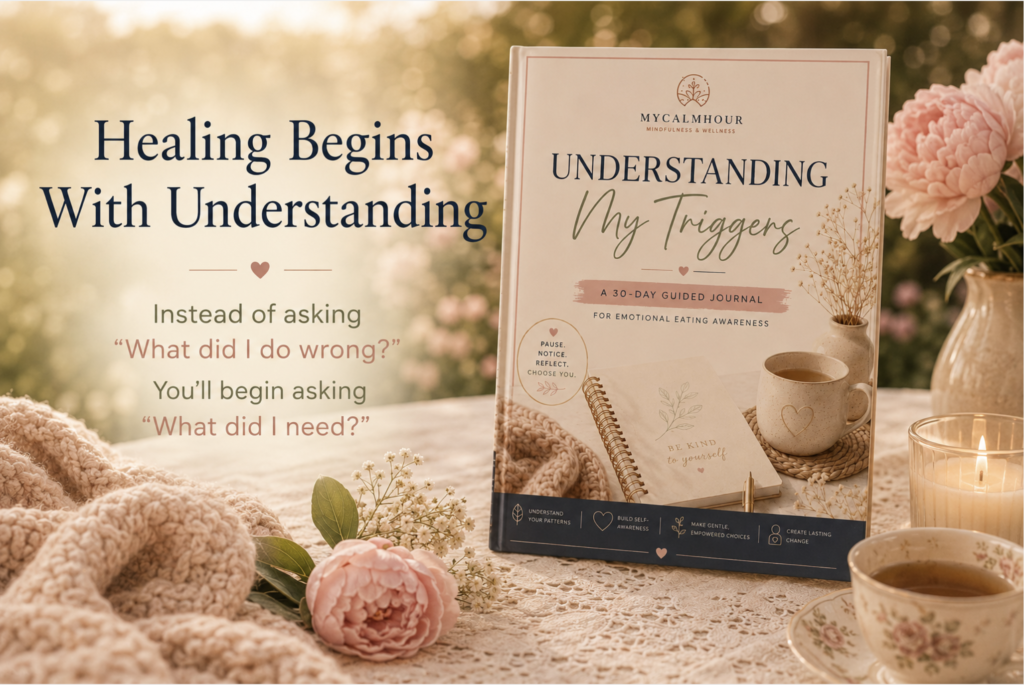
Your triggers are trying to tell you something.
The Understanding My Triggers Journal gently guides you through 30 days of reflection to help you recognise emotional patterns, understand your triggers and respond with greater self-compassion.
Evening Cravings Often Begin Before Dinner
Nighttime cravings rarely appear out of nowhere. They are usually the final chapter of a day that asked too much and offered too little recovery.
Perhaps you moved from task to task without a real break, or stayed composed through tension, disappointment, or uncertainty. By evening, your nervous system is simply tired of staying alert. At that point, a craving feels urgent because it is about the need underneath it: comfort, reward, quiet, connection, or permission to stop trying so hard.
Physical Hunger vs. Emotional Needs
There is also a practical piece: sometimes you are genuinely hungry. A rushed day, an unsatisfying lunch, or going too long without food makes evening hunger feel intense. Emotional needs and physical hunger often exist together. You don’t have to solve the mystery perfectly before responding with kindness.
Instead of asking:
❌ “Why am I doing this again?”
Try asking:
🌱 “What has today felt like in my body?”
That small shift replaces criticism with useful information.
The Relief Loop Is Learned, Not a Personal Failure
Cravings become especially strong when food is one of the few reliable breaks in your day. The sequence is simple:
- Stress builds throughout the day.
- The urge arrives in the evening.
- You eat, creating a brief softening.
- The brain remembers the route for next time.
This is why arguing with a craving when you are depleted feels impossible. The part of you seeking comfort isn’t interested in a debate—it is asking for care right now.
What Your Craving May Be Trying to Say
A craving doesn’t always have one clear message. However, slowing down for just 30 seconds can reveal helpful patterns:
| What you crave | What your body might actually need |
| Sweetness | Appreciation after a day where your efforts went unnoticed. |
| Crunchy foods | An outlet for held-back anger, frustration, or tension. |
| Endless snacking | Company or warmth when the house feels too quiet or lonely. |
Try a quiet check-in before heading to the kitchen:
“What do I hope this food will give me right now?”
There is no wrong answer. It might be “a treat,” “a break,” or simply “I don’t know.” Even “I don’t know” is a meaningful beginning.
A Gentler Way to Meet an Evening Craving
When the urge arrives, begin with the smallest possible pause. Not a rule. Not a demand to resist. Just a moment of quiet company with yourself.
- Ground your body: Place a hand over your chest or rest both feet firmly on the floor.
- Name the feeling: Take one slow breath and say, “I feel wrung out,” or “I want something comforting.” Naming the feeling reduces the pressure to act immediately.
- Add one non-food comfort: Keep it simple enough for a tired evening:
- Make a warm drink and hold the mug for a minute.
- Change into soft clothes or dim the bright lights.
- Put on one calming song and sit still through it.
- Write three uncensored sentences about your day.
After that, decide what you want to eat with a little more space around the choice. Perhaps you enjoy the food more deeply. Perhaps you realize you also need a warm shower or an earlier bedtime. Or perhaps nothing changes except that you spoke to yourself more gently—and that matters immensely.
When Food Is Still the Comfort You Choose
There will be nights when you eat the snack and feel comforted by it. There is no need to turn that into evidence that you have failed.
A calmer relationship with cravings isn’t about never seeking comfort in food. It is about reducing the fear, guilt, and struggle around the experience.
If you notice a recurring pattern that feels distressing, support from a qualified mental health or medical professional can offer a compassionate space to explore it further.
For tonight, let the craving be information rather than an accusation. It may simply be pointing toward a part of you that has been waiting all day to be noticed. One gentle hour at a time, you can give that part of yourself a little more room to breathe.