7 Nervous System Regulation Exercises
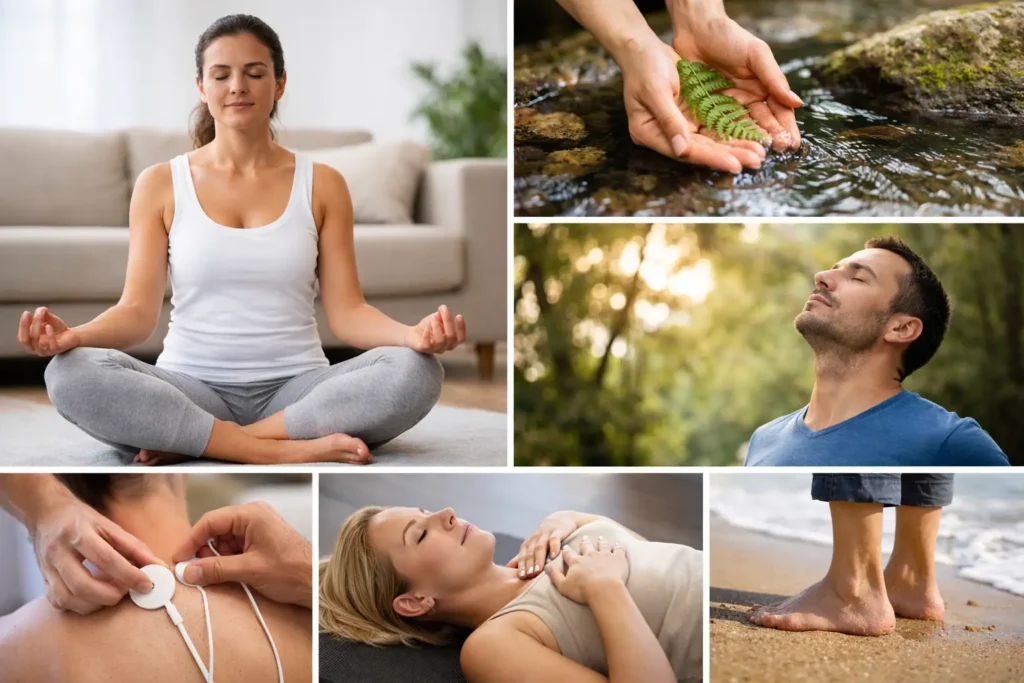
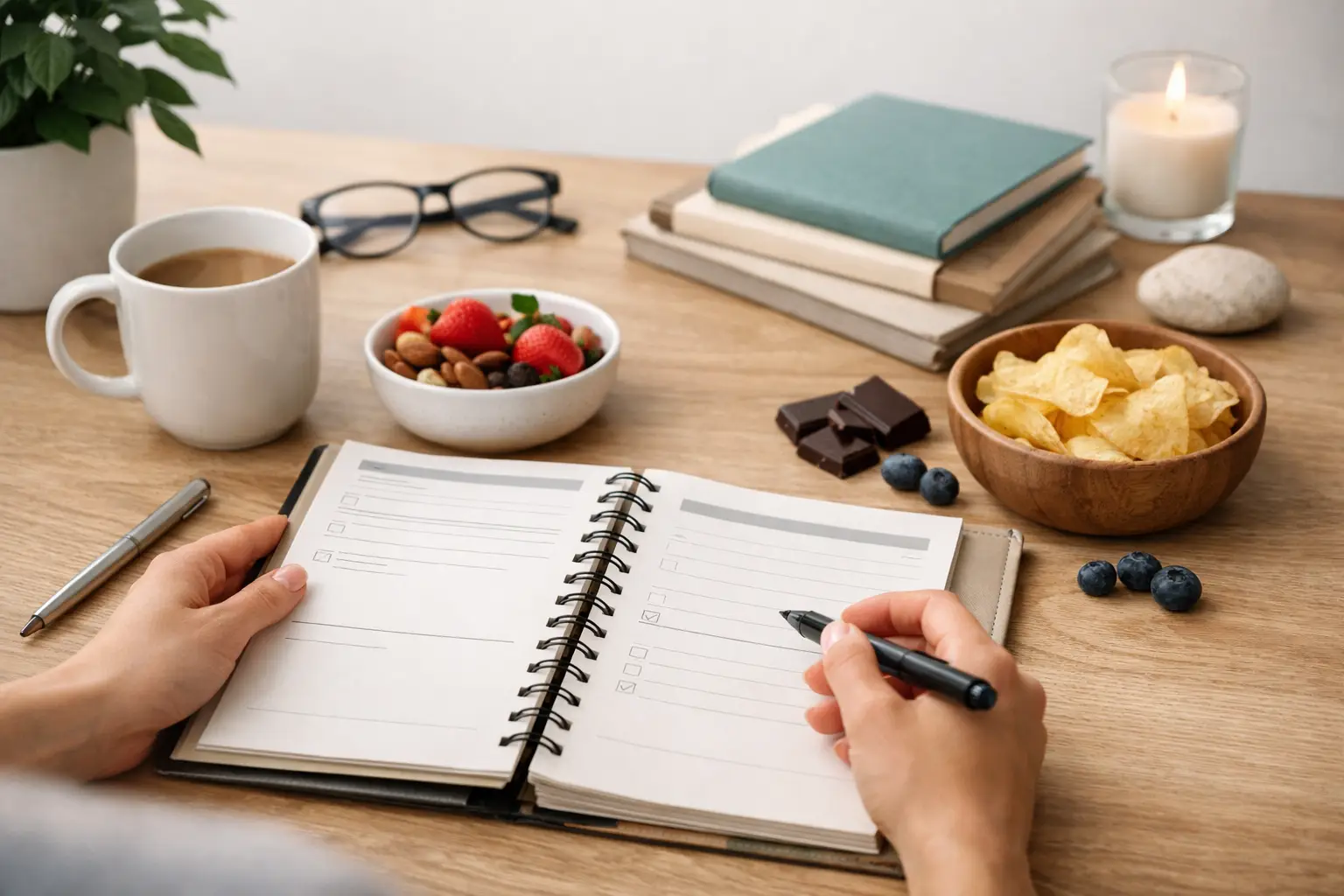
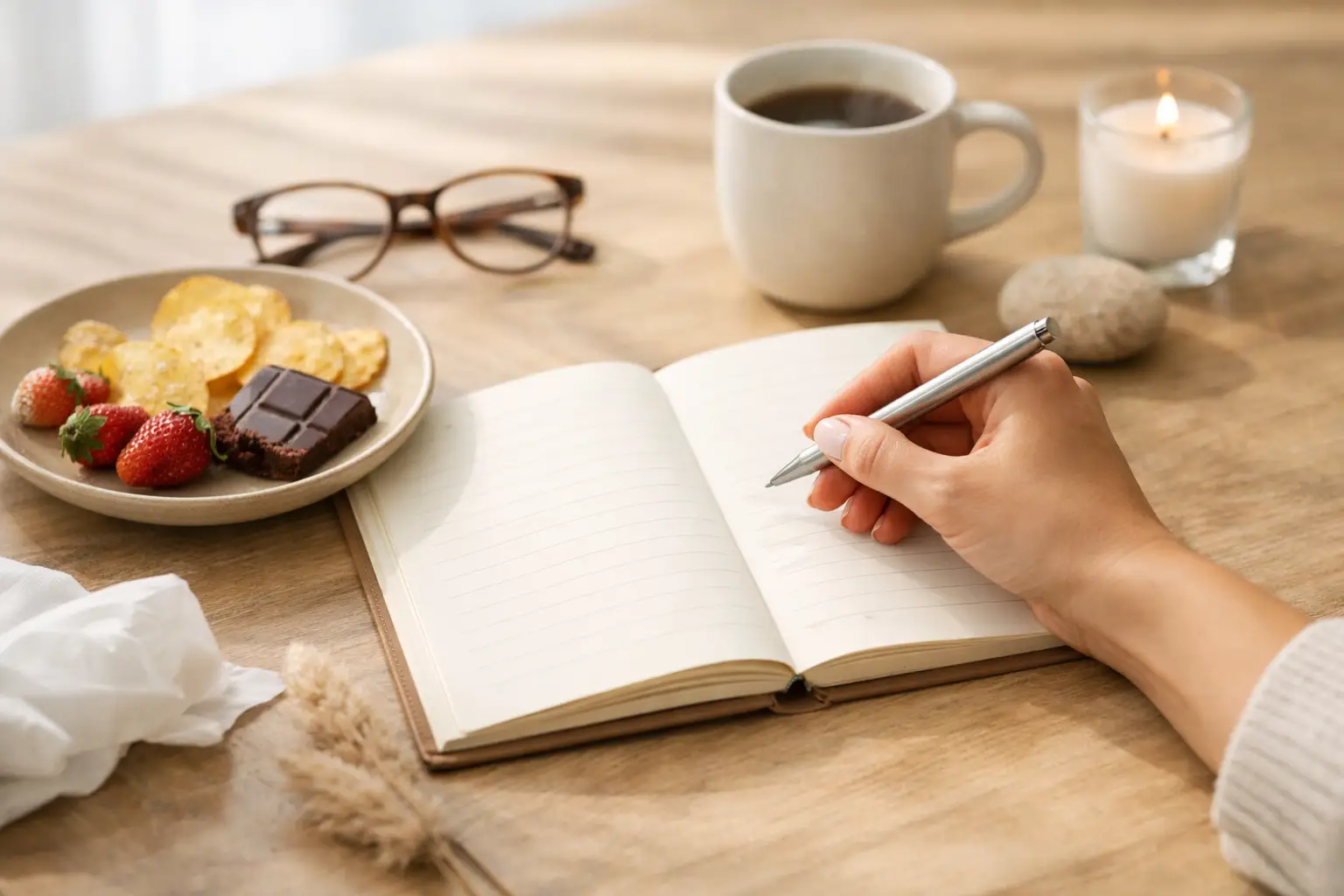
By 8:37 p.m., it can feel like your body is making decisions before your mind catches up. You reach for something crunchy, sweet, or comforting, not because you are failing, but because your system is asking for relief. That is where nervous system regulation exercises can help. They do not demand perfection. They simply give your body another way to find safety.
If evening eating tends to show up after a long, overstimulating day, this matters. When your nervous system has been carrying too much for too long, food can start to feel like the fastest path to grounding, pleasure, or shutdown. You are not broken. Your body is trying to help you cope with stress in the way it has learned.
Why nervous system regulation exercises can help at night
Evening cravings are often misunderstood as a lack of discipline, when they are frequently tied to depletion, emotional overload, and a body that has not had enough chances to come down from stress. If your day has been full of pressure, decision-making, caretaking, noise, or emotional masking, your system may still be bracing by the time the sun goes down.
In that state, it is hard to access pause, choice, or self-trust. Your body is more likely to seek something immediate and familiar. Food can become a very understandable form of soothing because it is sensory, predictable, and available.
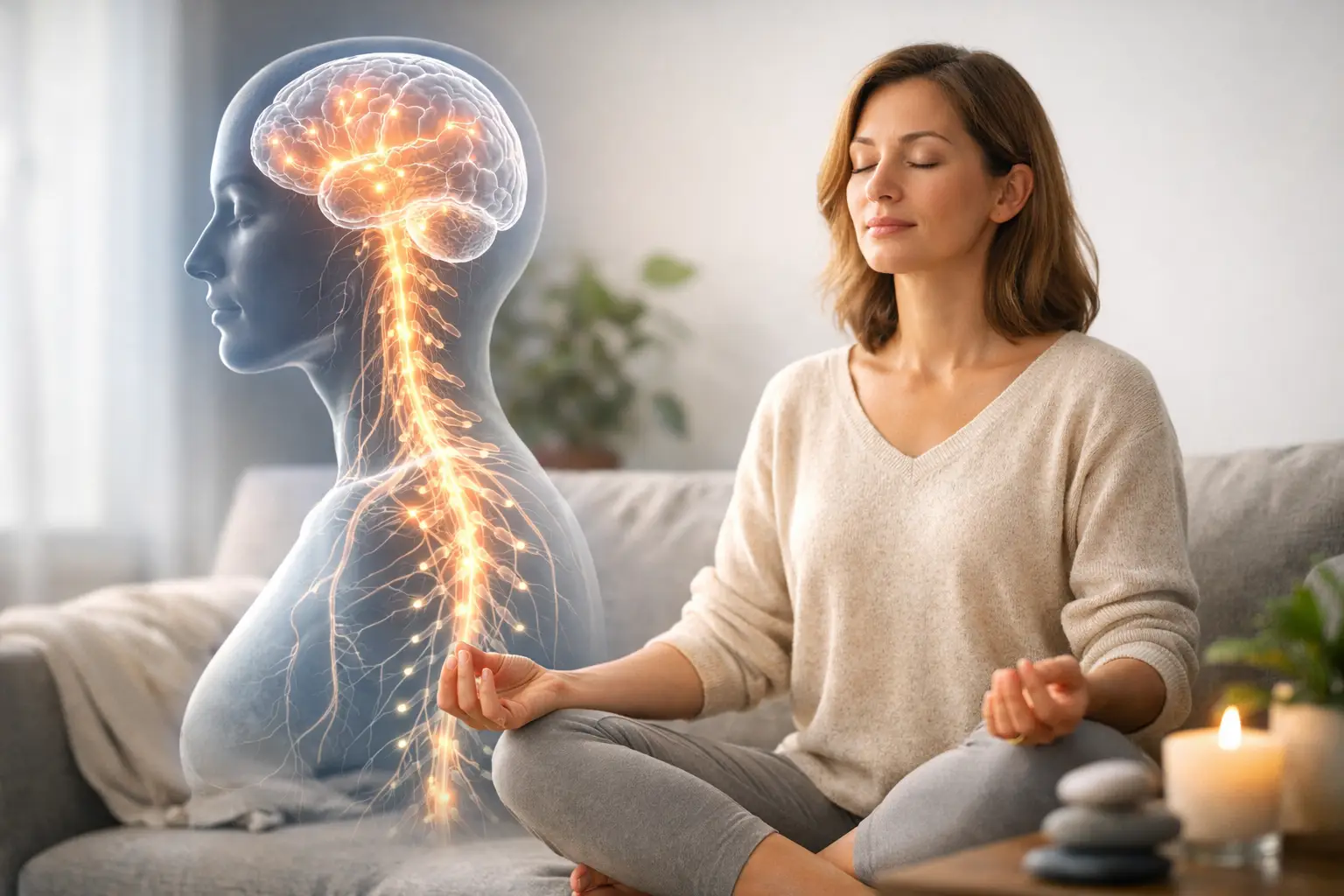
Nervous system regulation exercises work gently. They help shift your body out of urgency and toward enough safety that you can feel what is actually going on. Sometimes that means the craving softens. Sometimes it means you still want comfort, but you can meet that need more consciously. Both are meaningful.
What regulation really feels like
Regulation is not becoming perfectly calm, silent, or emotionally unaffected. It is not forcing yourself to meditate when you are overwhelmed or pretending to be peaceful when you are exhausted.
More often, regulation feels like a little more space. Your jaw unclenches. Your breathing deepens. The urge to fix everything right now loosens by five percent. You feel a bit more present in your body and a little less pulled by impulse.
That is enough to work with.
7 nervous system regulation exercises for stressful evenings
The best exercises are the ones you will actually use when you are tired, overstimulated, or emotionally thin. These are simple on purpose.
1. Lengthen your exhale
A longer exhale tells the body that the immediate threat may be passing. You do not need a complicated breathing method. Try inhaling gently through your nose for a count of four, then exhaling for a count of six or seven. Repeat for one or two minutes.
If counting makes you tense, skip the numbers and just let the out-breath be slightly longer than the in-breath. This tends to work well when your mind is busy but your body is ready for a small signal of relief.
2. Press your feet into the floor
When cravings hit, many people go straight into their heads. Grounding through pressure can help bring you back into your body. Sit or stand and press both feet firmly into the floor for ten to twenty seconds, then release. Repeat a few times and notice the support underneath you.
This can sound almost too simple, but that is part of why it helps. It gives your system a clear physical cue: I am here. I am supported. I do not have to spin faster to get through this moment.
3. Hold something warm
Warmth can be deeply regulating because it signals comfort and softness. Wrap your hands around a mug of tea, a bowl of warm soup, or even a heating pad. Pause long enough to actually feel the temperature.
This is especially helpful if your nighttime eating tends to happen when you feel lonely, emotionally flat, or quietly undone. Warmth will not solve the whole evening, but it can reduce the sense of internal coldness that often drives the search for comfort.
4. Try the longer-name exercise
Look around the room and slowly name five objects, but give each object a few extra words. Instead of saying lamp, say the small cream lamp beside the couch. Instead of blanket, say the soft blue blanket folded on the chair.
This helps orient your brain to the present moment. It can interrupt the tunnel vision that comes with stress and craving. It is not magic, but it often creates just enough distance to help you choose your next step with more care.
5. Use a wall for steady pressure
Stand with your hands against a wall and lean in gently, as if you are trying to move it. Hold for ten seconds, then release. You can also do this by pressing your back against the wall and noticing the contact points.
This kind of steady resistance can help discharge some of the activation that builds up during a stressful day. It is useful when you feel restless, agitated, or like you need to do something right now. The body often responds well to simple pressure when words are not enough.
6. Hum quietly on the exhale
Humming creates vibration, and vibration can be soothing to the nervous system. Take a small inhale and hum softly as you exhale. Feel the sound in your throat, chest, or face. Repeat a few times.
If humming feels awkward, especially around other people, try it in the shower, in the car, or while washing dishes. The point is not to perform relaxation. The point is to give your body a sensory cue that invites settling.
7. Make your evening smaller
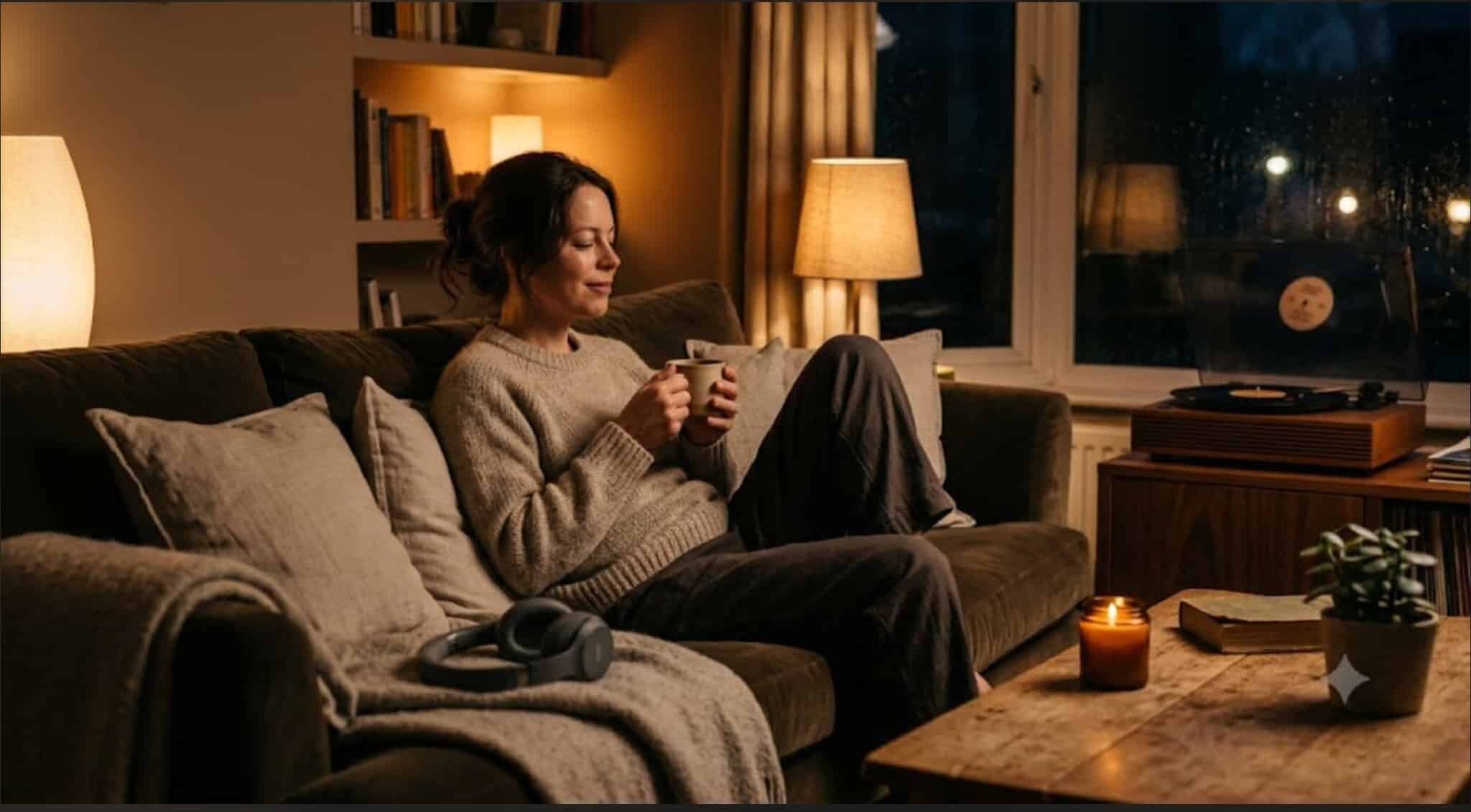
This may be the most overlooked regulation practice of all. When you are overwhelmed, your nervous system does not always need more effort. Sometimes it needs less input. Lower a light. Put your phone in another room for ten minutes. Turn off one source of noise. Sit under a blanket. Let the evening become simpler.
For many people, nighttime eating happens in an environment of accumulated stimulation. A smaller, quieter space can reduce the body’s need to reach for a fast numbing strategy. Gentle is powerful here.
How to know which exercise to use
It depends on what your body is asking for.
If you feel buzzy, panicky, or revved up, start with longer exhales, humming, or wall pressure. If you feel scattered and disconnected, try pressing your feet into the floor or naming objects in the room. If you feel emotionally tender or drained, warmth and a softer environment may work better.
This is where self-compassion matters. You are not trying to perform the perfect calming routine. You are learning your own patterns, one evening at a time.
When these exercises do not “work” right away
Sometimes you try a calming practice and still want the snack, still feel sad, or still end up eating on autopilot. That does not mean you did it wrong.
Regulation is not a switch. On harder days, an exercise may only bring your stress down a small amount. But small amounts matter. A little more awareness can help you notice whether you are hungry, lonely, overstimulated, angry, or simply tired of holding everything together.
There is also a trade-off to keep in mind. Some exercises are subtle and easy to weave into real life, but they may feel slower. Others, like strong pressure or humming, can create a quicker shift but may not always feel practical in every setting. It is okay to build a few options instead of relying on one perfect tool.
A gentle evening rhythm that supports regulation
If you want these practices to help with nighttime cravings, use them before the urge peaks whenever possible. A two-minute pause after work, a warm drink before the kitchen starts calling your name, or a quieter room after dinner can change the tone of the whole evening.
At My Calm Hour, we often come back to this idea: your body responds to patterns. The more often your evenings include small moments of safety, the less your system has to beg for relief through urgency.
You do not need a perfect nighttime routine. You need a few repeatable signals that tell your body the day is softening now.
Maybe tonight that looks like one hand on your chest, one longer exhale, and both feet on the floor before you open the pantry. Maybe it looks like tea, a lamp instead of overhead light, and permission to stop asking so much of yourself.
That is real nervous system care. Not dramatic. Not all at once. Just one gentle hour at a time.