How to Break Stress Snacking Without Fighting Yourself

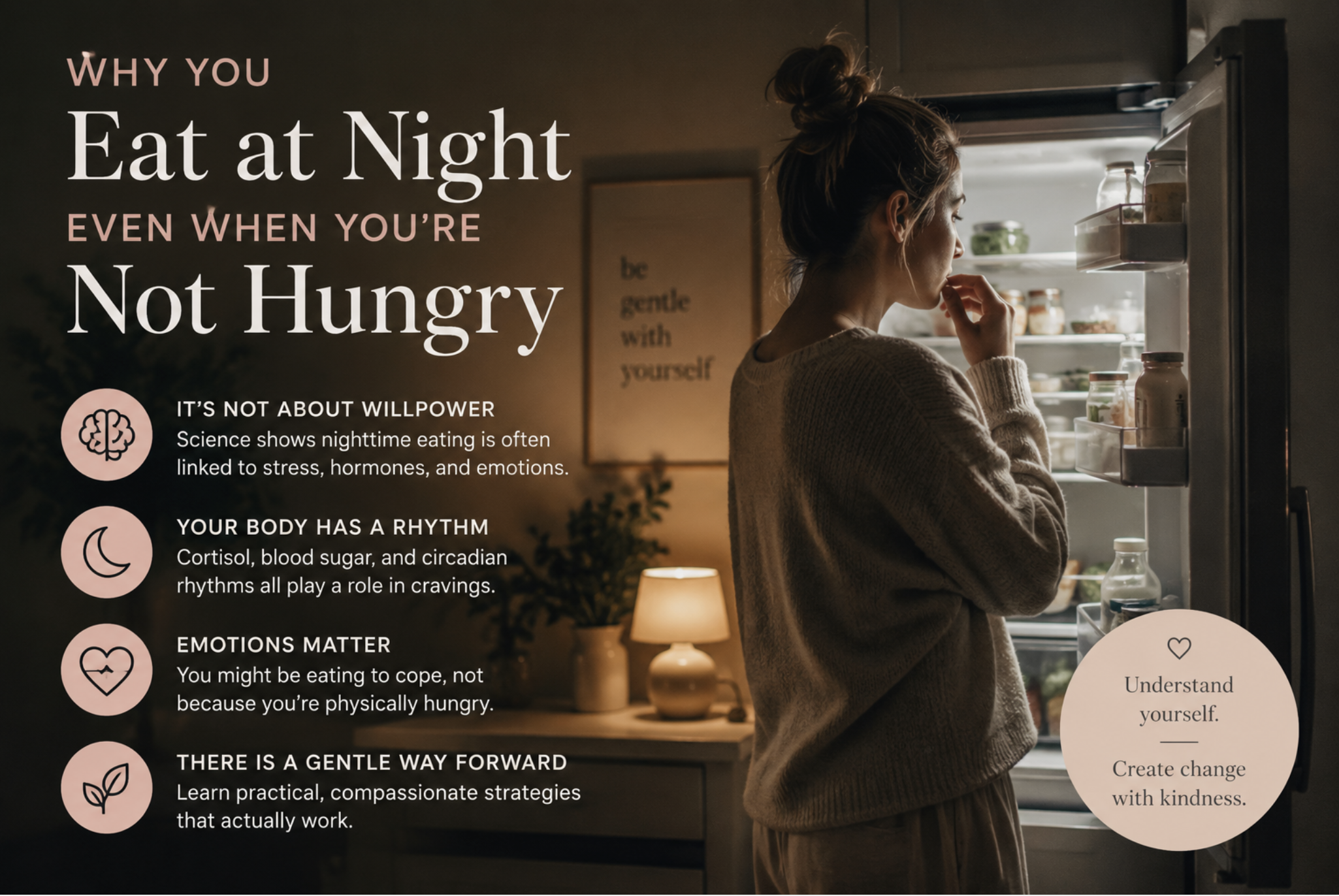
The kitchen can become very loud after a hard day, even when the house is quiet. You may find yourself reaching for something sweet or crunchy before you have fully taken off your shoes, wondering why this keeps happening. Learning how to break stress snacking begins with a gentler truth: you are not broken, and this habit is not a personal failure. It is often your mind and body asking for relief in the fastest way they know.
Food can offer a real, immediate sense of comfort. It gives your attention somewhere to land after hours of demands, decisions, noise, and emotional labor. The goal is not to make food the enemy or to force yourself to be perfectly in control each evening. It is to create more ways for you to feel soothed, supported, and safe.
Why stress snacking feels so hard to stop
Stress does not always look dramatic. It can be the pressure of a packed workday, the mental load of caring for others, a difficult conversation, loneliness, or the feeling that you have had no moment that belonged to you. By evening, your capacity to make another decision may be low.
When your system has been running on alert for hours, comfort food can feel like a small exhale. The taste, texture, familiar routine, and brief pause all signal relief. This is why telling yourself to simply use more willpower rarely reaches the real issue. The urge is not only about food. It may also be about rest, pleasure, quiet, reward, or a need to come back to yourself.
There is another layer, too. Sometimes what looks like stress snacking is plain physical hunger that was postponed during a busy day. If lunch was rushed, meals were irregular, or you were too distracted to notice your hunger, your body may ask for food urgently at night. Emotional needs and physical hunger can overlap. You do not have to solve that perfectly to respond with care.
How to break stress snacking by pausing, not policing
A pause is not a test of whether you are “good” enough to eat. It is a small space in which you can hear yourself. The next time you notice the pull toward the pantry or the delivery app, try asking: What has today asked of me? What do I need most right now?
You may still choose to eat, and that is allowed. The value of the pause is that it shifts the moment from automatic to intentional. Over time, you begin to recognize patterns: perhaps the urge arrives after answering emails late, after getting everyone else settled, or when you finally sit down alone.
Try making the pause physically simple. Stand at the counter with both feet on the floor. Take one slower breath than usual. Put a hand on your chest or stomach if that feels comforting. Then name what is present without arguing with it: “I am tired.” “I feel overstimulated.” “I need a transition.” Clear, kind language can soften the urgency.
Separate the need from the habit
Stress snacking is often a solution, even if it is not the only solution you want available. It may be solving for comfort, a break, connection, or the wish to feel cared for after spending the day caring for everyone else.
Once you identify the need, offer yourself a second option before deciding what to eat. Not a replacement that feels punishing, but something that genuinely meets the same need. If you need warmth, a shower, tea, or a heated blanket may help. If you need to release the day, a short walk around the block, stretching in the living room, or shaking out your shoulders can create a transition. If you need companionship, sending one honest text or sitting near someone you trust may matter more than another handful of snacks.
This is not an instruction to distract yourself from hunger. If food sounds nourishing and satisfying, you can eat. The practice is about adding care, rather than taking comfort away. Sometimes a snack alongside a few minutes of quiet is exactly what you need. Sometimes the quiet is what you were reaching for all along.
Make your evenings easier on your nervous system
The most helpful changes are often small enough to repeat on an ordinary Tuesday. A long, elaborate routine may feel lovely, but it can become another demand when life is full. Instead, create a short landing ritual that marks the shift from doing to being.
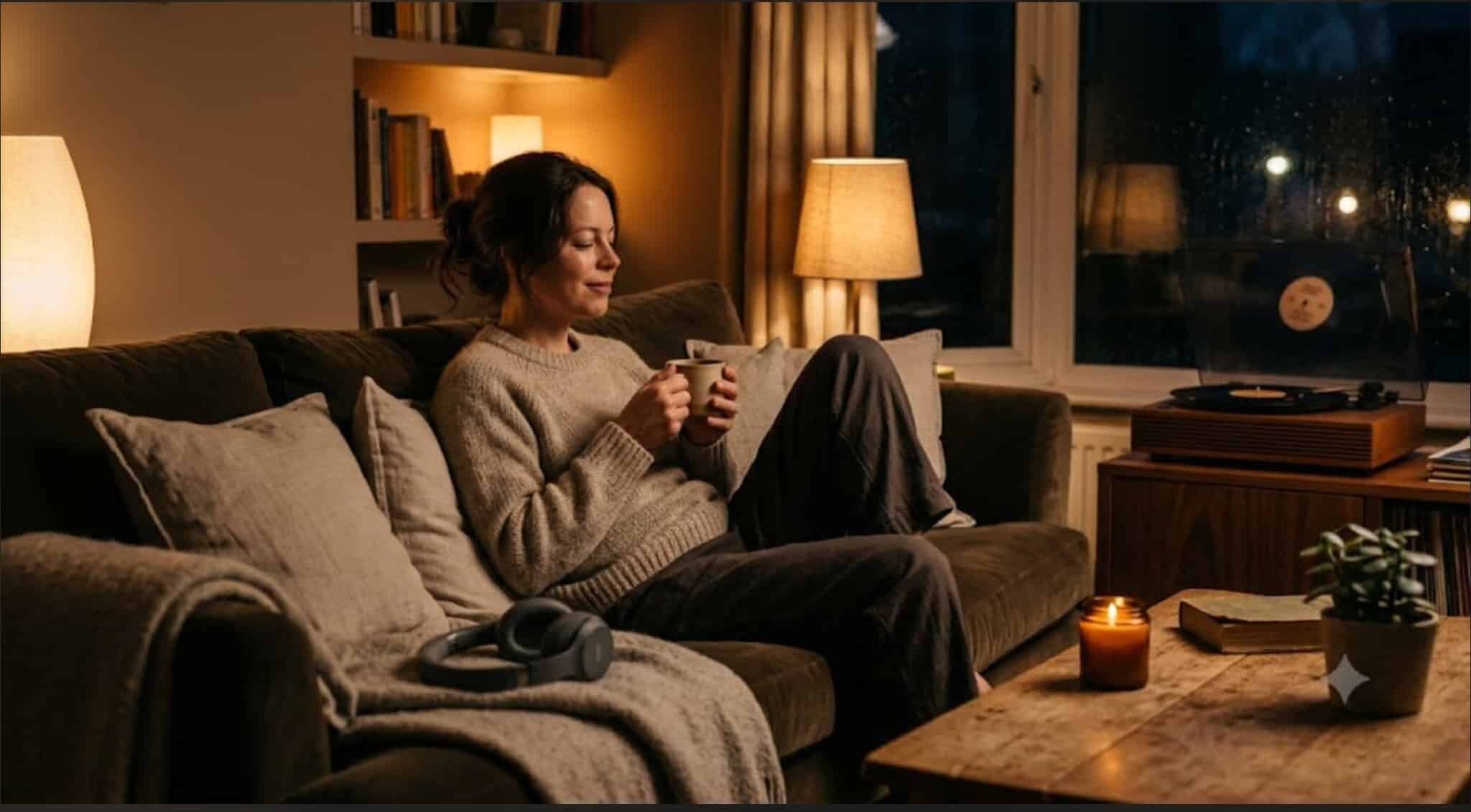
You might dim one lamp when the workday ends, change into comfortable clothes, play the same calming song, or spend five minutes outside before starting dinner. Repetition matters because it gives your body familiar cues: the day is changing, and you do not have to stay braced for everything.
Consider where stress snacking usually happens. If it happens while standing in the kitchen, can you create a more deliberate place to eat when you want food? Put a snack on a plate, sit down, and let it be a real moment rather than something squeezed between tasks. This is not about making eating formal. It is about allowing yourself enough presence to notice whether the food is giving you what you hoped for.
You can also make comfort easier to access. Keep a soft blanket within reach, save a calming playlist, place a journal where you usually sit, or set out a mug you enjoy using. When you are depleted, the most available comfort tends to win. Giving yourself a few other easy options changes the choice without requiring a battle.
Let regular nourishment support you
A calmer evening often starts earlier than evening. If your days are so busy that food becomes an afterthought, nighttime cravings may arrive with more intensity. Gentle consistency with meals and snacks can help you meet physical hunger before it turns into a crisis feeling.
There is no need to create rigid rules. Simply notice whether you tend to go long stretches without eating, rush through meals, or rely on coffee and momentum until late afternoon. Adding a satisfying midday meal or an afternoon snack may make your evening feel less urgent. This is practical care, not a rulebook.
It also helps to ask a compassionate question after you eat: “Did that help?” Not “Why did I do that?” or “How could I have stopped?” If it helped, what part helped? The flavor? The break? The permission to stop working? If it did not help much, that information is useful too. Curiosity teaches you far more than criticism ever can.
When the urge feels bigger than the moment
Some nights, the urge to eat will feel intense. That does not mean you have undone your progress. Stress rises and falls, and your capacity will change with sleep, work, relationships, hormones, and the ordinary unpredictability of life.
On those evenings, make the next ten minutes gentler rather than trying to solve your entire relationship with food. Eat something if you are hungry. Drink a glass of water if that sounds good. Sit down. Put on a comforting show. Let yourself cry if tears are close. Choose the smallest act that says, “I am here with myself.”
If stress snacking feels frequent, distressing, or connected to a difficult relationship with eating, speaking with a qualified mental health professional or registered dietitian can offer individualized support. You deserve support that sees the whole person, not just the habit.
The next time you find yourself searching the kitchen for relief, try not to meet that moment with a lecture. Meet it with a little tenderness. One hand on your heart, one honest question, one gentler option. That is how change often begins at My Calm Hour: not through force, but one gentle evening at a time.