Bedtime Anxiety vs Food Cravings Explained

Some evenings, the urge to eat arrives with a very particular feeling: a restless hum in your chest, thoughts that will not settle, and a sense that sleep is still far away.
The question of bedtime anxiety vs food cravings can be hard to untangle because both often lead straight to the kitchen. But the needs underneath them can be quite different.
You are not broken for wanting comfort at the end of a demanding day. Food offers pleasure, familiarity, and a small, immediate pause. At the same time, noticing whether you are physically hungry, emotionally depleted, or anxious about the quiet ahead can help you respond with more care.
Why Anxiety and Cravings Feel So Similar
Your body does not always send neat, separate signals. Stress can make your stomach feel hollow, fluttery, tight, or unsettled.
Anxiety often shows up as a strong desire for something sweet, salty, crunchy, or warm because a familiar sensory experience gives the mind something concrete to focus on.
Busy Day (No Breaks) ──► Quiet House / Evening ──► Anxiety Surfaces ──► Search for Sensory Focus (Food)
During a busy day, you move from task to task without much space to notice your feelings. Once the house is quiet and unanswered emails are done, your nervous system finally has room to register what it has been carrying. The urge to snack often arrives at the exact moment worry becomes audible.
Important: That does not mean every nighttime craving is anxiety in disguise. You may simply be hungry, especially if your day was rushed. Human needs overlap, and the goal is simply to become gently curious.
Bedtime Anxiety vs Food Cravings: The Clues to Notice
To understand what your body is asking for, look for these subtle differences:
| Feature | Physical Food Craving | Bedtime Anxiety |
|---|---|---|
| The Focus | Specific (e.g., chocolate, popcorn, warm soup). | Vague & restless (opening the fridge repeatedly). |
| The Feeling | “That sounds delicious.” | “I do not want to be alone with my mind.” |
| After Eating | The urge softeness; you feel physical completion. | The anxious energy remains unchanged or searching. |
Pay attention to what happens after a few bites. If you feel physically steadier, food was likely the support you needed. If the anxious energy remains, your mind may be asking for an additional kind of care.
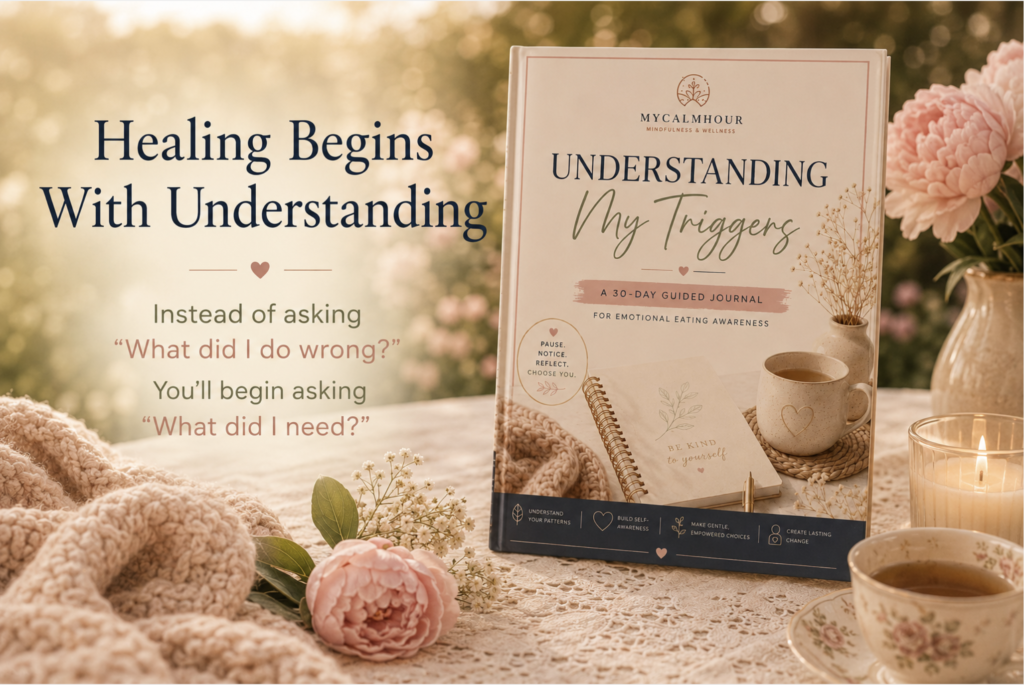
If this article resonated with you…
Your triggers are trying to tell you something.
The Understanding My Triggers Journal gently guides you through 30 days of reflection to help you recognise emotional patterns, understand your triggers and respond with greater self-compassion.
A Few Quiet Questions to Create Space
When you notice the pull toward food, pause for just one breath. You don’t have to deny yourself anything. Simply ask:
🌱 “What is my body asking for right now?”
- Is it physical hunger? (An empty feeling, low energy, irritability)
- Is it anxiety? (A tight jaw, shallow breathing, dread about tomorrow)
- Is it both?
If the answer is unclear, that is completely okay. The practice is not about getting a perfect answer—it is about replacing automatic judgment with a moment of gentle attention.
Start by Meeting the Most Practical Need
If Hunger Is Stronger:
Eating is a caring response. Choose something satisfying and easy to prepare, then sit down if you can. A small moment of presence—noticing warmth, texture, and taste—helps your body register that nourishment has arrived.
If Anxiety Is Louder:
Add a settling cue before or alongside food:
- Make a warm drink and hold the cup.
- Put both feet firmly on the floor.
- Turn off the bright overhead light and switch on a soft lamp.
- Place one hand on your chest and one on your stomach for a few slow breaths.
If you still want the snack after that, you can still have it. Sometimes the kindest choice is food. Sometimes it is food plus a few minutes of quiet.
Create a “Landing Place” for Your Mind
Doing Mode (Work/Chores) ──► Landing Ritual (10 mins) ──► Resting Mode (Bed)
A calming routine doesn’t have to be elaborate:
- Spend 10 minutes tidying one small surface.
- Wash your face slowly with warm water.
- Stretch while the kettle boils.
- Listen to one familiar song without checking your phone.
The Journaling Journaling Trick for Mental Noise
If thoughts are looping, write down the thought you keep returning to, and finish this sentence:
“For tonight, I can let this be unfinished because…”
(…because I have done enough for one day / …because I can return to this tomorrow.)
Watch for the Urge to “Make Nighttime Mean Something”
A difficult evening can quickly turn into a harsh inner narrative:
❌ “I always do this. I should have more discipline.”
Instead, try a more accurate interpretation:
✅ “My system is tired, and it reached for relief.”
Compassion is not passivity—it gives you a steadier starting point for change. Consider building a Personal Comfort Menu for your evenings:
- 🛁 Hot shower or clean pajamas
- 🛋️ Weighted blanket or heating pad
- 🎧 Voice note to a friend or soft music
- 🍵 Warm drink and 5 minutes on the porch
Moving Forward Tonight
Tonight, you do not need to solve your relationship with food or quiet every anxious thought.