
9 Best Journals for Craving Awareness
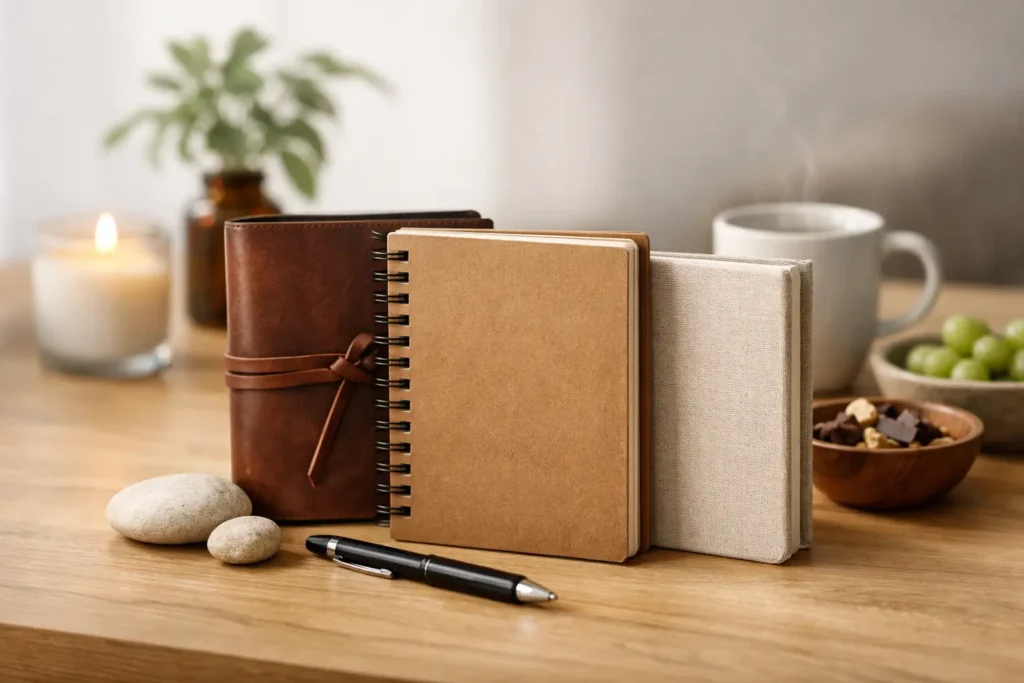
Some cravings arrive like clockwork. You clean the kitchen, sit down for the first time all day, and suddenly you need something sweet, crunchy, or comforting right now. If that pattern feels painfully familiar, the best journals for craving awareness can help in a way willpower usually cannot. They give you a place to notice what happened before the urge, what your body was asking for, and what kind of comfort you were really needing.
That matters because cravings are rarely random. Evening urges often show up at the intersection of stress, fatigue, loneliness, overstimulation, and habit. Writing things down does not make you “good” or “bad.” It simply helps you see your evenings more clearly, with less shame and more honesty. And from there, change becomes gentler.
What makes a journal good for craving awareness?
A beautiful notebook is lovely, but not every journal supports this kind of reflection. For craving awareness, the best option is one that makes it easy to pause and notice patterns without turning your evening into a project.
A helpful journal should feel emotionally safe. If the layout pushes you toward self-criticism, constant scoring, or perfectionism, it can make nighttime eating feel heavier. What you want instead is enough structure to guide reflection and enough space to be human.
In practice, that usually means a journal with room for a few specific observations: what time the craving showed up, what happened before it, what you were feeling, how intense it felt in your body, and what helped afterward. Simplicity matters. If a journal asks too much of you when you are already tired, you probably will not keep using it.
The best journals for craving awareness
There is no single perfect choice here. The best journals for craving awareness depend on whether you want structure, freedom, portability, or emotional depth. These are the types that tend to work especially well.
1. A simple lined notebook
This is often the most sustainable place to start. A plain lined journal removes pressure and gives you room to write naturally. If your cravings feel emotionally tangled, open-ended pages can be more supportive than a highly designed planner.
The trade-off is that blank pages can feel a little too open when your mind is tired. If that happens, use the same five prompts each night so the notebook becomes gentle and predictable rather than vague.
2. A guided emotional awareness journal
Some guided journals are designed around feelings, stress, and self-reflection rather than productivity. These can be especially helpful if your evening eating is tied to emotional overload and you struggle to name what you feel in the moment.
The benefit is support. The downside is fit. If the prompts feel too broad or overly cheerful, they may miss the specific experience of craving and comfort eating. Look for one that invites honesty, not performance.
3. A habit tracker with notes space
If you like seeing patterns visually, a habit-style journal can help. You might track when cravings tend to show up, whether you had a stressful day, how your energy felt at 8 p.m., or whether you had any real moments of rest.
This format works well for pattern recognition, especially over a few weeks. But numbers and boxes alone rarely tell the full story. A tracker is most useful when paired with a few lines of reflection, so you remember that you are noticing a nervous system pattern, not grading yourself.
4. A prompted evening reflection journal
Journals designed for end-of-day reflection can be a strong match for nighttime cravings because they meet you in the same window where urges often happen. A good one will help you slow down and ask, What kind of day did I just have? What am I carrying into the evening? What do I need now?
This can create a new pause between stress and eating. The only caution is timing. If cravings hit fast, a long evening journaling routine may feel unrealistic. Shorter is often better.
5. A pocket journal for in-the-moment notes
Cravings can disappear from memory by morning. A small notebook you can keep nearby lets you capture quick notes in real time: tense after phone call, lonely, wanted reward, felt wired not hungry. Those tiny observations can become surprisingly revealing.
This kind of journal is not about polished writing. It is about catching the moment before your brain smooths it over. Later, you can look back and notice what your evenings have been trying to tell you.
6. A printable craving log or worksheet
If you prefer structure without buying a new journal, a printable page can be ideal. A simple worksheet with prompts like What happened before this craving? What am I feeling? What do I need? can make self-awareness feel easier on hard nights.
This is especially helpful if blank pages leave you stuck. The trade-off is that some worksheets can feel clinical or rigid, so it helps to choose one with soft, reflective language.
7. A mind-body journal
Some journals focus on body sensations, stress signals, and nervous system awareness. These can be deeply useful when cravings show up less as a thought and more as a feeling of restlessness, buzzing, emptiness, or urgency.
That body-first lens matters. Many people say, “I just wanted chocolate,” when what they actually felt was overstimulated, depleted, or emotionally unsafe. A journal that helps you notice tight shoulders, shallow breathing, or that late-day wired feeling can bring a lot of compassion to the process.
8. A notes app used like a journal
Strictly speaking, this is not a paper journal, but it deserves a place here because it is practical. If your phone is what you reach for at night, using a notes app for craving check-ins may be more realistic than expecting yourself to find a notebook and pen.
Convenience is the strength. Distraction is the weakness. If your phone tends to pull you into scrolling, a physical journal may protect your calm more effectively.
9. A custom craving journal you create yourself
Often, the best option is one you build around your own evenings. You might dedicate a notebook to the same small set of prompts and let that become your ritual. This works well because craving patterns are personal. What matters most is not a fancy format but whether the journal helps you feel honest, safe, and consistent.
What to write in a craving journal
You do not need pages of reflection to make this useful. A few grounded questions are enough. When a craving shows up, try noting the time, what happened in the hour before, what you were feeling emotionally, what sensations were present in your body, and what you hoped the food would do for you.
That last question is especially powerful. Sometimes the answer is comfort. Sometimes it is numbing, reward, distraction, relief, or softness after a hard day. When you understand the job the craving is trying to do, you can respond with more care.
You can also add one gentle follow-up: What helped, even a little? Maybe you still ate the snack and also realized you were exhausted. Maybe a cup of tea, quieter lighting, or five minutes alone softened the urgency. Awareness is still progress.
How to use journaling without turning it into pressure
This is where many good intentions fall apart. The journal starts as support and quickly becomes another thing you are failing to keep up with. You are not broken if daily writing feels hard at the end of a long day.
Try using your journal only three nights a week, or only when cravings feel strong. Keep it visible. Keep the ritual short. Two minutes is enough. The goal is not to become someone with perfect journaling habits. The goal is to become a little more aware of what your evenings need.
It also helps to write like a compassionate witness, not a critic. Instead of, “I had no control again,” try, “The craving got stronger after a stressful conversation and a very long day.” That small shift can change everything. It moves you from blame to understanding.
A gentle way to choose the right journal
If you are choosing between options, ask yourself one simple question: What kind of support do I need at night?
If you feel flooded and do not know where to start, choose a guided or printable journal. If you feel resistant to structured prompts, choose a lined notebook. If patterns are hard to remember, choose something small and accessible. If emotional eating feels strongly connected to stress in your body, choose a mind-body style journal.
The best journal is the one you will actually reach for when you are tired, vulnerable, and craving comfort. Not the prettiest one. Not the most impressive one. The one that meets you gently where you are.
Sometimes craving awareness begins with nothing more dramatic than writing one honest sentence at the end of the day. I wanted food, but what I really needed was exhale, softness, and a place to land. That kind of truth can become its own form of relief, one gentle hour at a time.