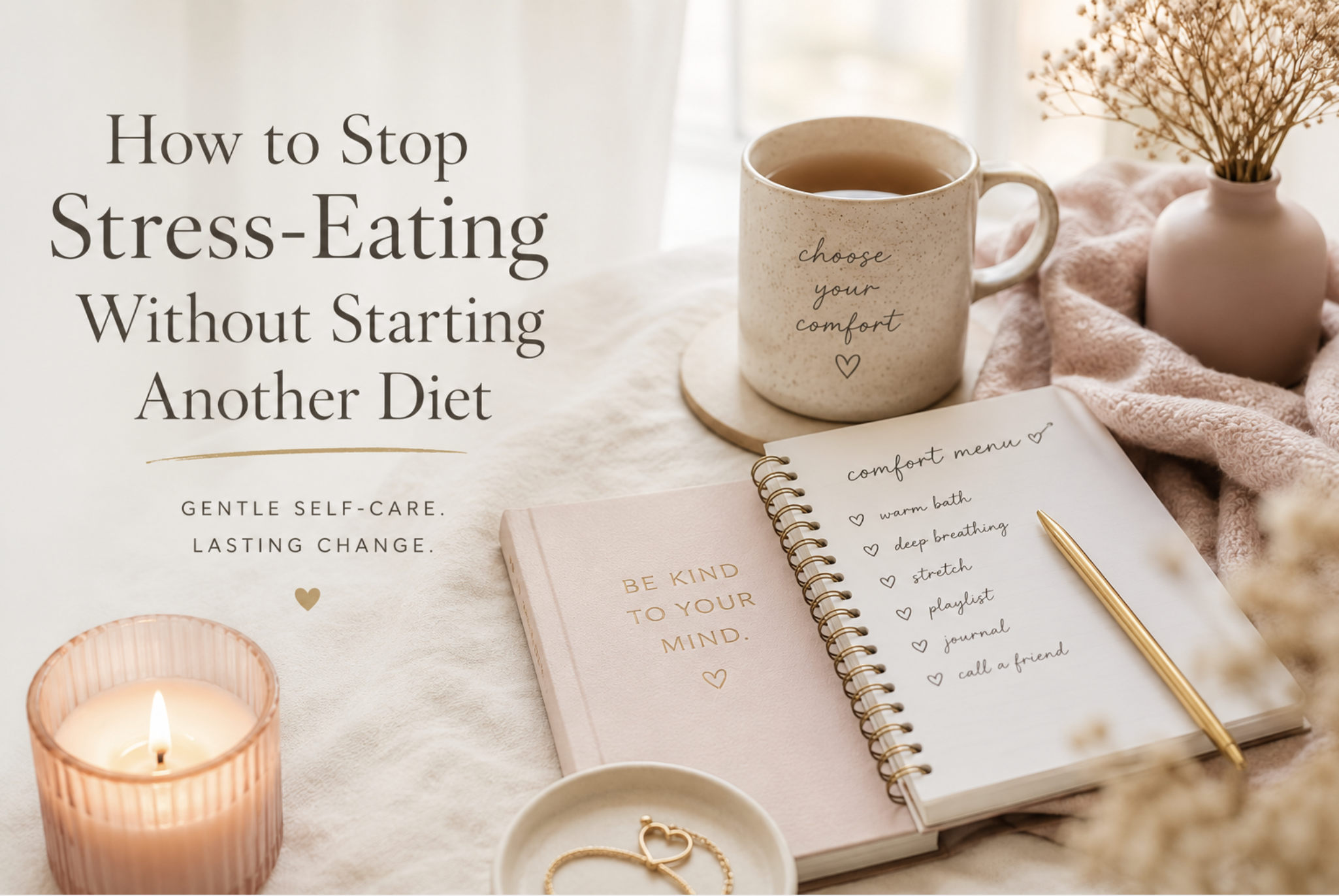
Late Hunger vs Stress and What Your Body Needs

The kitchen can feel unusually loud at 9 p.m. The day is finally quiet, your shoulders are tight, and suddenly you’re reaching for comfort. If you find yourself caught between late hunger and stress eating, know this first: you are not broken, and you don’t need more discipline.
Why Late-Night Cravings Aren’t a Flaw
Evening eating is rarely a lack of willpower. More often, it is an understandable response from a body and mind that have carried too much for too long.
When you learn to distinguish between physical hunger and stress-driven eating, you move away from self-criticism and toward true comfort.
“You don’t need to earn food by being ‘hungry enough.’ Meeting your body with curiosity rather than judgment changes everything.”
Physical Hunger vs. Stress Hunger: How to Tell
While both types of hunger can lead you to the pantry, their root needs are very different.
| Cue | Physical Hunger | Stress & Emotional Hunger |
| Arrival | Builds gradually over time | Arrives suddenly and intensely |
| Sensation | Hollow stomach, low energy, irritability | Tight chest, racing thoughts, need for a “pause” |
| Satisfaction | Many foods sound good | Craves specific textures (salty, crunchy, sweet) |
| Afterward | Leaves you feeling nourished and steady | Can leave behind guilt if unaddressed |
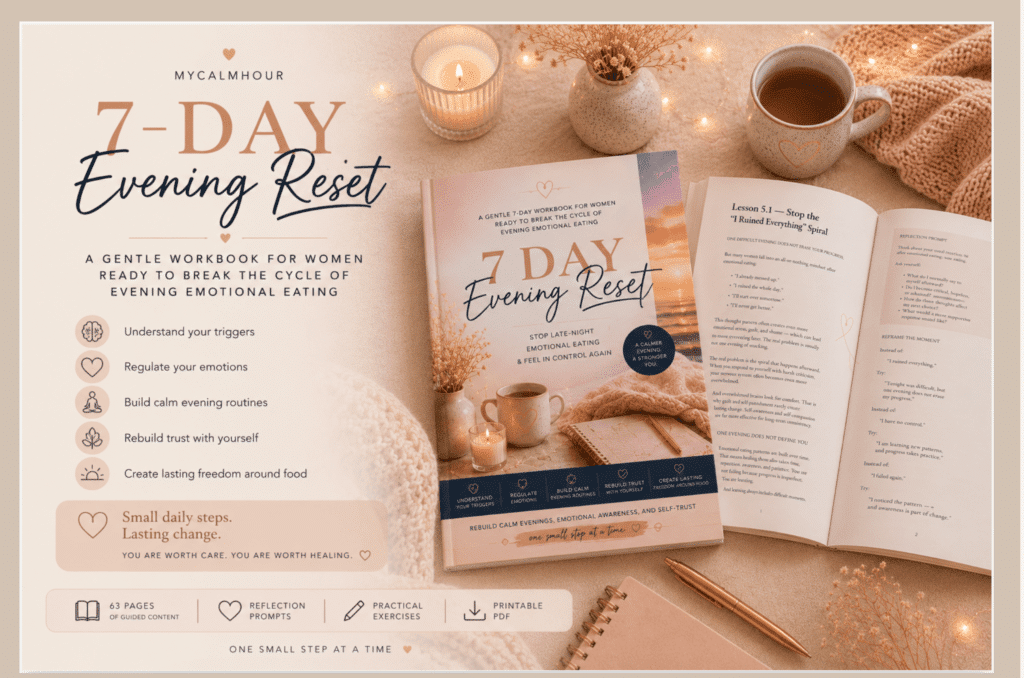
If this article resonated with you…
Discover what’s really behind your evening cravings.
The 7-Day Evening Reset Workbook helps you understand your emotional triggers through gentle reflection, calming practices and practical exercises.
Why Stress Gets Louder at Night
Throughout the day, you respond to emails, hold boundaries, meet deadlines, and care for others. By evening, that structure falls away.
Your nervous system finally has room to register what it’s been holding.
A Gentle 3-Step Evening Check-In
Before deciding whether to eat, give yourself a small, compassionate buffer. Try this quick 3-step practice—not as a test of willpower, but as a moment to sit with yourself:
- Name the Moment:Say to yourself: “It’s the end of a long day, and I am feeling pulled toward food.” Naming it creates immediate breathing room.
- Scan Your Body:Notice if there is physical emptiness, shakiness, or fatigue. If you are physically hungry, feed yourself without hesitation.
- Offer One Non-Food Comfort:Dim the lights, make a warm caffeine-free tea, change into soft clothes, or step outside for two minutes of fresh air.
Note: You can still eat afterward! The goal isn’t to replace food, but to show your body that comfort comes in many forms.
What to Do When Food Is the Comfort
The shift happens in how you eat:
- Put the food on a plate rather than eating from the bag.
- Sit down in a quiet spot away from screens.
- Allow yourself to truly taste and enjoy every bite without carrying guilt.
Tonight, if the craving arrives, ask yourself one honest question: “What would help me feel cared for right now?” Let the answer be simple, and let it be enough.