
Creating a Landing Strip: How Soft Clothes Signal the End of Demands

You step through the front door or step away from your home workspace after a relentless day. The demands of work are technically finished, yet your body remains tight, your breath stays high in your chest, and your mind continues to scan for tasks.
You sit down, but you cannot seem to land.
This inability to transition out of “work mode” is rarely a failure of mindset. Often, it is because your body is still wearing the uniform of performance. Tailored waistbands, structured collars, underwires, stiff denim, or restrictive fabrics act as continuous physical reminders to your nervous system that you are still on duty.
By intentionally creating a physical “landing strip”—starting with changing into soft, nonrestrictive clothes the moment your active day ends—you send an undeniable tactile cue to your brain: the demands are over; it is safe to come down.
“Your mind reads your schedule, but your nervous system reads your skin. Changing out of structured clothes is the physical act of resigning from the day’s demands.”
The Neuroscience of Enclothed Cognition and Touch
Psychologists use the term enclothed cognition to describe how the clothes we wear directly influence our psychological processes, stress levels, and behavior.
When you wear structured clothing designed for the outside world, your brain associates those garments with alertness, boundaries, and performance.
Beyond symbolism, the physical sensation of tight or rigid clothing triggers subtle mechanoreceptors in your skin:
Tight Fabrics & Rigid Waistbands → Continuous Tactile Pressure → Micro-Alertness (Sympathetic Drive)
                                         ↓
Loose, Soft, Seamless Clothes → Reduced Skin Friction → Vagal Safety Signal (Parasympathetic Rest)
Constricting waistbands are particularly problematic late in the day. They compress the abdomen, restricting the natural movement of your diaphragm. This forces your body into shallow chest breathing, which keeps your baseline cortisol elevated and mimics the physiology of low-grade anxiety.
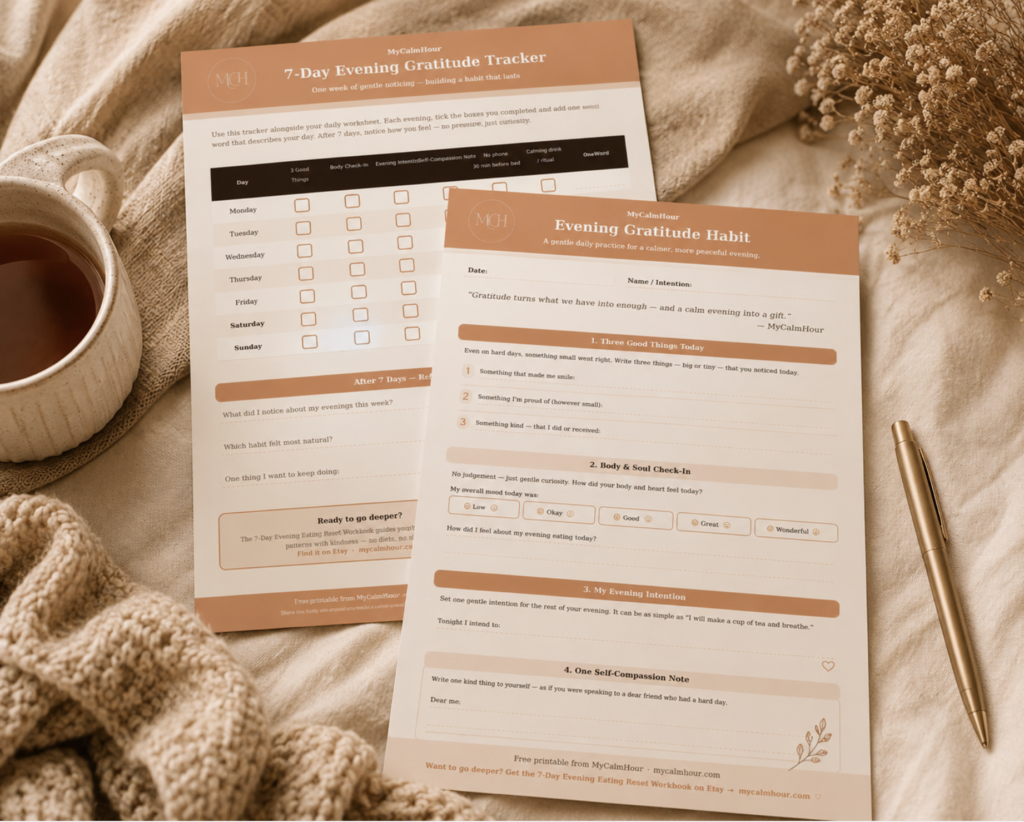
If this article resonated with you …
End your day with a little more kindness.
7-Day Evening Gratitude Tracker – build a simple evening habit that helps you slow down, reflect and finish the day with greater calm.
Why You Need an Evening “Landing Strip”
An airport landing strip gives a plane the space and surface it needs to reduce speed safely before coming to a complete stop.
Without an intentional buffer zone between your workday and your evening, your nervous system experiences a jarring “crash landing.” This sudden halt often triggers a spike in internal restlessness, leading straight to late-night phone scrolling or reaching into the pantry for quick dopamine.
Changing into soft clothing acts as the first physical marker of your landing strip:
- The Tactical Boundary: It creates a clear, tangible line between “public performance” and “private rest.”
- Diaphragmatic Freedom: Loose waistbands allow your belly to expand fully on the inhale, inviting natural diaphragmatic breathing.
- Sensory Decompression: Soft, natural textures lower tactile friction, allowing overstimulated nerve endings to settle.
Structured Wear vs. Landing Strip Clothing
| Feature | Structured “Daytime” Clothes | “Landing Strip” Evening Wear |
| Tactile Input | Tight waistbands, stiff seams, synthetic layers | Loose organic cotton, soft knits, seamless fits |
| Breathing Impact | Restricts belly expansion; encourages chest breathing | Allows full diaphragmatic expansion and long exhales |
| Nervous System Signal | “Stay alert, hold boundaries, perform” | “Demands are over, put down your weight, rest” |
| Transition Impact | Prolongs work tension into the evening | Triggers an immediate biological shift toward calm |
3 Rules for Building Your Clothing Landing Strip Tonight
To make this transition as effortless as possible, reduce the friction required to change your clothes at the end of the day:
1. The Immediate Swap
Do not wait until right before bed to put on your soft clothes. Make changing your outfit the very first action you take when your workday ends. Lay your soft clothes out in the morning so they are waiting for you the moment you step off the clock.
2. Prioritize Belly Freedom Above All
Choose pants, shorts, or dresses with soft, forgiving waistbands (or no waistband at all). Your abdominal nerve centers—including the enteric nervous system—need freedom from pressure to shift into digest-and-rest mode.
3. Remove “Micro-Friction”
Ditch tags that scratch, socks with tight elastic bands, or fabrics that trap heat. Choose natural, breathable textures like washed cotton, bamboo, or soft linen that feel completely effortless against your skin.
A Soft Practice for Tonight
Tonight, as you slip out of your daytime clothes and pull on your softest shirt, do it slowly.
As the fabric settles against your skin, take one deep, abdominal breath. Let your belly expand fully, unhindered by tight seams.