Temperature as Comfort: How Warm Baths Shift Your Nervous System
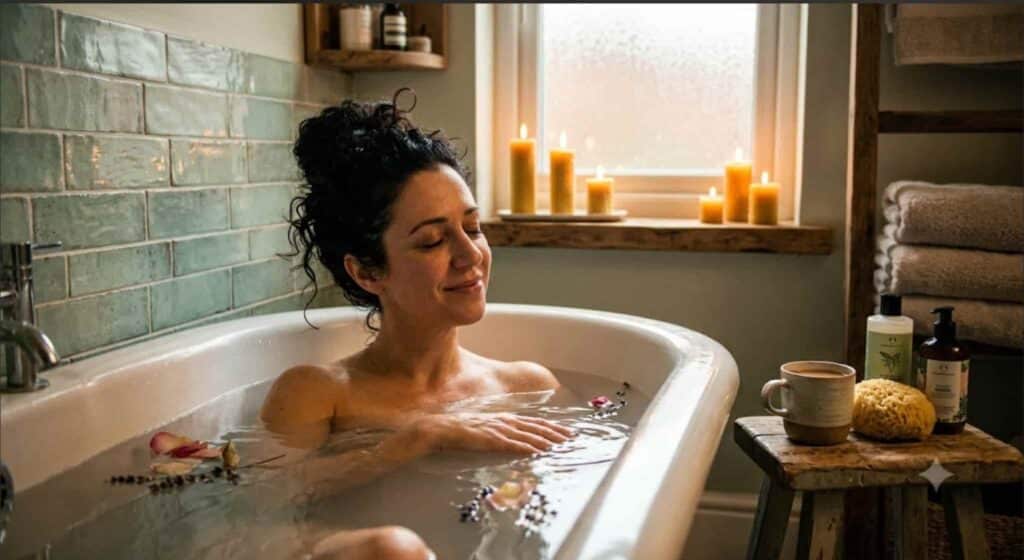
There is a quiet, near-instantaneous shift that happens the moment you sink into a warm bath. As the water settles around your shoulders, your breathing unhurriedly deepens, your muscles release their invisible bracing, and the mental chatter of the day begins to soften.
Your body uses temperature as one of its primary languages to measure safety. When you leverage warmth intentionally in the evening, you aren’t just soaking—you are actively sending a physiological message to your nervous system that the day’s demands are over and it is safe to let go.
“Temperature is a direct conversation with your nervous system. Warmth tells your body that it is safe to step out of defense and into rest.”
The Vascular Shift: How Warmth Calms the Body
To understand why a warm bath feels so grounding, it helps to look at what happens inside your circulatory system when stress accumulates.
Throughout a busy day, chronic alertness keeps your sympathetic nervous system (“fight-or-flight”) mildly active. This causes peripheral blood vessels to constrict, keeping blood flow centralized in your core and muscles. It’s why stress often leaves us with cold hands, tight shoulders, and a subtle sense of physical tension.
When you submerge yourself in warm water, your body undergoes vasodilation:
- Blood Vessel Expansion: Warmth causes blood vessels in your skin and extremities to widen, allowing blood to flow freely to the surface of your body.
- Heart Rate Modulation: As your blood vessels open, peripheral resistance drops. Your heart doesn’t have to work as hard, and your pulse naturally slows down.
- Muscle De-tensioning: Increased circulation delivers warmth directly to tight muscle tissues, melting away the physical armor built up from hours of sitting, typing, or holding tension.

If this article resonated with you…
Every emotion has something to tell you.
The Understanding Your Emotions Journal gently guides you through 30 days of reflection to help you recognize emotional patterns, build self-awareness and respond with greater compassion.
The Thermoregulatory Secret to Falling Asleep Faster
One of the most fascinating aspects of warm baths is how they interact with your body’s natural circadian rhythm.
Your core body temperature naturally drops in the evening to prepare you for sleep. A warm bath works in harmony with this process through a paradox: it warms you up to cool you down.
Warm Bath (Increases Surface Blood Flow)
       ↓
Stepping Out into Cool Air (Heat Escapes Rapidly)
       ↓
Core Body Temperature Drops Promptly
       ↓
Melatonin Release Triggered → Deep Natural Drowsiness
When you step out of a warm bath into a cooler room, heat radiates away from your skin quickly. This sudden drop in core body temperature mimics the body’s natural pre-sleep cooling signal, triggering a rise in melatonin and making it significantly easier to drift off without overthinking.
Comparing Evening Temperature Signals
How you use temperature at night completely changes how your nervous system responds:
| Temperature Input | Physiological Signal | Evening Impact |
| Harsh Cold Exposure | High alertness, vasoconstriction, cortisol spike | Great for morning energy; disrupts evening softening |
| Overheated Bedroom | Disrupted thermoregulation, night restlessness | Keeps core temperature too high for deep sleep stages |
| Warm Bath / Shower | Vasodilation, muscle relaxation, rapid core cooling | Triggers parasympathetic rest and prepares body for sleep |
3 Gentle Ways to Enhance Your Warm Bath Ritual
You don’t need fancy bath salts or an elaborate two-hour ritual to receive the somatic benefits of warmth. Keep it simple and low-pressure:
- Time It for the Core Drop: Aim to take your warm bath or shower about 60 to 90 minutes before bed. This gives your core temperature enough time to drop after you step out, perfectly aligning with your sleep window.
- Keep the Lighting Soft: Resist the urge to keep bright bathroom overhead lights on. Light a candle or use a warm nightlight so your eyes receive a low-light signal while your skin receives warmth.
- If You Don’t Have a Tub, Use a Warm Foot Bath or Shower: A warm shower offers similar benefits! Alternatively, soaking just your feet in a basin of warm water for 10 minutes stimulates the same peripheral blood flow and brings instant physical grounding.