Comfort Eating vs Self-Soothing Explained
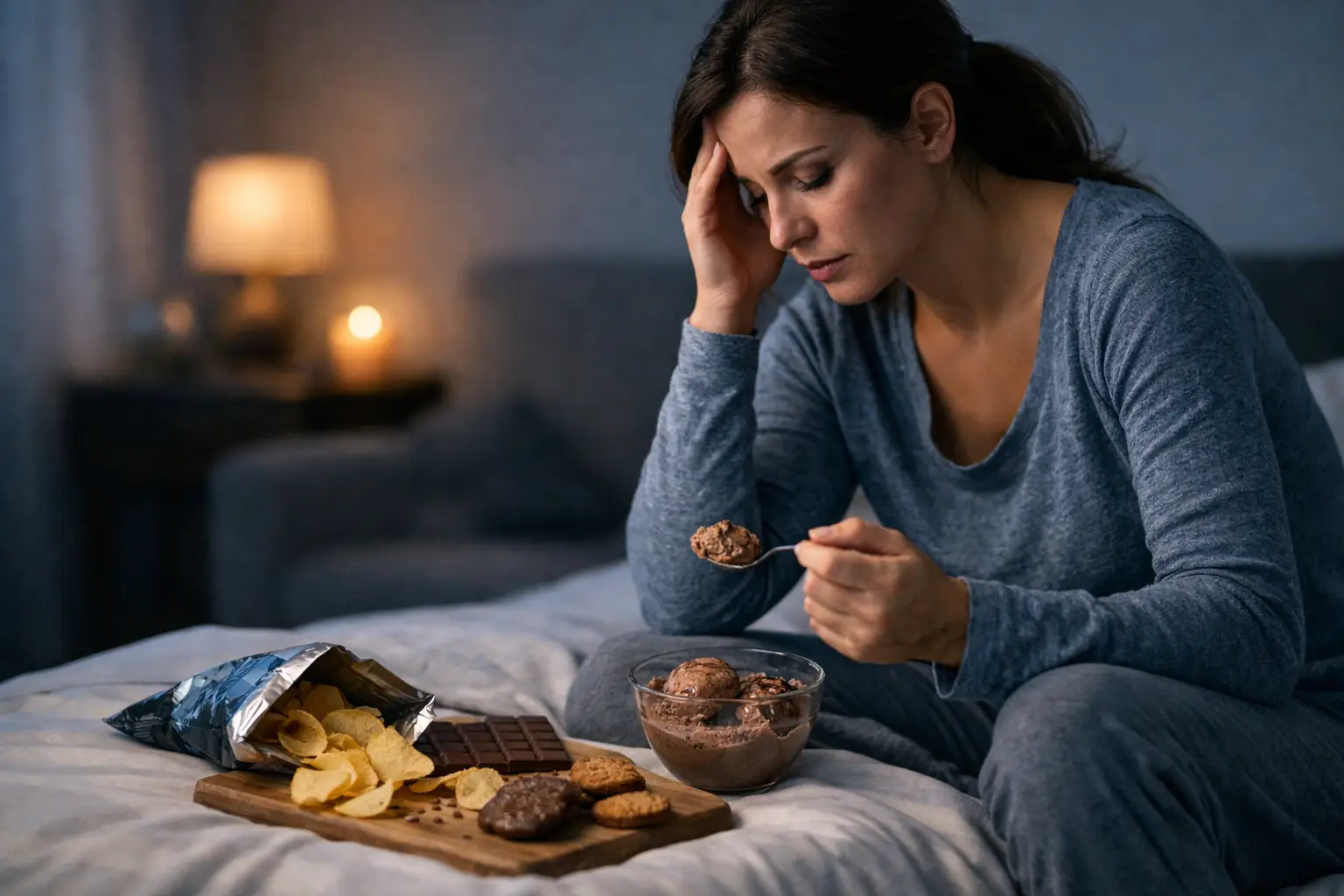
The kitchen is quiet. The day is finally over, yet your body still feels as if it is carrying every email, every request, and every small disappointment. You reach for something sweet or crunchy, and for a few minutes, the internal noise softens.
This is where understanding comfort eating vs self-soothing becomes crucial—especially when food has become your most reliable way to signal: “I need a break.”
There is nothing weak or broken about this response. Food is sensory, familiar, and immediately available. It offers warmth, pleasure, and predictability. The goal is not to ask if you are “allowed” to find comfort in food, but to ask: what kind of comfort is your nervous system actually seeking tonight?
The Real Difference
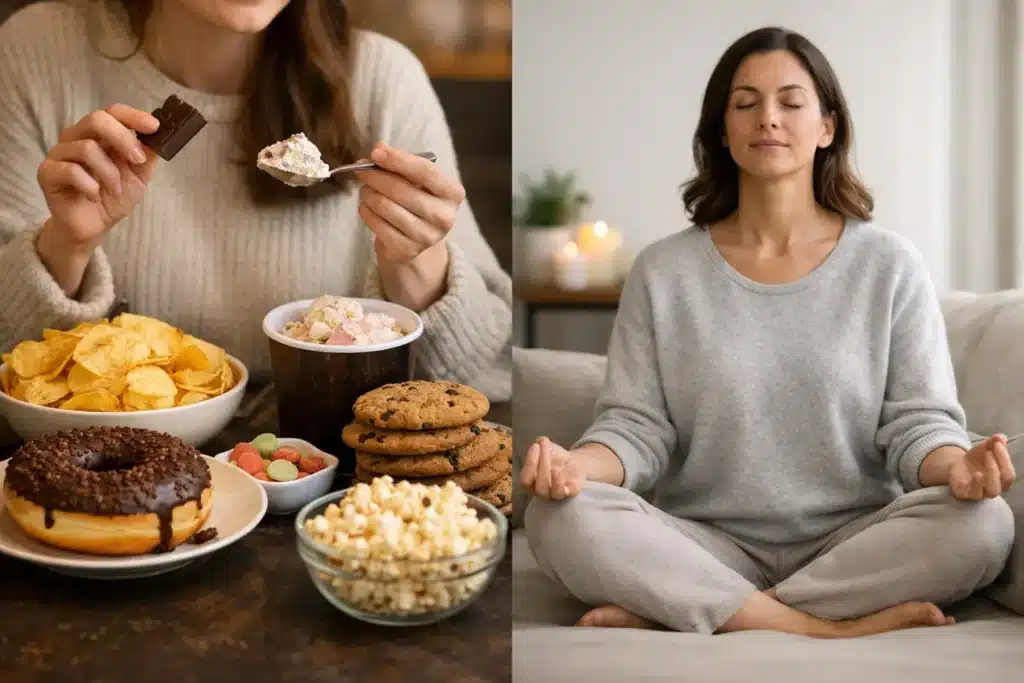
To build a healthier relationship with food, it helps to see how these two concepts interact:
| Comfort Eating 🍩 | Self-Soothing 🌿 |
| Eating driven primarily by an emotional need rather than physical hunger. | The broader practice of helping yourself feel safe, calm, and supported. |
| Uses food as the primary or only tool for emotional relief. | Uses a variety of sensory, physical, and emotional tools (including food). |
| Often leaves you feeling physically full, yet emotionally still unsatisfied. | Addresses the root cause (e.g., warmth for loneliness, quiet for overstimulation). |
Comfort eating is actually one form of self-soothing. The challenge arises when food becomes your only dependable option, or when you keep eating long after the comfort has faded because the underlying emotional need was left untouched.
Key takeaway: You do not need more strict rules around food. You simply need more options for comfort.
Why Evening Comfort Eating Feels So Urgent
Stress fundamentally changes how the body searches for relief. After hours of rushing, caretaking, problem-solving, or performing, your nervous system remains braced for action.
Busy & Demanding Day ──► Nervous System Braced ──► Search for Quick Sensory Boundary ──► Urgent Evening Craving
Food acts as a rapid transition. A favorite snack gives your attention a clear place to land, creating a sensory boundary between a chaotic day and the quiet evening.
3 Signs You Need Comfort, Not Just Food
You don’t need to interrogate yourself before every snack, but these clues can offer helpful self-awareness:
- The Timing: The urge arrives the exact second you finish work, put children to bed, or finally sit down on the couch.
- The Specificity: You crave a very specific texture or taste, accompanied by restless, numb, or flat emotional energy.
- The Aftermath: You feel physically full, but mentally still unsettled. This usually means the underlying need was larger than what food could provide (e.g., needing rest, connection, or permission to stop).
If this article resonated with you…
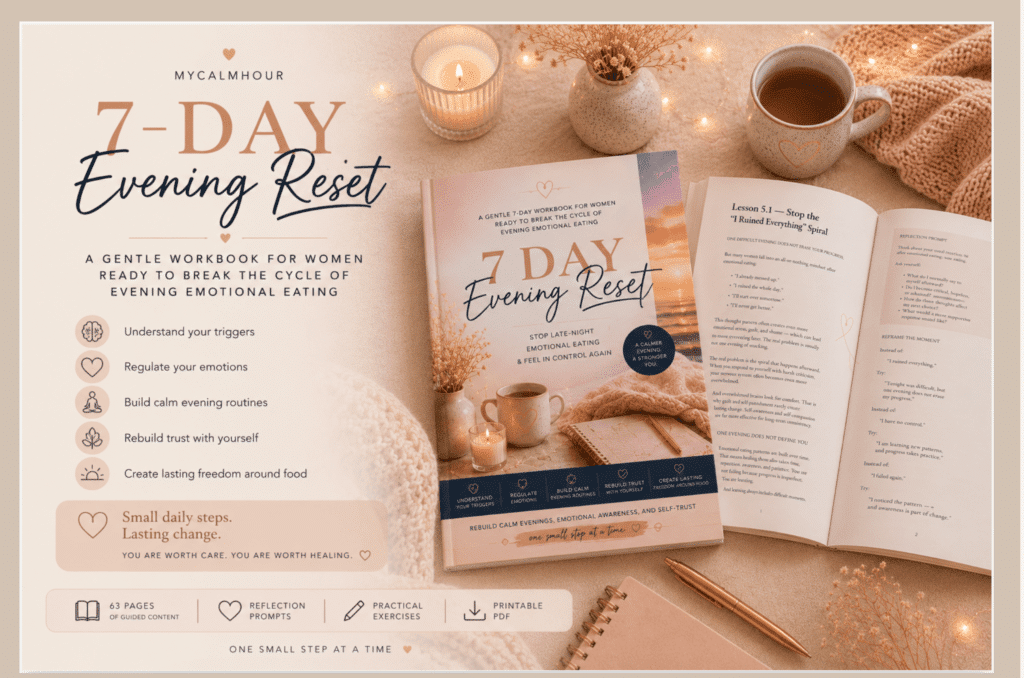
Discover what’s really behind your evening cravings.
The 7-Day Evening Reset Workbook helps you understand your emotional triggers through gentle reflection, calming practices and practical exercises.
How to Practice Self-Soothing Without Making Food the Enemy
Rather than forcing yourself to choose between eating or “being good,” try adding a layer of gentle comfort alongside your food.
1. Start with a 60-Second Arrival
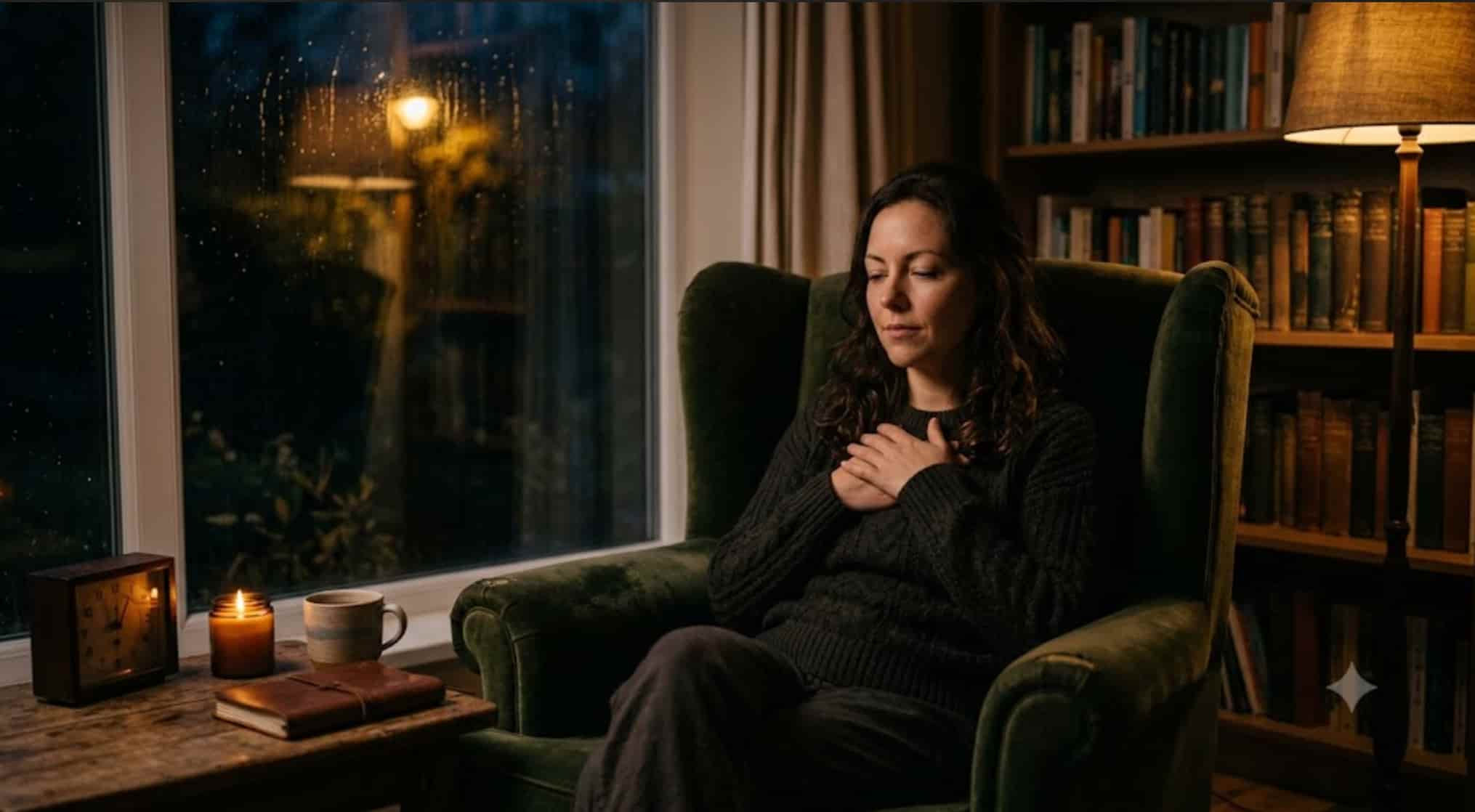
Before opening the pantry, pause for one minute. Place a hand on your chest or stomach and let your exhale be slightly longer than your inhale.
Quietly ask yourself:
“What has today asked of me?”
This question moves you away from self-criticism and toward recognition. You don’t have to fix anything—simply naming your exhaustion reduces its urgency.
2. Make Comfort Intentional
If you decide to eat the snack, give yourself a complete experience of it:
- Put it on a plate or in a bowl.
- Sit down comfortably.
- Take the first few bites without scrolling or standing over the counter.
When food is eaten in a hurried or secretive state, the brain struggles to register that it received pleasure. Presence allows the comfort to actually land.
Build Your “Menu of Comforts”
When you are exhausted at 9:00 p.m., it is hard to invent self-soothing ideas from scratch. Keep a simple “menu” in your phone or journal for ordinary weeknights:
                  ┌──► Overstimulated? ──► Low lighting, noise-canceling headphones, quiet room.
                  │
Your Comfort Menu ┼──► Lonely/Unsupported? ─► Warm tea, heavy blanket, texting a close friend.
                  │
                  └──► Tense/Restless? ────► Slow body stretch, warm shower, slow music.
When Food Is the Only Comfort You Have Right Now
There will be nights when you do not have the energy for a wind-down ritual. You might eat cookies in the car or stand at the counter finishing leftovers because you are completely spent. You are still worthy of kindness in those moments.
Self-soothing is not a performance or another wellness chore. Sometimes the kindest thing you can do is eat, rest, and let tomorrow be a fresh start. Pressure makes the cycle louder; compassion gives you room to heal.
A Gentle Experiment for Tonight
Tonight, don’t try to “win a battle” against your craving. When the urge arrives, offer yourself 10 minutes of comfort before making a decision:
- Dim the lights.
- Wrap yourself in a blanket.
- Make a warm drink.
Then, ask: “What would help me feel a little more held right now?”