Why You Eat at Night Even When You’re Not Hungry
Many people experience nighttime cravings…
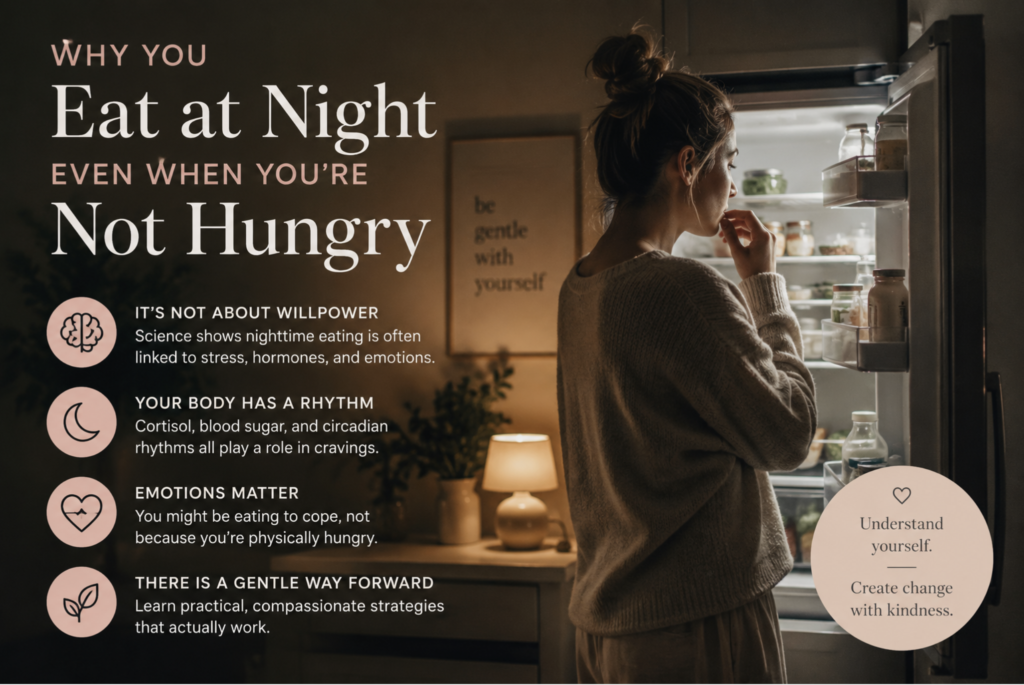
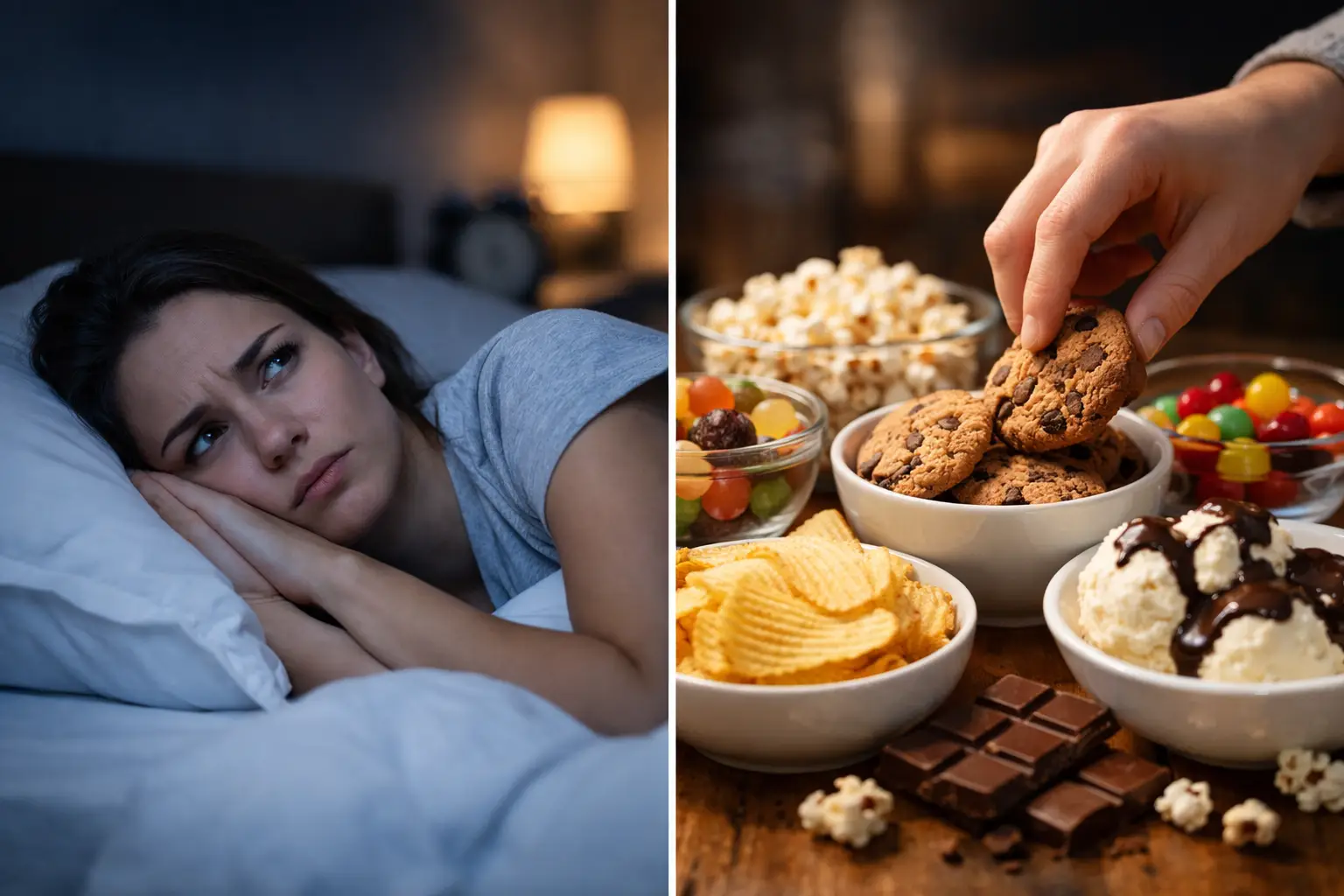
It’s 9 PM. You had a satisfying dinner just a few hours ago, yet you find yourself wandering back to the kitchen, opening the fridge, and looking for something to eat. You’re not physically hungry—your stomach isn’t growling—but the urge to eat is overwhelming. If this sounds familiar, you are not alone.
Many women struggle with nighttime cravings, often blaming themselves for a lack of willpower. But science tells us a different story. Eating at night when you are not hungry is rarely about discipline; it is deeply rooted in your biology, your nervous system, and how you process the stress of the day.
Why You Eat at Night: The Science Behind Nighttime Cravings
When we look closely at the neuroscience and psychology behind nighttime eating, several key factors emerge that explain why the evening hours are particularly challenging.
1. The Cortisol and Circadian Rhythm Connection
Your body operates on an internal clock known as the circadian rhythm. This rhythm regulates everything from sleep to hormone release. Cortisol, often called the “stress hormone,” is supposed to peak in the morning to help you wake up and gradually decline throughout the day, reaching its lowest point at night .
However, when you experience chronic stress, your cortisol levels can remain elevated in the evening. Elevated nighttime cortisol disrupts your natural rhythm and can trigger cravings for high-calorie, comforting foods. Your body is essentially seeking a way to soothe the stress response, and food—especially carbohydrates and fats—provides a quick, albeit temporary, fix.
2. The Dopamine Deficit
Dopamine is a neurotransmitter associated with pleasure and reward. After a long, demanding day of making decisions, caring for others, and managing work, your brain is often depleted of dopamine. Comfort foods, particularly those high in sugar and fat, trigger a rapid release of dopamine in the brain’s reward centers, such as the nucleus accumbens .
In the evening, when you are exhausted and seeking comfort, your brain remembers that food is a reliable and immediate source of dopamine. You aren’t eating because you need calories; you are eating because your brain is seeking a chemical reward to counteract the depletion of the day.
3. Emotional Regulation and “Stuffing” Feelings
Throughout the day, many women push aside their emotions to stay productive. Whether it’s frustration at work, anxiety about the future, or feelings of inadequacy, these emotions don’t just disappear. By the time evening arrives and the distractions of the day fade, these suppressed emotions rise to the surface.
Eating becomes a coping mechanism—a way to temporarily numb or “stuff down” uncomfortable feelings. The physical act of chewing and the sensory experience of eating provide a distraction from emotional discomfort . This is classic emotional eating: using food to fill an emotional void rather than a physical one.
The Difference Between Physical and Emotional Hunger
To begin addressing nighttime eating, it is crucial to understand the difference between physical hunger and emotional hunger.
| Characteristic | Physical Hunger | Emotional Hunger |
| Onset | Gradual | Sudden and urgent |
| Cravings | Open to various foods (even vegetables) | Specific comfort foods (sweets, salty snacks) |
| Satiety | Stops when full | Often leads to eating past the point of fullness |
| Aftermath | Feeling satisfied | Often accompanied by guilt or shame |
Table 1: Distinguishing between physical and emotional hunger.
Gentle Strategies to Manage Nighttime Eating
Understanding why you eat at night is the first step toward change. The next step is applying gentle, self-compassionate strategies to support your nervous system and emotional well-being.
Create an Evening Reset Routine
Instead of relying on food to signal the end of the day, create a new routine that tells your nervous system it is time to relax. This could involve dimming the lights, changing into comfortable clothes, or drinking a warm cup of herbal tea. The goal is to create a clear transition between the demands of the day and the rest of the evening.
Practice the “Pause”
When the urge to eat strikes, try to pause for just five minutes before heading to the kitchen. Use this time to check in with yourself. Ask gently: What am I actually feeling right now? Am I anxious, lonely, bored, or exhausted? Simply identifying the underlying emotion can reduce the intensity of the craving.
Meet the Real Need
If you identify that you are not physically hungry, try to meet the actual need. If you are exhausted, perhaps you need to go to bed earlier rather than eating for energy. If you are stressed, a few minutes of deep breathing or gentle stretching might soothe your nervous system more effectively than a snack. If you are lonely, calling a friend or journaling might provide the connection you crave.
A Note on Self-Compassion
It is essential to approach nighttime eating with self-compassion rather than criticism. Beating yourself up for eating only adds to your stress, which can trigger further emotional eating. Remember that your body is simply trying to cope with the demands of life using the tools it has. By slowly introducing new, gentle ways to care for yourself, you can break the cycle and find true comfort.
Looking for more gentle tools? Visit our Free Resources page to download printable guides and calming worksheets.
References
[1] Role of late-night eating in circadian disruption and depression. PMC. Available at:
[2] Probing the Neurobiology of Emotional Eating. Harvard Brain Science Initiative. Available at:
[3] Emotional Eating and How to Stop It. HelpGuide.org. Available at: