The Connection Between Sleep, Stress and Emotional Eating

Some evening cravings are not really about food at all. The connection between sleep, stress and emotional eating often shows up at the exact moment your body has run out of energy, your mind is overstimulated, and comfort feels urgent.
If this happens to you at night, you are not broken. You are not weak, and you do not need more willpower. Very often, your nervous system is asking for relief in the fastest, most familiar way it knows.
Why sleep, stress, and emotional eating are so closely linked
When stress builds all day, your body does not simply forget about it when dinner is over. It carries that tension forward. Muscles stay tight, your thoughts stay busy, and your system may remain alert long after the workday ends.
That matters because stressed bodies tend to crave quick comfort. Food, especially sweet or highly satisfying food, can feel grounding for a few moments. It offers pleasure, distraction, and sometimes a sense of reward after a hard day. If evenings are the only time you finally stop moving, emotional eating can begin to feel like your exhale.
Sleep adds another layer. When you are underslept, everything feels louder. Stress feels sharper, patience gets thinner, and emotional regulation becomes harder. You may notice that on tired days, cravings arrive earlier, feel stronger, and are harder to question.
This is part of the connection between sleep, stress and emotional eating that so many people miss. The issue is not always hunger. Sometimes it is nervous system depletion.
What happens in the body when you are overtired
A tired brain looks for relief. It also has a harder time pausing before acting on impulse. That can make nighttime eating feel almost automatic, especially after a draining day.
When sleep is inconsistent, your body may read the world as more demanding and less safe. In that state, soothing behaviors become more appealing. Food is one option because it is immediate, familiar, and socially acceptable. It does not mean food is the problem. It means food may have become your most reliable form of downshifting.
There is also a practical side to this. People who are exhausted often have less capacity for evening care. Cooking feels harder. Hydrating gets forgotten. Rest feels oddly unreachable, even when you need it most. By the time the house is quiet, eating can become the easiest way to cope with emotional and physical depletion at once.
Why stress often peaks at night
Many people assume stress should fade in the evening, but the opposite is often true. Daytime responsibilities can keep you distracted. At night, when the noise drops, your body finally has space to feel what it has been carrying.
That is why cravings can surge after dinner, even when you have eaten enough. The urge may be less about needing more food and more about needing softness, comfort, or transition. Night eating often happens in the gap between being functional all day and not yet feeling truly safe enough to rest.
For some people, the habit becomes cyclical. Stress disrupts sleep. Poor sleep lowers emotional resilience. Lower resilience increases the pull toward emotional eating. Then eating late may leave you feeling uncomfortable, unsettled, or frustrated, which can make sleep even harder. The cycle is exhausting, but it is also understandable.
The gentler question to ask instead of “Why can’t I stop?”
A more helpful question is, “What is my body asking for right now?“
That shift matters. It moves you away from self-criticism and toward curiosity. Sometimes the answer is food. Sometimes it is rest, quiet, reassurance, or a softer landing at the end of the day.
If you tend to eat emotionally at night, try looking at the hour before the craving gets loud. That is often where the real story lives. Were you answering messages until bedtime? Did you skip pauses all day? Are you trying to go from full-speed stress into sleep without any transition?
Emotional eating often makes more sense when you see the full context.
Small ways to support the sleep-stress cycle
You do not need a perfect nighttime routine. You need a few signals that tell your body the day is ending.
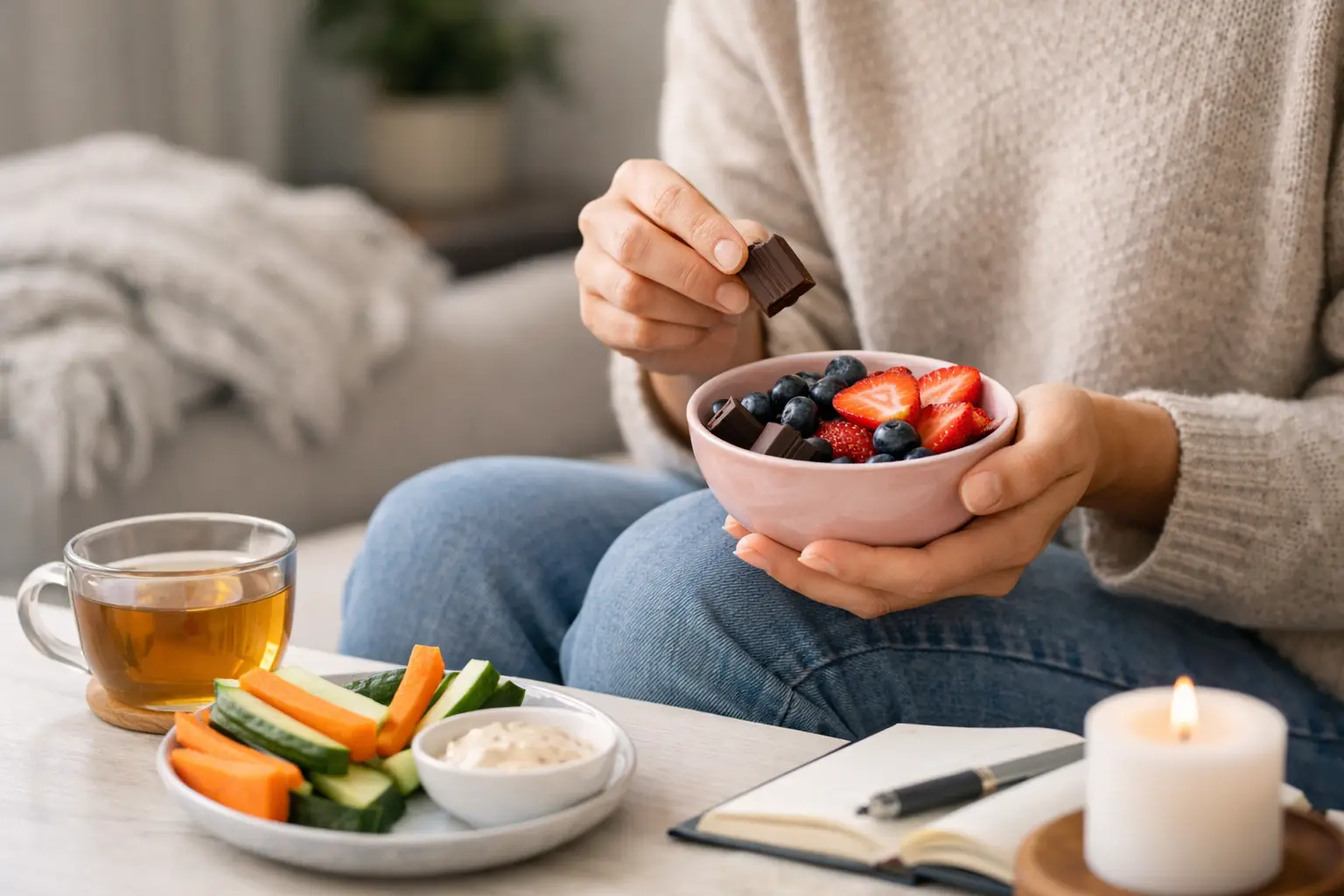
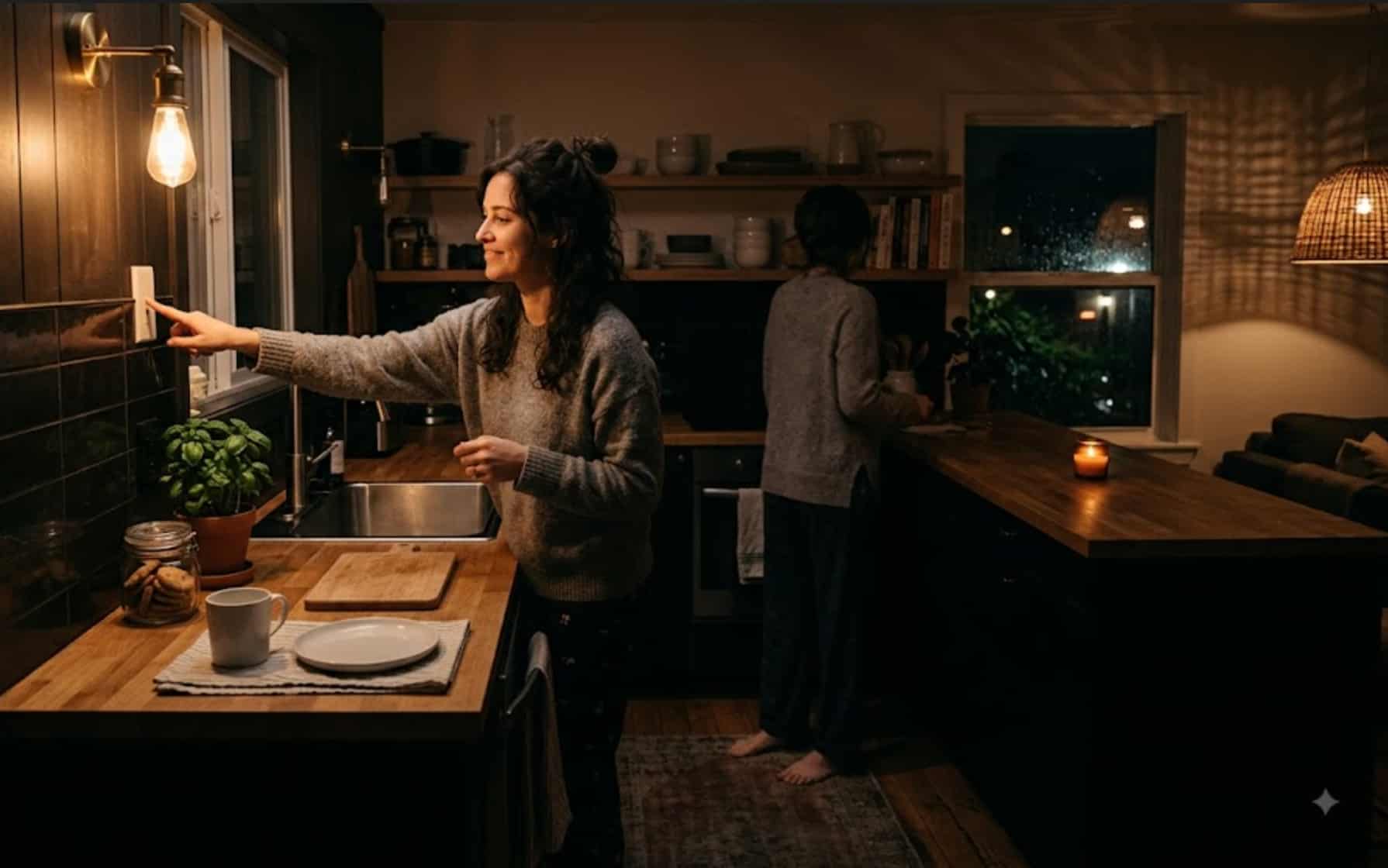
A gentler evening might mean dimming lights earlier, putting your phone down 20 minutes sooner, or having a simple ritual that helps your body slow down before cravings take over. A cup of tea, a shower, quiet music, a few lines of journaling, or sitting in silence with your hand on your chest can all create a pause between stress and food.
If you do eat emotionally, that is not a sign that you failed. It may simply be a sign that your system needed more support before the urge arrived. At My Calm Hour, that is the heart of the work: understanding the need underneath the behavior so evenings can start to feel safer, one gentle hour at a time.
Better sleep can reduce stress sensitivity. Less stress can soften the urgency around food. And a calmer evening rhythm can support both. You do not have to fix everything at once. Sometimes the next step is just this: make tonight feel 5 percent calmer than last night.