
The Power of “Unplugging” the Kitchen After Your Evening Snack
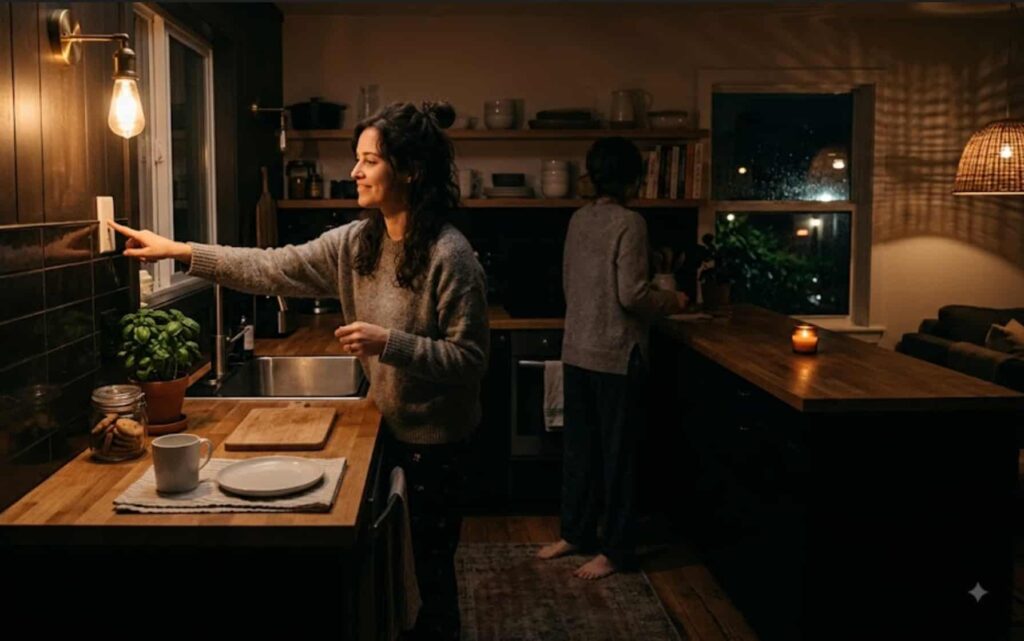
You have finished your evening tea, enjoyed your chosen bedtime snack, and wiped down the counter. Yet, an hour later, as you sit reading or attempting to unwind, your mind wanders back toward the kitchen. You find yourself drifting toward the pantry for “just one more little thing”—not out of hunger, but out of open-ended proximity.
In modern homes, the kitchen rarely closes. It remains brightly lit, fully accessible, and perpetually “open for business” until the moment we turn out the bedroom lights.
By creating a clear, symbolic boundary—the practice of “unplugging” the kitchen after your evening snack—you provide your nervous system with a definitive closing ceremony for the day. This simple ritual signals to your brain that the window for nourishment and decision-making has closed, freeing your mind to shift entirely into rest.
“An open kitchen keeps your brain in a state of subtle availability. Closing the kitchen for the night isn’t about restriction; it is an act of shelter for your tired mind.”
The Psychology of Open-Ended Availability
When the kitchen remains in its daytime state—overhead lights on, counters glowing, food easily visible—it acts as an open tab in your brain’s mental browser. Your subconscious continues to register the space as a source of stimulation, comfort, and activity.
Kitchen Left "Open" → Subconscious Availability → Low-Grade Decision Fatigue → Mindless Grazing
                                        ↓
Kitchen "Unplugged" → Environmental Boundary → Cognitive Closure → Uninterrupted Rest
Creating an environmental boundary removes the need for late-night willpower. You are no longer choosing not to eat every twenty minutes; the environment itself reflects that the eating phase of the day is complete.

If this article resonated with you…
Every emotion has something to tell you.
The Understanding Your Emotions Journal gently guides you through 30 days of reflection to help you recognize emotional patterns, build self-awareness and respond with greater compassion.
What Does “Unplugging” the Kitchen Actually Look Like?
Unplugging the kitchen does not mean deep-cleaning appliances or creating rigid, punishing rules. It is a gentle, 2-minute sensory transition that shifts the room from an active workspace into a resting state.
1. The Lighting Shift (The Primary Cue)
Turn off all main overhead lights and fluorescent under-cabinet lighting. If you need a light for safety, rely on a single warm amber nightlight or a tiny battery-operated candle. A dark or dimly lit kitchen instantly removes the room’s visual invitation.
2. The Physical “Closure” Marker
Perform one small, physical action that signifies the end of kitchen tasks:
- Put the dish towel away or hang it over the oven handle.
- Close all pantry doors and cabinet cupboards completely.
- Put a wooden lid over the fruit bowl or bread basket.
3. The Sensory Wipe-Down
Wipe down the central counter with a soft cloth and a gentle, calming scent (like lavender, chamomile, or warm vanilla). The clean scent provides an olfactory signal that the space is fresh, clean, and finished for the night.
Open Kitchen vs. Unplugged Kitchen
| Aspect | The “Open” Kitchen | The “Unplugged” Kitchen |
| Visual Input | Bright overhead LEDs, visible food, glowing counters | Dim warm glow, closed cupboards, clear surfaces |
| Cognitive Impact | Keeps open tabs in the mind; prompts “Should I eat?” | Signals complete closure; releases decision fatigue |
| Nervous System Signal | “Active workspace, stimulation available” | “Resting space, day is finished” |
| Late-Night Outcome | Mindless grazing, lingering around counters | Smooth transition to couch or bed with a quiet mind |
3 Low-Effort Steps to Try Tonight
- Clear Your Final Mug: Wash or place your final cup in the dishwasher so no active dishes remain in the sink.
- Lower the Sensory Volume: Flip off the main light switch. Let the room fall into soft shadows.
- Cross the Threshold: Step out of the kitchen, pull the door partially closed if possible, or simply turn your back to the room. Mentally say to yourself: “The kitchen is resting now, and so am I.”
Tonight, give yourself the gift of an environmental boundary. Let your kitchen sleep so your mind can do the same.