Why Stress Makes You Crave Carbs at Night
After a long, draining day, cravings can feel almost eerily specific. You may not want just any food. You want toast, chips, pasta, cookies, cereal, or something warm and easy that helps your body exhale. If you’ve been wondering why stress makes you crave carbs, the answer is not a lack of willpower. It’s a very human stress response playing out in your brain, body, and nervous system.
That matters, because when you understand what is happening, the craving starts to feel less like a personal failure and more like a message. Your body is not trying to sabotage you. It is trying to soothe you in one of the fastest ways it knows how.
Why stress makes you crave carbs in the first place
Stress changes the body’s priorities. When your nervous system senses pressure, conflict, overload, uncertainty, or emotional strain, it shifts resources toward survival. That can affect hunger signals, blood sugar patterns, digestion, and the parts of the brain involved in reward and self-control.
Carbohydrate-rich foods are often the foods the brain tags as quick relief. They are fast, familiar, and usually linked to comfort. Some are also tied to memory – childhood snacks, easy dinners, late-night treats, or foods you learned to reach for when you needed a break.
There is also a biochemical piece. Stress hormones can increase appetite, especially when stress lasts for hours or days instead of passing quickly. At the same time, the brain becomes more interested in foods that offer rapid energy. Carbs can do that. They are the body’s preferred short-term fuel source, so when you feel depleted, wired, or emotionally wrung out, your system may start asking for the most efficient energy it can get.
This is one reason cravings tend to hit so hard in the evening. By then, many people are carrying accumulated stress, decision fatigue, unmet emotional needs, and plain old exhaustion. Your body is not just asking for food. It may be asking for softness, safety, and relief.
Your brain wants comfort, not just energy
Stress affects more than hunger. It also changes how the brain evaluates reward.
When you are calm and resourced, you usually have more access to pause, reflect, and make intentional choices. When you are stressed, the brain becomes more interested in immediate payoff. That is not because you are lazy or undisciplined. It is because survival mode favors what feels relieving right now.
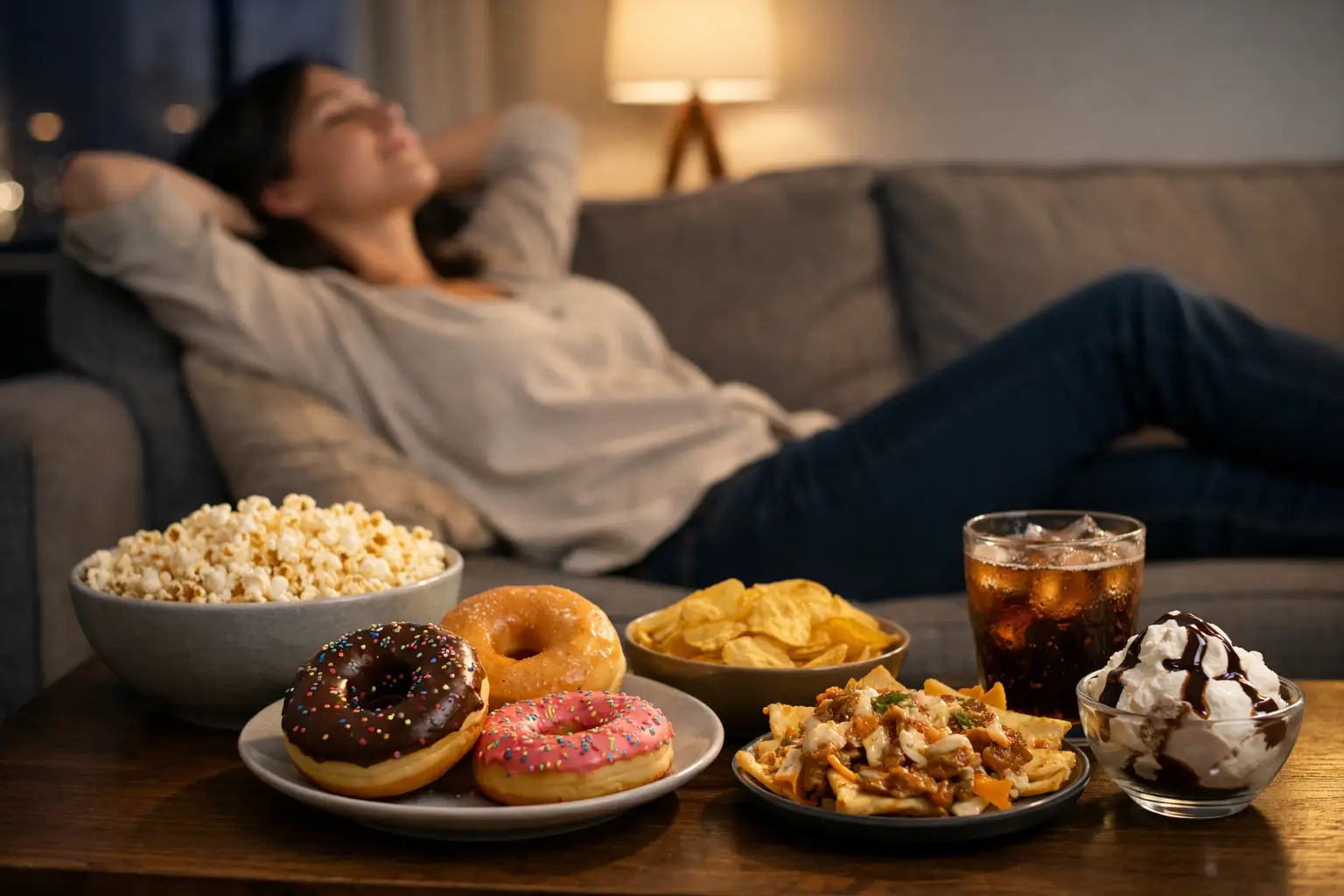
Carbs often deliver that immediate payoff. They can feel grounding, sedating, and emotionally satisfying, especially when paired with fat, salt, or sugar. A crunchy snack may discharge tension. A warm bowl of pasta may feel like being taken care of. Ice cream after a hard conversation may create a brief sense of emotional cushioning.
None of this is imaginary. Food can genuinely create a temporary downshift in the nervous system. The problem is not that it works. The problem is that it often becomes the only reliable way you know how to come down at night.
Why nighttime cravings feel stronger after stressful days
Evening cravings are rarely about the evening alone. They are often the final chapter of a day your body never fully recovered from.
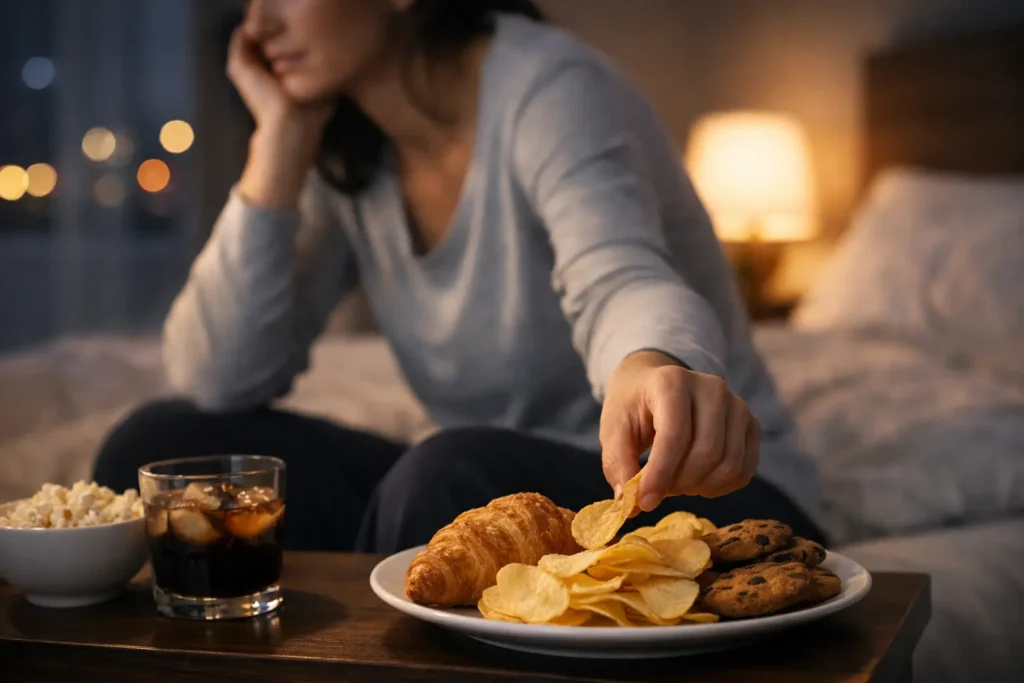
Maybe you rushed through meals, pushed past your stress signals, held yourself together for everyone else, or spent all day in a low-grade state of pressure. By nighttime, your inner resources are thin. This is when cravings can feel loudest, because the body finally has enough quiet to register what it has been needing.
There is often a mix of physical and emotional depletion at play. You might be underfed, overstimulated, lonely, mentally overloaded, or craving comfort after giving too much. In that state, carbs make sense. They are easy. They ask very little of you. They offer a quick bridge between overwhelm and relief.
This is why trying to fight nighttime cravings with more self-criticism usually backfires. Shame increases stress, and more stress often means more craving. You are not broken. You may simply be caught in a loop where stress creates the craving, the food brings short relief, and the deeper need remains unmet.
The nervous system piece most people miss
A lot of food advice treats cravings like a logic problem. But many evening cravings are actually regulation problems.
If your nervous system is stuck in overdrive, your body will naturally look for ways to come back down. Some people scroll, some pour a drink, some overwork, and some eat. Often, it is not about the food itself. It is about what the food helps you feel for a few minutes: calmer, fuller, quieter, heavier, safer.
That is why nervous system support can be so helpful. When you give your body other ways to settle, food no longer has to do all the emotional heavy lifting.
This does not mean cravings disappear overnight. It means you begin responding to them with curiosity instead of combat. Instead of asking, “How do I stop wanting carbs?” you might ask, “What is my body trying to help me survive right now?” That question changes the whole tone of the evening.
What to do when stress makes you crave carbs
The gentlest approach is not to police the craving, but to slow down enough to understand it.
Start by noticing the moment before you reach for food. Not to judge it. Just to catch it. Ask yourself what kind of hunger is present. Is it physical hunger, emotional exhaustion, sensory overload, loneliness, tension, or the need for a transition after a hard day? Sometimes it is several at once.
Then bring in support before or alongside food. You might make a snack and also turn off the bright overhead light. You might eat the toast and also sit down instead of standing at the counter. You might have the cereal and also put one hand on your chest and take three slower breaths. Small signals of safety matter more than they seem to.
If your evenings are especially vulnerable, it can help to build a bridge between the stress of the day and the rest of the night. This might be ten minutes of quiet, a shower, a short walk, a comforting drink, gentle stretching, music, journaling, or simply changing into softer clothes before you enter the kitchen. The goal is not to perform a perfect routine. The goal is to tell your body, “You can come out of high alert now.”
It also helps to look earlier in the day. If stress eating shows up every night, your body may be arriving at evening undernourished in more ways than one. Regular meals, moments of pause, and emotional check-ins during the day can reduce the intensity of the nighttime crash.
When carbs are comfort, not the enemy
Carbs are not the villain in this story. For many people, they have become symbolic comfort foods because they are accessible, familiar, and effective at creating short-term relief. That does not make you weak. It makes you adaptive.
The shift is not to fear those foods. It is to widen your support system so comfort does not rest on food alone.
You may still want the cookie, the bread, or the bowl of pasta after a stressful day. That is okay. The difference is that you can begin meeting the craving with more awareness. Sometimes the food will be exactly what you want. Sometimes, once your body feels a little safer, the urgency softens.
That is a much kinder and more sustainable place to work from than trying to overpower yourself at the end of an already exhausting day.
A calmer way to respond tonight
If this pattern is familiar, try making tonight an experiment in self-understanding. When the craving appears, pause for one breath and ask, “What would help me feel supported right now?” The answer might still include food. It might also include rest, warmth, quiet, comfort, or a softer landing than you usually give yourself.
At My Calm Hour, we believe change happens one gentle hour at a time. Not through pressure, but through safety. And often, that is the real answer to why stress makes you crave carbs: your body is searching for calm in the quickest way it knows. The more often you offer calm on purpose, the less alone the craving has to carry you.
You do not need to become more strict. You may simply need more support at the hour of day when your body feels most done.