
Nervous System Regulation for Beginners
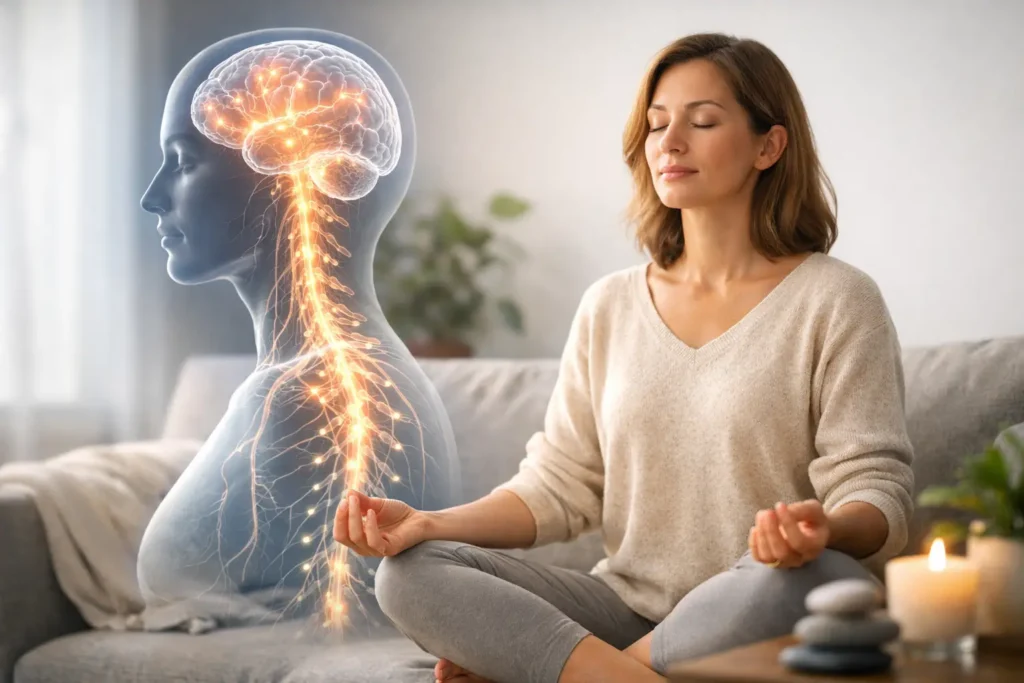
If your hardest time of day starts after dinner, you are not broken. For many people, the evening is when stress finally catches up with the body. That is why Nervous System Regulation matters so much – especially if nighttime cravings, emotional eating, or that restless need to self-soothe keep showing up when the day goes quiet.
Nervous system regulation is not about becoming calm all the time. It is about helping your body feel safe enough to come out of survival mode more often. When your system is overwhelmed, food can start to feel like relief, comfort, grounding, or reward. That does not mean you lack discipline. It often means your body has been carrying too much for too long.
What nervous system regulation actually means
Your nervous system is constantly scanning for cues of safety and stress. When it senses pressure, conflict, overstimulation, or emotional strain, it can shift into protective states. You might feel wired, tense, snappy, urgent, foggy, shut down, or oddly numb. Some people feel all of that in one evening.
Regulation is the process of supporting your body so it can move back toward steadiness. Not perfection. Just steadiness. A regulated state usually feels more present, more grounded, and less reactive. You can pause before acting. You can notice a craving without instantly obeying it. You can feel discomfort without needing to escape it right away.
Why stress often shows up as evening cravings
This is where many beginners feel a wave of relief: your evening eating patterns may make more sense than you think. If you spend the day pushing through stress, meeting everyone else’s needs, staying productive, or ignoring your own emotions, your body may wait until nighttime to ask for comfort.
Food works quickly. It can soothe, distract, stimulate, and settle all at once. Sweet or crunchy foods in particular can feel regulating in the moment because they change your sensory experience fast. The problem is not that you reach for comfort. The problem is that food may have become your most available form of nervous system support.
That is why trying to simply “stop eating at night” often backfires. If the nervous system still feels unsafe, deprived, lonely, or overstimulated, the urge usually returns.
Nervous System Regulation for beginners: where to start
The best place to start is smaller than most people expect. You do not need a perfect routine, a silent house, or an hour of meditation. You need a few consistent signals of safety.
Begin by noticing your state before you try to change your behavior. Ask yourself, “What does my body feel like right now?” You may notice tight shoulders, shallow breathing, a buzzing chest, heavy fatigue, or the feeling that you need something immediately. That awareness matters. It interrupts autopilot.
From there, choose one simple regulation practice you can actually do at the end of a real day. A longer exhale can help when you feel wired. A warm drink can help when you feel scattered. Soft lighting can reduce sensory overload. A hand on your chest can create a surprising sense of grounding. Gentle music, a blanket, slow stretching, or five quiet minutes without your phone can all become cues that the day is softening.
None of these tools are magic on their own. Their power comes from repetition. The nervous system learns through experience. When your body repeatedly meets calm, it starts to trust calm a little more.
What regulation is not
It is not forcing yourself to be peaceful when you are deeply overwhelmed. It is not judging yourself for being dysregulated. And it is not about doing wellness “right.”
Some evenings, regulation might look like breathing slowly and journaling for ten minutes. Other nights, it might look like eating the snack, sitting down while you eat it, and speaking to yourself with kindness instead of criticism. That still counts. Shame tends to dysregulate people further. Compassion creates room for change.
It also helps to know that different tools work for different states. If you feel anxious and restless, movement may help more than stillness. If you feel numb or shut down, sensory comfort and gentle connection may work better than trying to think your way out of it. This is why nervous system support is personal. It depends on what your body is doing in that moment.
A gentle evening practice that helps
If your evenings feel chaotic, try creating a short transition ritual between the demands of the day and the rest of the night. Keep it simple enough that you will not resist it.
Turn off the bright overhead lights. Put one hand on your body and take three slower breaths than usual. Ask, “What am I needing right now – comfort, rest, quiet, warmth, company, a pause?” Then meet one of those needs before going to food if you can.
Sometimes you will still want the food. That is okay. The goal is not to earn or avoid eating. The goal is to widen the space between stress and response so you have more than one option.
At My Calm Hour, that space matters. It is where self-trust begins to come back.
The real goal of nervous system regulation
For beginners, the biggest shift is often this: stop asking, “How do I control myself better?” and start asking, “How do I help myself feel safer?” That question changes everything.
When your nervous system feels less threatened, cravings often become less urgent. Your evenings may feel less like a battle and more like a conversation with yourself. Not every night will be easy. Not every urge will disappear. But one gentle hour at a time, your body can learn that comfort is possible in more ways than one.